THE ADVENTURE COLLECTIVE® · Independent discovery and booking for outdoor travel

Launch from Plan Praz and drift in tandem beneath a billowing wing with Mont Blanc at your shoulder. This 15–30 minute paragliding flight over Chamonix pairs certified pilots with dramatic alpine panoramas—and practical rules that keep it safe.
Launch from Plan Praz and drift in tandem beneath a billowing wing with Mont Blanc at your shoulder. This 15–30 minute paragliding flight over Chamonix pairs certified pilots with dramatic alpine panoramas—and practical rules that keep it safe.
You step out of the cable car onto a shelf of rock and wind—cold air already teasing the edges of the wing as pilots walk you through a final checklist. Below, the town of Chamonix folds into the valley like a painted map; ahead, Mont Blanc pins the horizon with a glacier-slick crown. For 15 to 30 minutes you won't so much fly as be carried: the wing lifts, the valley opens, and the world rearranges into long ribs of ridgeline and serrated crests.
Verified experiences and guided adventures in the surrounding area.
Operated by Air Sports Chamonix · Chamonix, Auvergne-Rhône-Alpes
You step out of the cable car onto a shelf of rock and wind—cold air already teasing the edges of the wing as pilots walk you through a final checklist. Below, the town of Chamonix folds into the valley like a painted map; ahead, Mont Blanc pins the horizon with a glacier-slick crown. For 15 to 30 minutes you won't so much fly as be carried: the wing lifts, the valley opens, and the world rearranges into long ribs of ridgeline and serrated crests.
Chamonix's relationship with the high country is long and practical. The town grew around alpine guiding and the first ascent of Mont Blanc in 1786; today those same routes are read by weather and wind rather than rope and crampon alone. The limestone and granite combs that make up the Mont Blanc massif guide thermals and shape the lift that paragliders use—the same geology that drew climbers and scientists here centuries ago.
There’s a cultural rhythm to flying in Chamonix: early starts for stable mornings, a tolerant tolerance for weight limits, and a language of weather—vague to the untrained, precise to the pilot. Local guides are often bilingual and steeped in mountain safety; many hold French paragliding teacher certificates and carry full insurance. Paragliding here is not an adrenaline shot divorced from care; it’s a practiced transfer of trust between pilot, harness, and air.
Practical details matter. Meet at the bottom of the cable car by the lift-ticket office (buy a one-way lift ticket, roughly €18). You’ll be briefed, clipped in, and carried by a certified instructor; flights launch from Plan Praz or, during cable-car maintenance windows, from Plan de l’Aiguille. Weight limits and safety rules are enforced—max 100 kg—and if weather turns dangerous the flight is refunded.
Timing affects the experience: early mornings give calm glassy air and cleaner light for photos; midday thermals can extend flight times but introduce turbulence. Dress in layers and wear sturdy shoes—the takeoff involves a short run of footing on gravel and grass. Bring a small camera or phone on a tether if you want photos; larger bags are not allowed.
The whole operation is compact: plan on about 75 minutes from meeting to end, and expect the pilot to invite you to try the controls if conditions and weight allow. For first-timers the sensation is immediate and honest: wind that feels like a hand pushing you forward, mountains that seem to breathe around you. It’s a brief, high-altitude conversation with the Alps that leaves a lasting sense of scale—and a practical appreciation for the mountain skills that make it safe.
moderate.
1–1.5 hours.
Light fitness—able to stand, walk a short distance, and run a few steps at takeoff; not suitable for serious mobility limitations.
Minimum age is 4 years; maximum weight limit is 100 kg—accurate weight must be provided at booking for safety and load calculations.
Meet at the bottom of the cable car near the lift-ticket office and buy a one-way lift ticket (about €18) before heading up to the takeoff zone.
Flight time in the air is typically 15–30 minutes depending on conditions; total time including briefing and transfers is around 75 minutes.
This activity is not recommended for pregnant travelers or those with spinal or significant cardiovascular problems—consult your doctor and the operator before booking.
Pilots may let you try basic piloting inputs during calm conditions, but the certified instructor controls takeoff, landing, and safety-critical maneuvers.
Flights are weather-dependent; if conditions are unsafe you’ll be refunded or offered an alternative date—safety is prioritized over flying.
Chamonix grew as an alpine hub after the first ascent of Mont Blanc in 1786; the valley’s long heritage of mountain guiding evolved into modern air sports like paragliding.
Pilots and operators follow seasonal closures and landing rules to protect fragile alpine meadows and wildlife—stick to established landing zones and avoid littering.
Air Sports Chamonix operates guided outdoor trips and adventures with an emphasis on safety, stewardship, and memorable experiences.
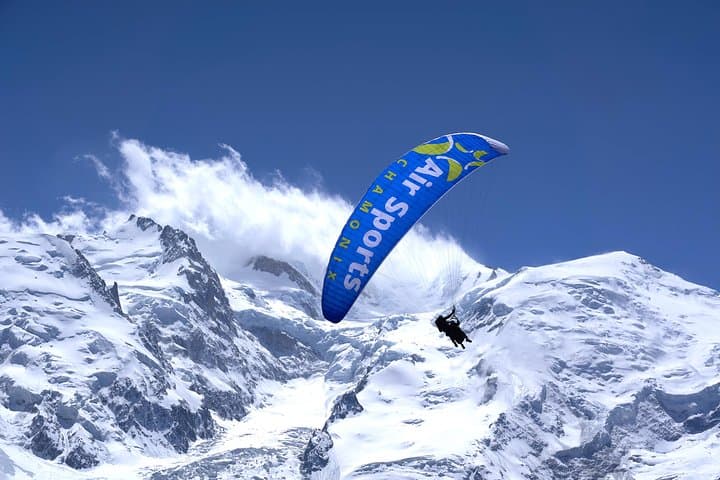
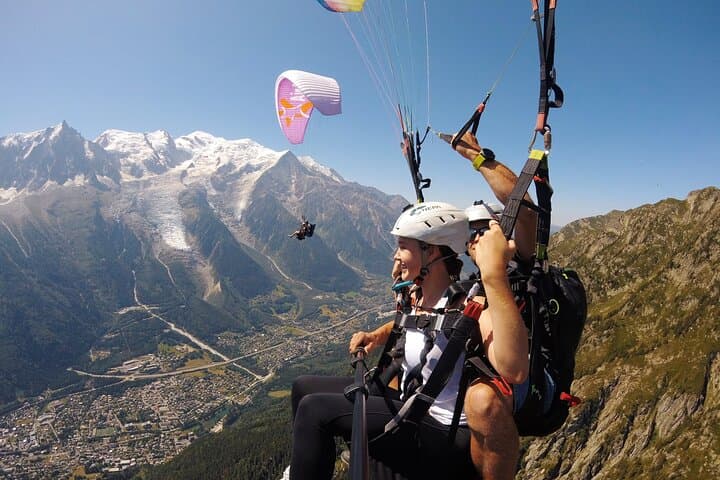
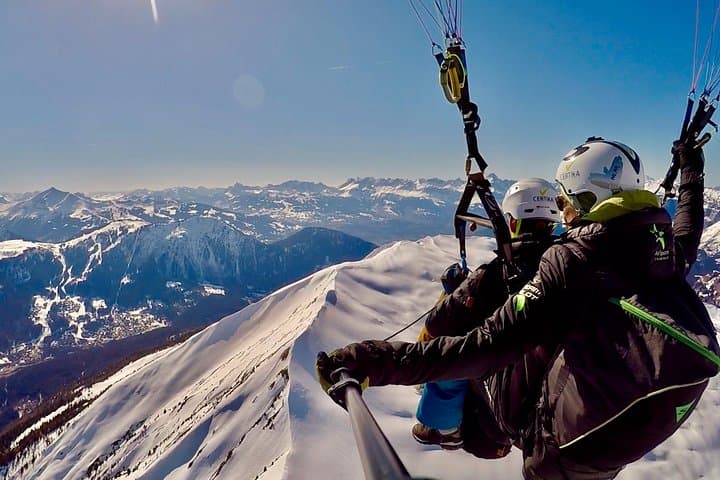
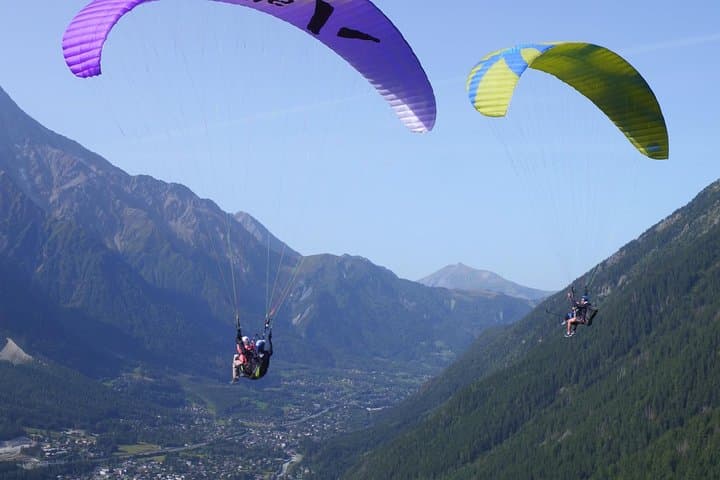
You step out of the cable car onto a shelf of rock and wind—cold air already teasing the edges of the wing as pilots walk you through a final checklist. Below, the town of Chamonix folds into the valley like a painted map; ahead, Mont Blanc pins the horizon with a glacier-slick crown. For 15 to 30 minutes you won't so much fly as be carried: the wing lifts, the valley opens, and the world rearranges into long ribs of ridgeline and serrated crests.
You step out of the cable car onto a shelf of rock and wind—cold air already teasing the edges of the wing as pilots walk you through a final checklist. Below, the town of Chamonix folds into the valley like a painted map; ahead, Mont Blanc pins the horizon with a glacier-slick crown. For 15 to 30 minutes you won't so much fly as be carried: the wing lifts, the valley opens, and the world rearranges into long ribs of ridgeline and serrated crests.
Chamonix's relationship with the high country is long and practical. The town grew around alpine guiding and the first ascent of Mont Blanc in 1786; today those same routes are read by weather and wind rather than rope and crampon alone. The limestone and granite combs that make up the Mont Blanc massif guide thermals and shape the lift that paragliders use—the same geology that drew climbers and scientists here centuries ago.
There’s a cultural rhythm to flying in Chamonix: early starts for stable mornings, a tolerant tolerance for weight limits, and a language of weather—vague to the untrained, precise to the pilot. Local guides are often bilingual and steeped in mountain safety; many hold French paragliding teacher certificates and carry full insurance. Paragliding here is not an adrenaline shot divorced from care; it’s a practiced transfer of trust between pilot, harness, and air.
Practical details matter. Meet at the bottom of the cable car by the lift-ticket office (buy a one-way lift ticket, roughly €18). You’ll be briefed, clipped in, and carried by a certified instructor; flights launch from Plan Praz or, during cable-car maintenance windows, from Plan de l’Aiguille. Weight limits and safety rules are enforced—max 100 kg—and if weather turns dangerous the flight is refunded.
Timing affects the experience: early mornings give calm glassy air and cleaner light for photos; midday thermals can extend flight times but introduce turbulence. Dress in layers and wear sturdy shoes—the takeoff involves a short run of footing on gravel and grass. Bring a small camera or phone on a tether if you want photos; larger bags are not allowed.
The whole operation is compact: plan on about 75 minutes from meeting to end, and expect the pilot to invite you to try the controls if conditions and weight allow. For first-timers the sensation is immediate and honest: wind that feels like a hand pushing you forward, mountains that seem to breathe around you. It’s a brief, high-altitude conversation with the Alps that leaves a lasting sense of scale—and a practical appreciation for the mountain skills that make it safe.