THE ADVENTURE COLLECTIVE® · Independent discovery and booking for outdoor travel

Learn to handle a paraglider on the grassy cliffs above Montañita and take your first radio-supervised solo flights. This APPI initiation course teaches ground handling, radio check-ins, and the basics of independent flying.
Learn to handle a paraglider on the grassy cliffs above Montañita and take your first radio-supervised solo flights. This APPI initiation course teaches ground handling, radio check-ins, and the basics of independent flying.
The wind off the Pacific pulls at the wing before the student does — a short, sharp tug that demands attention. On the warm grassy lip above Montañita’s shoreline, the instructor’s voice comes through a headset as the student practices ground handling, feeling the canopy inflate and breathe. A few steps later, a controlled run, a breath, and the first supervised solo lift: the town, the breakers and the long beach drop away.
Verified experiences and guided adventures in the surrounding area.
Operated by Parapente Montanita · Montañita, Santa Elena
The wind off the Pacific pulls at the wing before the student does — a short, sharp tug that demands attention. On the warm grassy lip above Montañita’s shoreline, the instructor’s voice comes through a headset as the student practices ground handling, feeling the canopy inflate and breathe. A few steps later, a controlled run, a breath, and the first supervised solo lift: the town, the breakers and the long beach drop away.
Montañita began as a fishing village and has been a surf and traveler hub since the 1970s; its coastal cliffs are steeped in recent tourism history rather than deep, ancient settlement. Geologically the launch zones sit on uplifted coastal terraces and compacted sands that produce consistent sea breezes that paragliders learn to read. Culturally the town is informal and service-oriented — expect Spanish-spoken briefings and a community used to adventure sports.
Practically, the initiation course follows APPI fundamentals: ground handling, radio-linked solo lifts, and instructor oversight. Expect two to three hours of hands-on instruction, weather-dependent cancellations in heavy rain, and a limit on passenger weight for safety. Bring closed-toe shoes, a secure harness, sunscreen, and a water bottle; dress in light layers for changing winds. Hydrate before flying and avoid heavy meals right before runs.
This is an entry-level route into independent flying: students leave with basic wing control, radio familiarity and the confidence to progress to higher certification. Book mornings for flatter winds and clearer thermals, and be prepared to reschedule if coastal showers move in.
moderate.
2–3 hours.
Moderate fitness: able to walk short uneven slopes, run a few meters, and follow physical instructions without assistance.
No—this is an initiation course designed for beginners; instructors teach all basics from ground handling to supervised solo flights.
Yes—operators require you to declare height and weight at booking and may restrict participation for safety; confirm limits when you reserve.
Flights are weather-dependent; heavy rain or unstable winds can cancel sessions with refunds if canceled more than 24 hours prior or same-day per policy.
You will have supervised solo flights but only with active radio contact and under the direct oversight of an instructor.
Montañita evolved from fishing village to international surf and adventure hub in the late 20th century, shaping local services around outdoor sports.
Respect coastal vegetation and marked access paths to protect dune and nesting habitats; operators typically brief students on minimizing footprints.
Parapente Montanita operates guided outdoor trips and adventures with an emphasis on safety, stewardship, and memorable experiences.
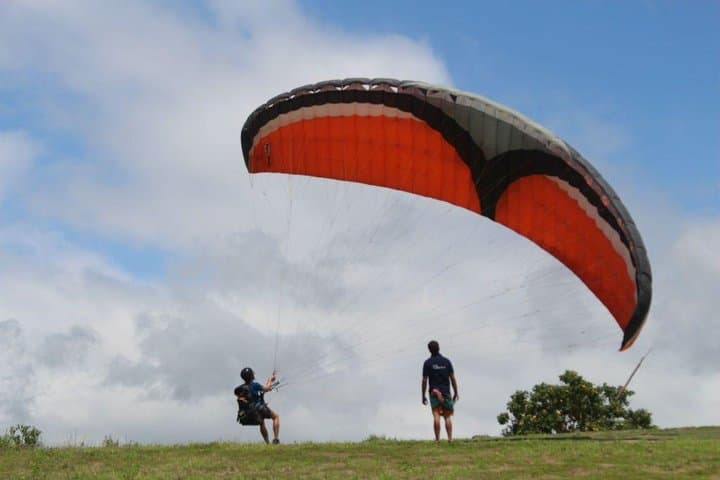
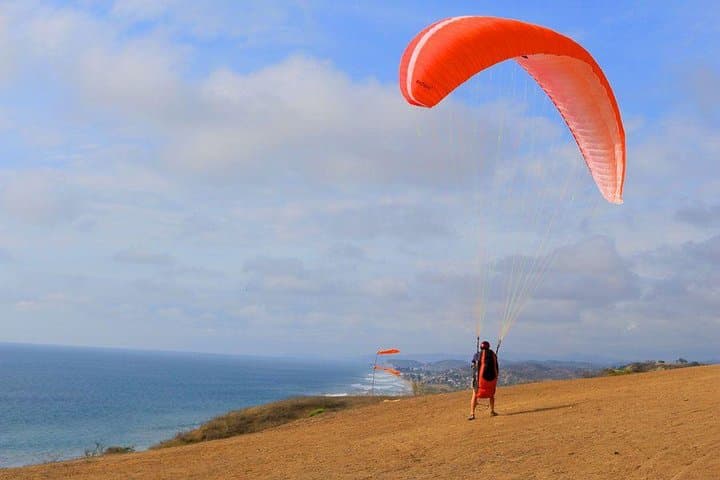
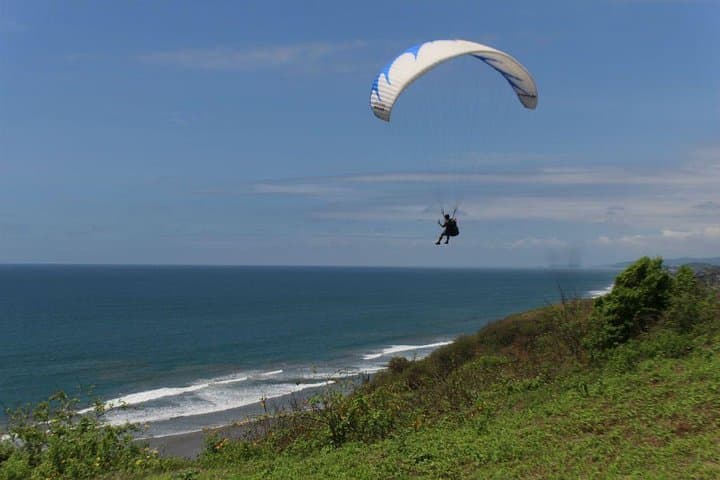
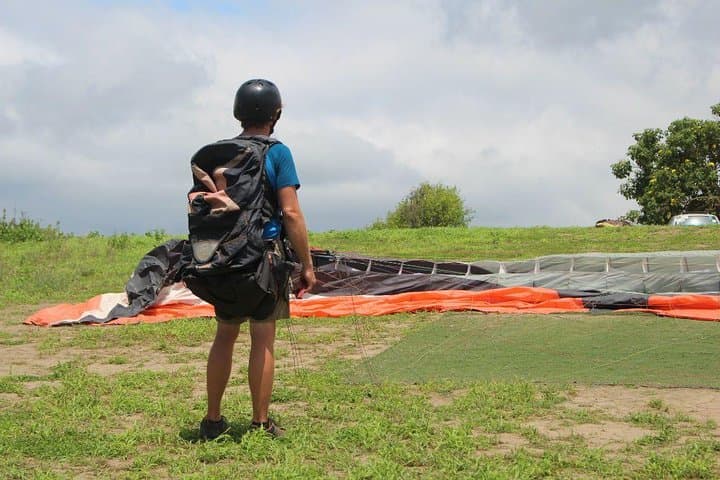
The wind off the Pacific pulls at the wing before the student does — a short, sharp tug that demands attention. On the warm grassy lip above Montañita’s shoreline, the instructor’s voice comes through a headset as the student practices ground handling, feeling the canopy inflate and breathe. A few steps later, a controlled run, a breath, and the first supervised solo lift: the town, the breakers and the long beach drop away.
The wind off the Pacific pulls at the wing before the student does — a short, sharp tug that demands attention. On the warm grassy lip above Montañita’s shoreline, the instructor’s voice comes through a headset as the student practices ground handling, feeling the canopy inflate and breathe. A few steps later, a controlled run, a breath, and the first supervised solo lift: the town, the breakers and the long beach drop away.
Montañita began as a fishing village and has been a surf and traveler hub since the 1970s; its coastal cliffs are steeped in recent tourism history rather than deep, ancient settlement. Geologically the launch zones sit on uplifted coastal terraces and compacted sands that produce consistent sea breezes that paragliders learn to read. Culturally the town is informal and service-oriented — expect Spanish-spoken briefings and a community used to adventure sports.
Practically, the initiation course follows APPI fundamentals: ground handling, radio-linked solo lifts, and instructor oversight. Expect two to three hours of hands-on instruction, weather-dependent cancellations in heavy rain, and a limit on passenger weight for safety. Bring closed-toe shoes, a secure harness, sunscreen, and a water bottle; dress in light layers for changing winds. Hydrate before flying and avoid heavy meals right before runs.
This is an entry-level route into independent flying: students leave with basic wing control, radio familiarity and the confidence to progress to higher certification. Book mornings for flatter winds and clearer thermals, and be prepared to reschedule if coastal showers move in.