THE ADVENTURE COLLECTIVE® · Independent discovery and booking for outdoor travel

Lift off from a coastal ridge and float over Chania’s cliffs and olive-dotted valleys on a 15-minute tandem paragliding flight. This short, accessible aerial experience pairs calm instruction with sweeping Mediterranean views.
Lift off from a coastal ridge and float over Chania’s cliffs and olive-dotted valleys on a 15-minute tandem paragliding flight. This short, accessible aerial experience pairs calm instruction with sweeping Mediterranean views.
A wind-loaded ridge on Crete's north coast catches you before you do — a steady push that lifts the wing and, with it, the city and sea. From the harness you watch olive groves give way to a serrated coastline; the Mediterranean stretches flat and blue while inland slopes climb to limestone shoulders that hold centuries of shepherd paths. The pilot checks the wing, the intercom clicks on, and the coastline begins to shrink beneath you.
Verified experiences and guided adventures in the surrounding area.
Operated by Paragliding Crete Power Fly · Chania, Crete
A wind-loaded ridge on Crete's north coast catches you before you do — a steady push that lifts the wing and, with it, the city and sea. From the harness you watch olive groves give way to a serrated coastline; the Mediterranean stretches flat and blue while inland slopes climb to limestone shoulders that hold centuries of shepherd paths. The pilot checks the wing, the intercom clicks on, and the coastline begins to shrink beneath you.
Crete's shoreline and nearby White Mountains have long shaped local life: fishermen, shepherds and Venetian-era watchtowers trace the same lines you now fly over. Geologically the island is a collage of metamorphic and limestone ranges; thermals rise from sun-warmed rock and coastal cliffs, creating the lift pilots use for short tandem hops and longer ridge flights. Local culture is direct and maritime — villages cluster near fertile plains and harbors, and you may hear Cretan lyra carried on the breeze from a seaside taverna after landing.
Practically, expect a 15-minute tandem flight bracketed by a 30–60 minute check-in and safety briefing. Flights are suitable for a wide range of fitness levels but require basic mobility for a short run or firm step at launch and a controlled landing. Weather governs everything; outfits should layer for wind and sun. Bring closed-toe shoes, a windproof layer, and a camera with a secure strap. Listen to your instructor, respect weight and health limits, and plan this as a highlight-minute that reframes the island from above.
easy.
15 minutes (flight); 1–2 hours total including briefing.
Basic mobility and the ability to stand and take a short run are needed; suitable for most fitness levels
The tandem airborne portion is approximately 15 minutes; allow extra time for briefing and setup, typically bringing the total to 1–2 hours.
Operators usually have upper weight limits and require ages and weights at booking; infants are sometimes restricted — check the provider's policy.
No prior paragliding experience is needed; professional pilots handle launch, flight, and landing with an in-flight safety briefing via intercom.
Flights are canceled or rescheduled in high winds, storms or low-visibility conditions; always confirm the morning-of weather policy and cancellation window.
The Chania coastline bears Venetian and Ottoman-era sites; historic watchtowers and harbors reflect centuries of maritime trade and defense along these cliffs.
Pilots and operators emphasize minimal landing impact and avoiding sensitive coastal nesting areas; follow instructions to protect fragile cliffside habitat.
Paragliding Crete Power Fly operates guided outdoor trips and adventures with an emphasis on safety, stewardship, and memorable experiences.
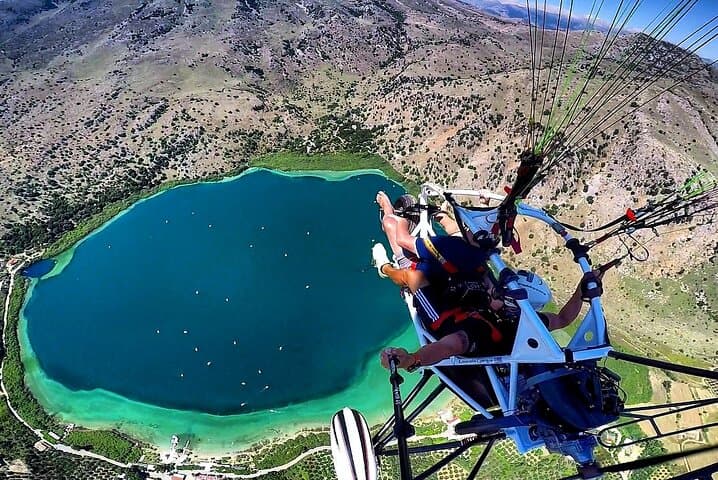
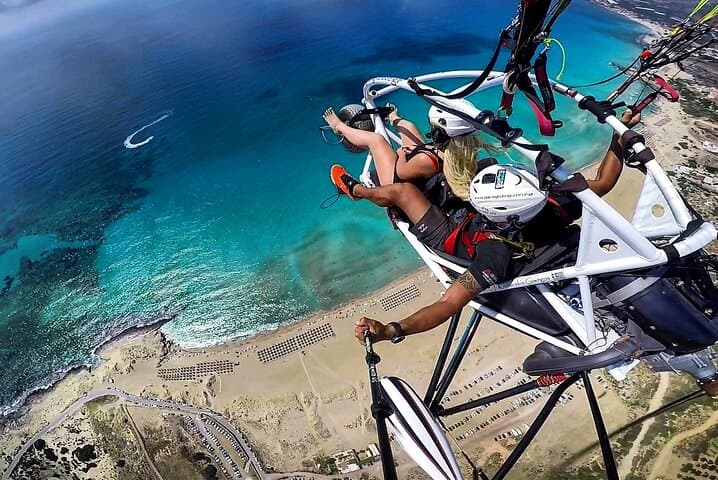
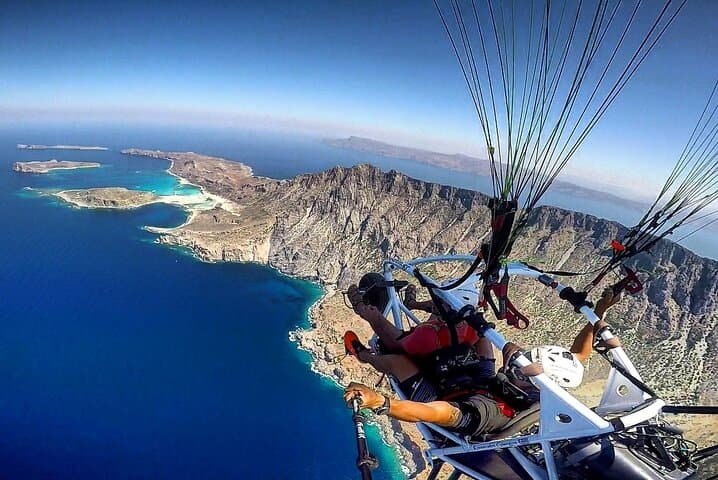
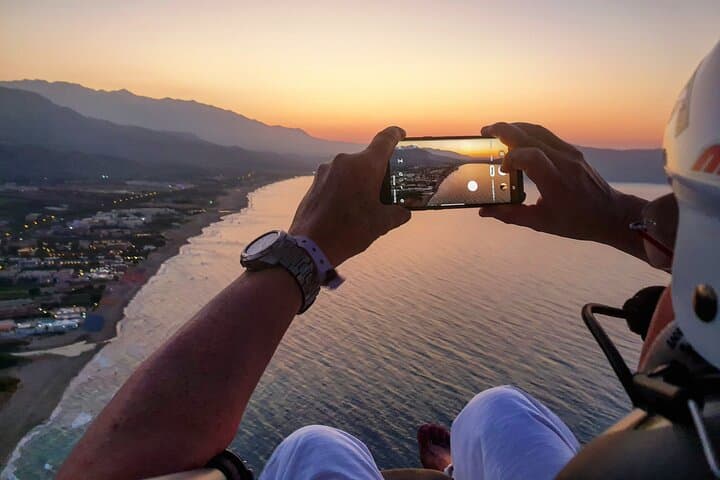
A wind-loaded ridge on Crete's north coast catches you before you do — a steady push that lifts the wing and, with it, the city and sea. From the harness you watch olive groves give way to a serrated coastline; the Mediterranean stretches flat and blue while inland slopes climb to limestone shoulders that hold centuries of shepherd paths. The pilot checks the wing, the intercom clicks on, and the coastline begins to shrink beneath you.
A wind-loaded ridge on Crete's north coast catches you before you do — a steady push that lifts the wing and, with it, the city and sea. From the harness you watch olive groves give way to a serrated coastline; the Mediterranean stretches flat and blue while inland slopes climb to limestone shoulders that hold centuries of shepherd paths. The pilot checks the wing, the intercom clicks on, and the coastline begins to shrink beneath you.
Crete's shoreline and nearby White Mountains have long shaped local life: fishermen, shepherds and Venetian-era watchtowers trace the same lines you now fly over. Geologically the island is a collage of metamorphic and limestone ranges; thermals rise from sun-warmed rock and coastal cliffs, creating the lift pilots use for short tandem hops and longer ridge flights. Local culture is direct and maritime — villages cluster near fertile plains and harbors, and you may hear Cretan lyra carried on the breeze from a seaside taverna after landing.
Practically, expect a 15-minute tandem flight bracketed by a 30–60 minute check-in and safety briefing. Flights are suitable for a wide range of fitness levels but require basic mobility for a short run or firm step at launch and a controlled landing. Weather governs everything; outfits should layer for wind and sun. Bring closed-toe shoes, a windproof layer, and a camera with a secure strap. Listen to your instructor, respect weight and health limits, and plan this as a highlight-minute that reframes the island from above.