THE ADVENTURE COLLECTIVE® · Independent discovery and booking for outdoor travel

Short drive from Agadir or Taghazout, Paradise Valley’s rocky canyon, palm groves and natural pools offer a half-day of easy scrambling and swimming. Plan for uneven terrain, bring water and aim for an early start to beat the crowds.
Short drive from Agadir or Taghazout, Paradise Valley’s rocky canyon, palm groves and natural pools offer a half-day of easy scrambling and swimming. Plan for uneven terrain, bring water and aim for an early start to beat the crowds.
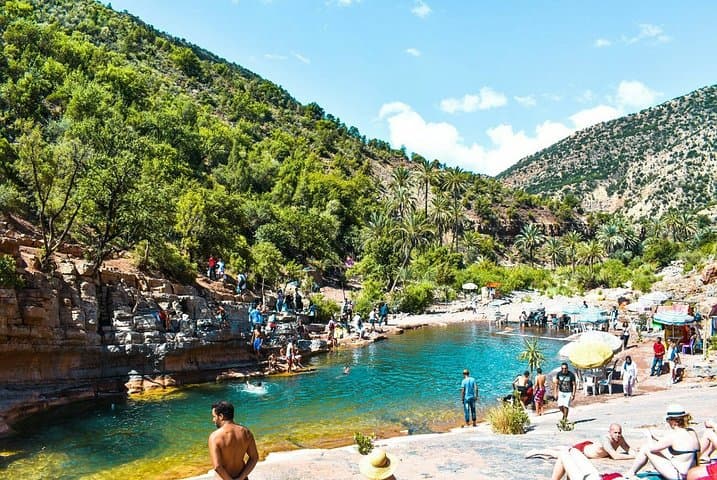
Morning light slices across white-and-pink cliffs as you drive from the coast into the Atlas foothills; palms and argan trees pepper the slopes while a river threads the canyon below. Step out and the canyon’s hush replaces ocean noise—the water calls, pools glint, and a wind through low almond trees seems to nudge you downstream.
Verified experiences and guided adventures in the surrounding area.
Operated by Agadir Journey · Taghazout, Souss-Massa
Morning light slices across white-and-pink cliffs as you drive from the coast into the Atlas foothills; palms and argan trees pepper the slopes while a river threads the canyon below. Step out and the canyon’s hush replaces ocean noise—the water calls, pools glint, and a wind through low almond trees seems to nudge you downstream.
Paradise Valley formed where V-shaped wadis cut into volcanic and sedimentary rock, leaving steep terraces, plunge pools and natural hammocks. Berber villages cling high above; their whitewashed houses and narrow tracks are part of a living mountain culture that has farmed these slopes for centuries.
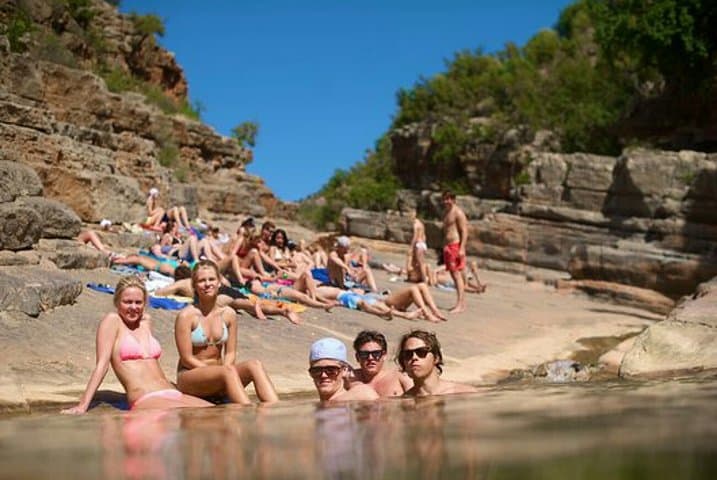
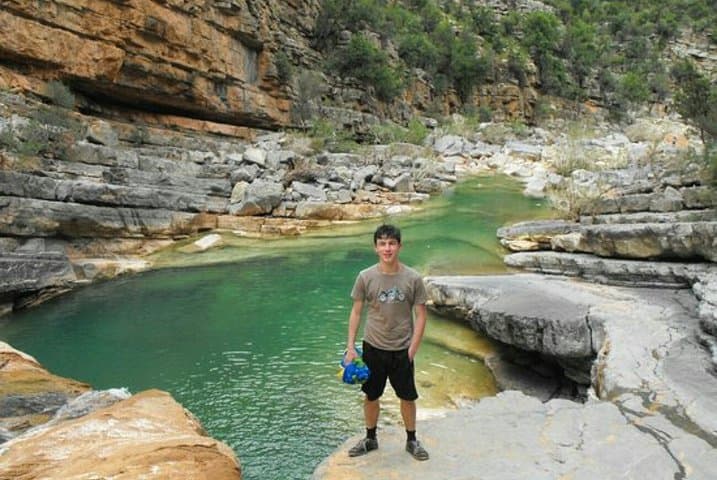
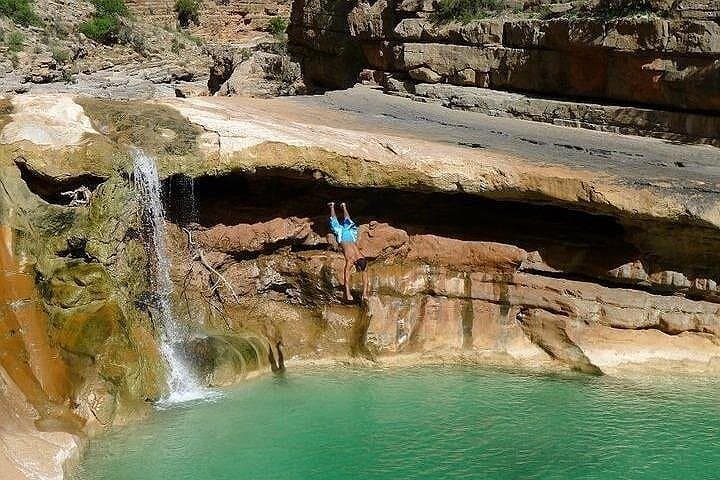
Expect short scrambles over smooth rock, shallow river crossings and sections of dusty trail that open into shaded palm groves. The main attraction is a string of natural pools ideal for cooling off; some visitors cliff-jump at marked spots, others picnic on flat ledges. Guides often point out local flora—argan, tamarisk and oleander—and share stories of village life and the valley’s seasonal water flow.
Practical guidance: plan a 5–6 hour outing that fits between low-heat hours in summer and rainier shoulder seasons. Wear sturdy shoes with good traction, bring a layered top for morning chill, and carry enough water—tap sources are unreliable. If you want quieter sections, aim for weekdays or early starts; organized transfers from Agadir or Taghazout make logistics simple but confirm pickup details in advance.
Paradise Valley rewards curiosity and basic caution: move deliberately on wet rock, respect private terraces, and leave no trace so the pools keep daring the next traveler to jump in.
moderate.
5–6 hours.
Suitable for casual hikers in reasonable shape who can handle uneven terrain, short scrambles, and occasional river crossings.
Most door-to-door tours run 5–6 hours including transfer time; driving takes roughly 45–75 minutes each way depending on pickup location.
Swimming is common and generally safe in calm pools, but avoid fast-flow areas after rains, and be cautious on slippery entry points.
Not required—paths to main pools are well-traveled—but a guide adds local context, points out quieter spots, and handles logistics.
Some areas are family-friendly and stroller-accessible near roadside viewpoints, but pools and canyon paths involve uneven, sometimes steep terrain not suited to limited mobility.
Local Berber communities have farmed the valley for generations; terraces and irrigation tracks reflect long-standing small-scale agriculture.
Stick to marked paths, avoid using soap in pools, and pack out all waste—visitor pressure can erode trails and impact water quality.
Agadir Journey operates guided outdoor trips and adventures with an emphasis on safety, stewardship, and memorable experiences.
Morning light slices across white-and-pink cliffs as you drive from the coast into the Atlas foothills; palms and argan trees pepper the slopes while a river threads the canyon below. Step out and the canyon’s hush replaces ocean noise—the water calls, pools glint, and a wind through low almond trees seems to nudge you downstream.
Morning light slices across white-and-pink cliffs as you drive from the coast into the Atlas foothills; palms and argan trees pepper the slopes while a river threads the canyon below. Step out and the canyon’s hush replaces ocean noise—the water calls, pools glint, and a wind through low almond trees seems to nudge you downstream.
Paradise Valley formed where V-shaped wadis cut into volcanic and sedimentary rock, leaving steep terraces, plunge pools and natural hammocks. Berber villages cling high above; their whitewashed houses and narrow tracks are part of a living mountain culture that has farmed these slopes for centuries.
Expect short scrambles over smooth rock, shallow river crossings and sections of dusty trail that open into shaded palm groves. The main attraction is a string of natural pools ideal for cooling off; some visitors cliff-jump at marked spots, others picnic on flat ledges. Guides often point out local flora—argan, tamarisk and oleander—and share stories of village life and the valley’s seasonal water flow.
Practical guidance: plan a 5–6 hour outing that fits between low-heat hours in summer and rainier shoulder seasons. Wear sturdy shoes with good traction, bring a layered top for morning chill, and carry enough water—tap sources are unreliable. If you want quieter sections, aim for weekdays or early starts; organized transfers from Agadir or Taghazout make logistics simple but confirm pickup details in advance.
Paradise Valley rewards curiosity and basic caution: move deliberately on wet rock, respect private terraces, and leave no trace so the pools keep daring the next traveler to jump in.