THE ADVENTURE COLLECTIVE® · Independent discovery and booking for outdoor travel

Spend a day from Agadir exploring Paradise Valley’s palm-lined gorges, natural turquoise pools and cliff jump spots. This six-hour outing pairs short hikes with refreshing swims and local culture.
Spend a day from Agadir exploring Paradise Valley’s palm-lined gorges, natural turquoise pools and cliff jump spots. This six-hour outing pairs short hikes with refreshing swims and local culture.
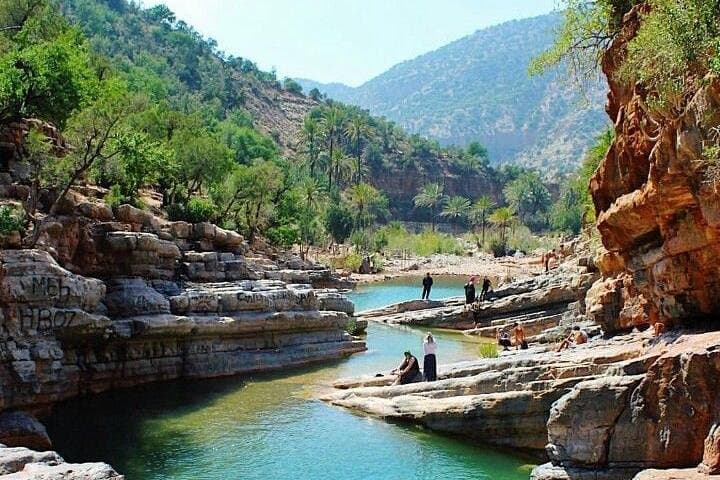
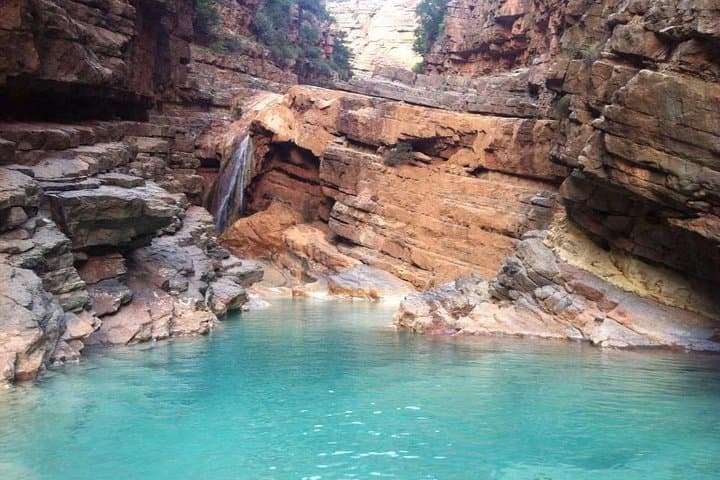
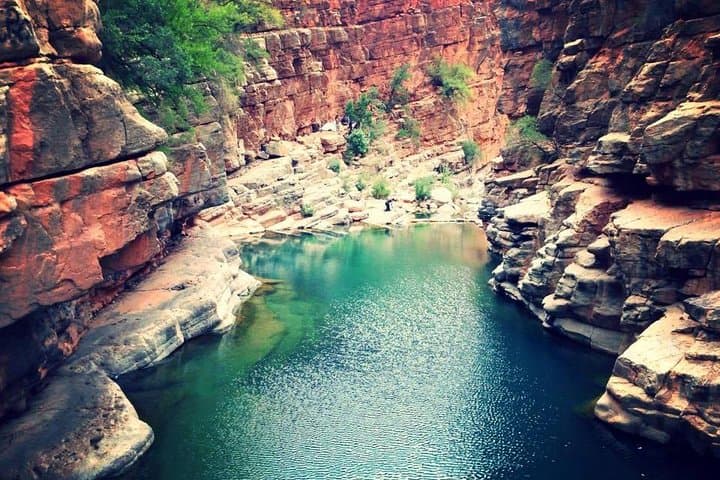
The morning bus slips out of Agadir and the city’s heat thins as the road climbs past groves of palms and the green ribbon of the Tamraght river. By mid-morning you’re stepping from the van onto sun-warmed rock, the canyon walls narrowing above and small turquoise pools daring you to take the plunge.
Verified experiences and guided adventures in the surrounding area.
Operated by Travica · Aourir, Souss-Massa
The morning bus slips out of Agadir and the city’s heat thins as the road climbs past groves of palms and the green ribbon of the Tamraght river. By mid-morning you’re stepping from the van onto sun-warmed rock, the canyon walls narrowing above and small turquoise pools daring you to take the plunge.
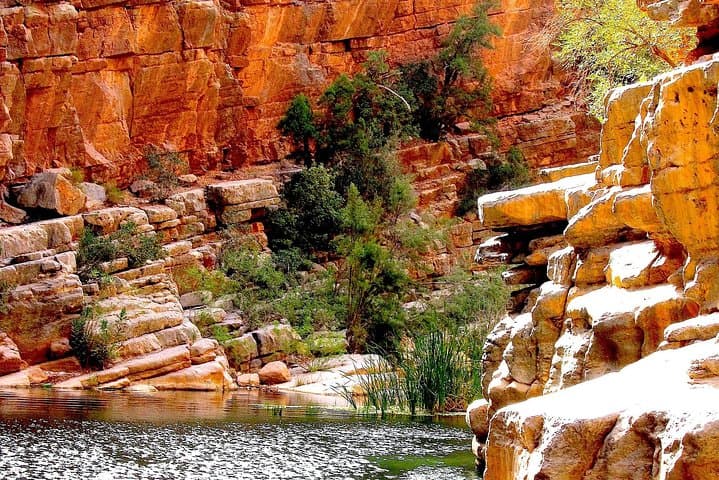
Paradise Valley grew as a weekend refuge for Agadir residents and fishermen from the Atlantic coast; its name stuck from the 1960s when travelers praised the clear basins and palm-fringed gorges. Geologically the valley is carved from ancient metamorphic rock—schist and granite shaped by seasonal rivers—creating natural basins, small waterfalls and steep cliffs that form jumping platforms up to a few meters high.
Locally, villages like Aourir (the “banana village”) and Alma supply market fruit and day-trip guides; you’ll hear Berber and Arabic, smell mint tea, and see agricultural terraces clinging to slopes.
Expect a mix of short, rocky walks between pools and easier dirt paths; many stops are only a few minutes from parking but exploring upstream lengthens the hike. Water is cool year-round—best for summer swims and spring runoff—and some pools are surprisingly deep.
Practical guide: wear grippy water shoes or lightweight hiking shoes, bring at least 1–2 liters of water, reef-safe sunscreen, and a light towel. If you plan to jump, scout entry depth carefully and test with a low jump first. Peak times are late morning to mid-afternoon; arrive early for quieter pools. Respect local signage and avoid trampling riparian vegetation—this place stays beautiful when visitors leave it intact.
moderate.
6 hours.
Moderate fitness; able to walk on uneven rocky trails and enter/exit pools multiple times
The drive is roughly 45–60 minutes depending on traffic and your exact pickup point in Agadir; tours typically include round-trip transport.
Swimming is generally safe in the pools, but cliff-jumping carries risk—always check depth and submerged rocks, avoid jumping after heavy rain, and start low to test conditions.
There is no formal entrance fee for most access points; guided tours provide transport, local knowledge, and sometimes picnic stops—useful if you prefer logistics handled.
Yes—children can enjoy the pools with supervision; however some narrow paths and cliff edges require close attention and are not stroller-friendly.
Local Berber villages have used these water channels for irrigation for centuries; modern popularity rose with 20th-century travelers and nearby Agadir development.
Foot traffic and litter are the main threats—stick to established paths, pack out waste, and use reef-safe sunscreen to limit chemical runoff into pools.
Travica operates guided outdoor trips and adventures with an emphasis on safety, stewardship, and memorable experiences.
The morning bus slips out of Agadir and the city’s heat thins as the road climbs past groves of palms and the green ribbon of the Tamraght river. By mid-morning you’re stepping from the van onto sun-warmed rock, the canyon walls narrowing above and small turquoise pools daring you to take the plunge.
The morning bus slips out of Agadir and the city’s heat thins as the road climbs past groves of palms and the green ribbon of the Tamraght river. By mid-morning you’re stepping from the van onto sun-warmed rock, the canyon walls narrowing above and small turquoise pools daring you to take the plunge.
Paradise Valley grew as a weekend refuge for Agadir residents and fishermen from the Atlantic coast; its name stuck from the 1960s when travelers praised the clear basins and palm-fringed gorges. Geologically the valley is carved from ancient metamorphic rock—schist and granite shaped by seasonal rivers—creating natural basins, small waterfalls and steep cliffs that form jumping platforms up to a few meters high.
Locally, villages like Aourir (the “banana village”) and Alma supply market fruit and day-trip guides; you’ll hear Berber and Arabic, smell mint tea, and see agricultural terraces clinging to slopes.
Expect a mix of short, rocky walks between pools and easier dirt paths; many stops are only a few minutes from parking but exploring upstream lengthens the hike. Water is cool year-round—best for summer swims and spring runoff—and some pools are surprisingly deep.
Practical guide: wear grippy water shoes or lightweight hiking shoes, bring at least 1–2 liters of water, reef-safe sunscreen, and a light towel. If you plan to jump, scout entry depth carefully and test with a low jump first. Peak times are late morning to mid-afternoon; arrive early for quieter pools. Respect local signage and avoid trampling riparian vegetation—this place stays beautiful when visitors leave it intact.