THE ADVENTURE COLLECTIVE® · Independent discovery and booking for outdoor travel

A half‑day escape from Agadir into a river‑cut valley of pools, argan slopes, and low cliffs. This day trip blends easy scrambling, local culture, and natural swimming holes for a straightforward Atlas Mountains adventure.
A half‑day escape from Agadir into a river‑cut valley of pools, argan slopes, and low cliffs. This day trip blends easy scrambling, local culture, and natural swimming holes for a straightforward Atlas Mountains adventure.
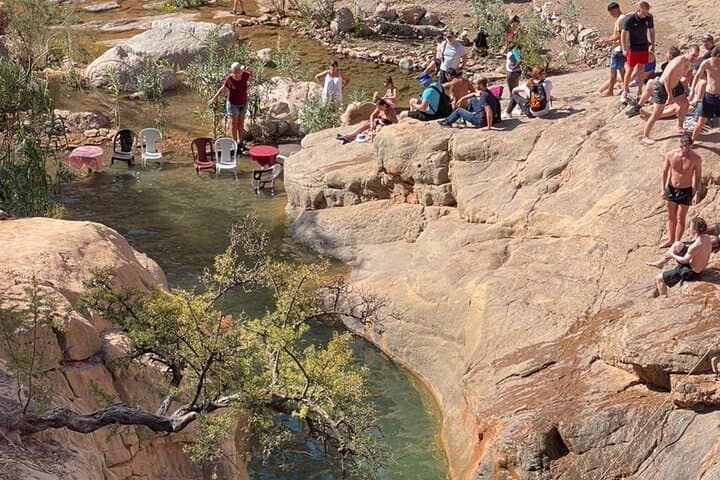
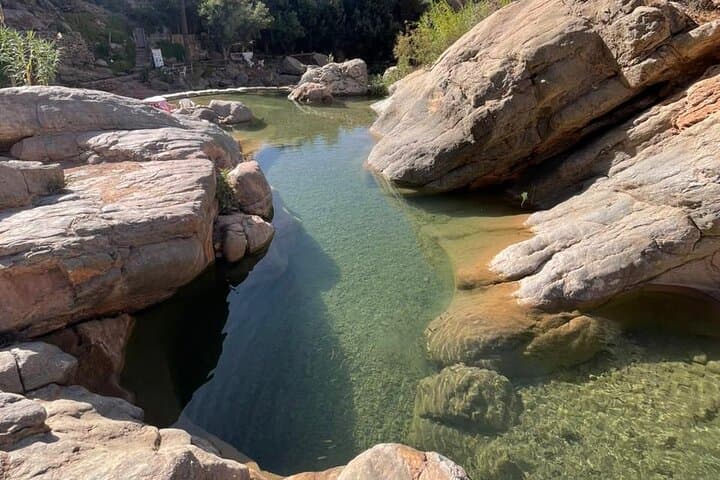
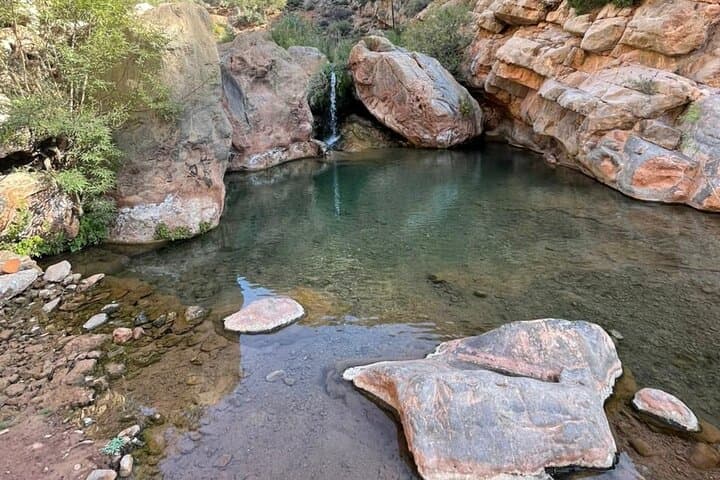
You step out of the air‑conditioned van and the valley greets you: sun-scrubbed rock shelves, a ribbon of clear water cutting a cool line through ochre cliffs, and pools that dare you to pause. Paradise Valley sits on the northern flank of the Anti‑Atlas/High Atlas transition, where seasonal streams have carved shallow basins and small waterfalls into volcanic and sedimentary rock.
Verified experiences and guided adventures in the surrounding area.
Operated by Timlaline Tours · Agadir, Souss-Massa
You step out of the air‑conditioned van and the valley greets you: sun-scrubbed rock shelves, a ribbon of clear water cutting a cool line through ochre cliffs, and pools that dare you to pause. Paradise Valley sits on the northern flank of the Anti‑Atlas/High Atlas transition, where seasonal streams have carved shallow basins and small waterfalls into volcanic and sedimentary rock.
The landscape is shaped by runoff and time — terraces and argan-studded slopes tell the story of Amazigh families who have tended olive and argan trees here for generations. Geologically, the channel exposes layered beds and river-smoothed boulders; botanically, argan and acacia anchor the dry slopes while reed pockets line the watercourse. Local culture surfaces in roadside tea stands and mosaic-tiled rest stops where guides point out irrigation channels and seasonal orchards.
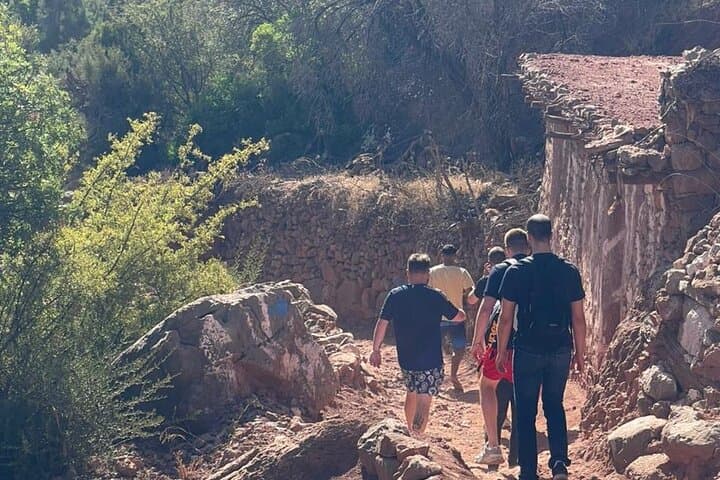
On a practical level, most day trips from Agadir last about five hours; expect moderate walking on uneven trails, short, rocky scrambles, and the option to swim in natural pools when flows are low. Start early to avoid the midday heat, bring a reusable water bottle, and wear shoes with grip — rocks get slick after rain. Respect private plots and use established paths to limit erosion. Photography rewards those who climb slightly above the pools for sweeping vistas, while quieter side channels reveal small, shaded picnic spots.
Paradise Valley is a compact, tactile taste of southern Morocco: raw geology, living local culture, and accessible adventure rolled into a half‑day escape from Agadir.
moderate.
4–6 hours.
Suitable for travelers with a moderate fitness level: comfortable walking on uneven ground and short rocky scrambles.
Most travelers book a guided day trip or private transfer; the drive north into the foothills takes roughly 40–75 minutes depending on traffic and pickup location.
Swimming is common when flows are low, but avoid deep pools after heavy rain due to strong currents and check local guidance before entering.
Children who can manage uneven paths and short scrambles can enjoy the valley, but supervise near cliffs and pools—sturdy shoes and life vests for weak swimmers are recommended.
You can visit independently, but a local guide or organized trip helps with navigation, cultural context, and finding quieter spots off the main access points.
Amazigh (Berber) communities have worked the valley’s terraces and water channels for centuries; argan and olive cultivation remain visible marks of that history.
The valley’s water and riparian plants are sensitive to trampling and pollution; follow leave‑no‑trace principles, avoid soaps in streams, and use marked paths to limit erosion.
Timlaline Tours operates guided outdoor trips and adventures with an emphasis on safety, stewardship, and memorable experiences.
You step out of the air‑conditioned van and the valley greets you: sun-scrubbed rock shelves, a ribbon of clear water cutting a cool line through ochre cliffs, and pools that dare you to pause. Paradise Valley sits on the northern flank of the Anti‑Atlas/High Atlas transition, where seasonal streams have carved shallow basins and small waterfalls into volcanic and sedimentary rock.
You step out of the air‑conditioned van and the valley greets you: sun-scrubbed rock shelves, a ribbon of clear water cutting a cool line through ochre cliffs, and pools that dare you to pause. Paradise Valley sits on the northern flank of the Anti‑Atlas/High Atlas transition, where seasonal streams have carved shallow basins and small waterfalls into volcanic and sedimentary rock.
The landscape is shaped by runoff and time — terraces and argan-studded slopes tell the story of Amazigh families who have tended olive and argan trees here for generations. Geologically, the channel exposes layered beds and river-smoothed boulders; botanically, argan and acacia anchor the dry slopes while reed pockets line the watercourse. Local culture surfaces in roadside tea stands and mosaic-tiled rest stops where guides point out irrigation channels and seasonal orchards.
On a practical level, most day trips from Agadir last about five hours; expect moderate walking on uneven trails, short, rocky scrambles, and the option to swim in natural pools when flows are low. Start early to avoid the midday heat, bring a reusable water bottle, and wear shoes with grip — rocks get slick after rain. Respect private plots and use established paths to limit erosion. Photography rewards those who climb slightly above the pools for sweeping vistas, while quieter side channels reveal small, shaded picnic spots.
Paradise Valley is a compact, tactile taste of southern Morocco: raw geology, living local culture, and accessible adventure rolled into a half‑day escape from Agadir.