THE ADVENTURE COLLECTIVE® · Independent discovery and booking for outdoor travel

A short drive from Agadir delivers palm-lined gorges, carved plunge pools and a crisp mountain lunch. This half-day hike to Paradise Valley mixes easy scrambling, cool swims and panoramic Atlas views—ideal for travelers who want nature without a full-day commitment.
A short drive from Agadir delivers palm-lined gorges, carved plunge pools and a crisp mountain lunch. This half-day hike to Paradise Valley mixes easy scrambling, cool swims and panoramic Atlas views—ideal for travelers who want nature without a full-day commitment.
You step off the minibus into scrubbed rock and the dry, warm breath of the Atlas foothills; date palms lean over cliff-edged pools and a narrow river dares you to follow its turquoise thread upstream. The trail drops through argan and olive trees, then opens to a series of carved basins where waterfalls slip into glassy swimming holes—natural plunge pools formed by millennia of water and volcanic rock.
Verified experiences and guided adventures in the surrounding area.
Operated by morocco tour and guide · Imouzzer, Souss-Massa
You step off the minibus into scrubbed rock and the dry, warm breath of the Atlas foothills; date palms lean over cliff-edged pools and a narrow river dares you to follow its turquoise thread upstream. The trail drops through argan and olive trees, then opens to a series of carved basins where waterfalls slip into glassy swimming holes—natural plunge pools formed by millennia of water and volcanic rock.
The valley sits on the northern flank of the Anti-Atlas/High Atlas transition zone, where folded sedimentary and volcanic layers create sudden gorges and stepped cliffs. Local villages like Imouzzer have long lived from argan fruit and olive groves; the site earned wider attention in the 1960s as travelers came for sun, swims, and a quieter pace—there’s even a persistent Hendrix-era rumor that gives the place its name.
Expect an active half-day: a foothill drive from Agadir, a 30–60 minute descent to the pools, moderate scrambling beside the river, and time for a dip and a roof-terrace lunch with mountain views. Trails are rocky and uneven; water can be cool even in summer and currents strong after rains. Dress in quick-dry layers, protect skin from sun and rough stone, and carry water—the valley’s fragile argan groves and riparian plants respond poorly to heavy foot traffic.
Practical timing: mornings or late afternoons are best for light and cooler temperatures; avoid the valley after heavy rain when flash flooding can make crossings dangerous. With basic fitness and sensible gear, Paradise Valley gives a short, punchy taste of Morocco’s mountains—sun, stone, and sudden water that pulse like a living thing.
moderate.
4–5 hours.
Moderate fitness: comfortable walking on uneven terrain and short sections of scrambling and steps.
The on-foot portion varies with stops—plan for 30–90 minutes each way depending on how far you explore and how much time you spend at the pools.
Yes—swimming is common and refreshing; check conditions first and avoid deep or fast-flowing sections after heavy rains.
Yes, with supervision; the route includes uneven terrain and some short scrambles so assess mobility and bring attentive supervision for children.
Most operators include pickup from Agadir and Taghazout hotels—confirm your pickup point when booking and be ready 20–30 minutes before the scheduled departure time.
The valley saw increased international visitors in the 1960s; local stories link its modern name to bohemian travelers who camped and swam there.
Visitors should stick to established paths and avoid trampling argan seedlings—local argan production is culturally and economically important, and foot traffic can damage regeneration.
morocco tour and guide operates guided outdoor trips and adventures with an emphasis on safety, stewardship, and memorable experiences.
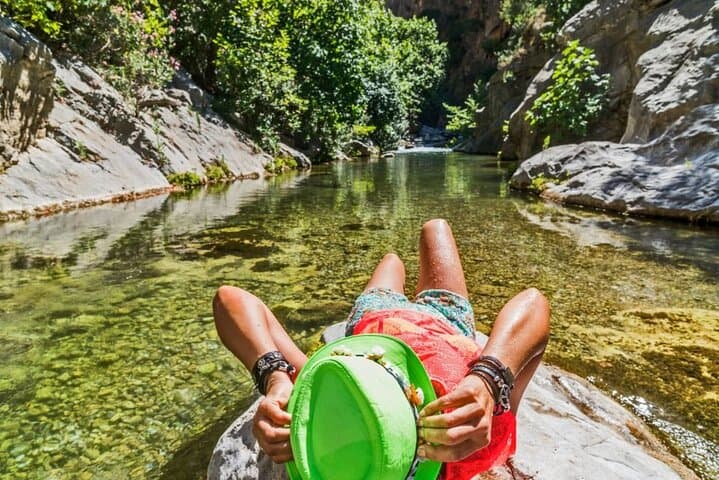
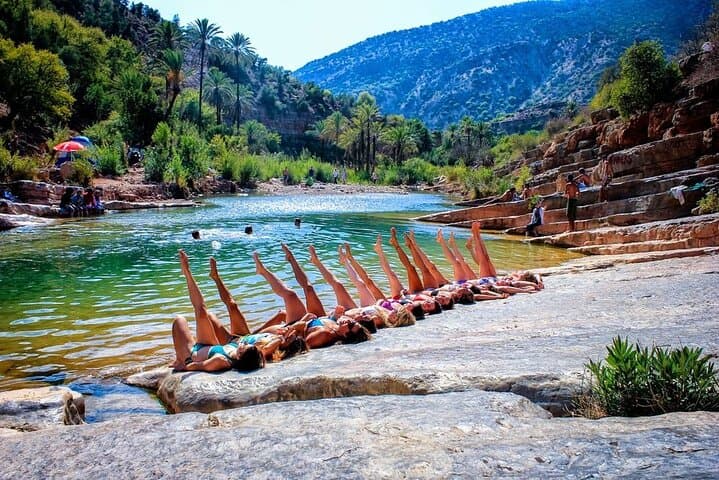
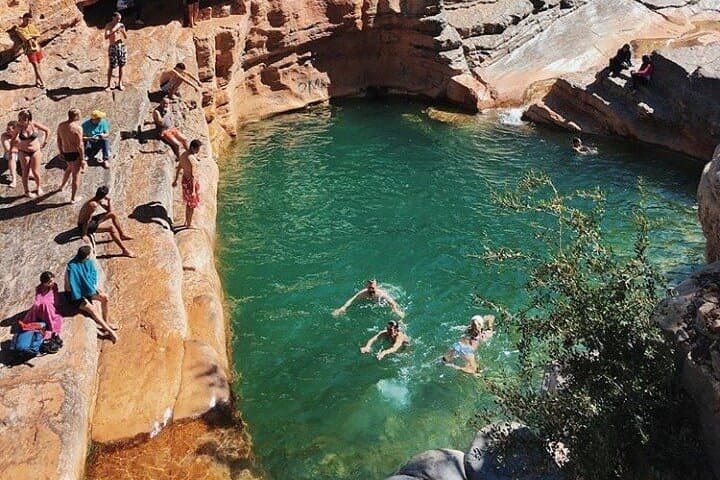
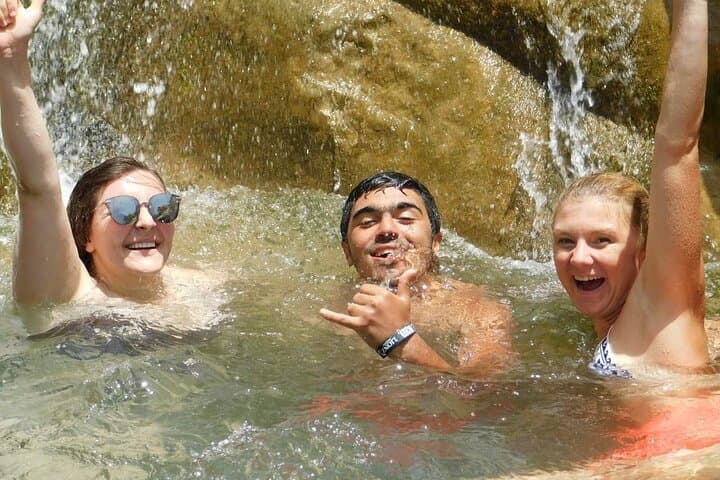
You step off the minibus into scrubbed rock and the dry, warm breath of the Atlas foothills; date palms lean over cliff-edged pools and a narrow river dares you to follow its turquoise thread upstream. The trail drops through argan and olive trees, then opens to a series of carved basins where waterfalls slip into glassy swimming holes—natural plunge pools formed by millennia of water and volcanic rock.
You step off the minibus into scrubbed rock and the dry, warm breath of the Atlas foothills; date palms lean over cliff-edged pools and a narrow river dares you to follow its turquoise thread upstream. The trail drops through argan and olive trees, then opens to a series of carved basins where waterfalls slip into glassy swimming holes—natural plunge pools formed by millennia of water and volcanic rock.
The valley sits on the northern flank of the Anti-Atlas/High Atlas transition zone, where folded sedimentary and volcanic layers create sudden gorges and stepped cliffs. Local villages like Imouzzer have long lived from argan fruit and olive groves; the site earned wider attention in the 1960s as travelers came for sun, swims, and a quieter pace—there’s even a persistent Hendrix-era rumor that gives the place its name.
Expect an active half-day: a foothill drive from Agadir, a 30–60 minute descent to the pools, moderate scrambling beside the river, and time for a dip and a roof-terrace lunch with mountain views. Trails are rocky and uneven; water can be cool even in summer and currents strong after rains. Dress in quick-dry layers, protect skin from sun and rough stone, and carry water—the valley’s fragile argan groves and riparian plants respond poorly to heavy foot traffic.
Practical timing: mornings or late afternoons are best for light and cooler temperatures; avoid the valley after heavy rain when flash flooding can make crossings dangerous. With basic fitness and sensible gear, Paradise Valley gives a short, punchy taste of Morocco’s mountains—sun, stone, and sudden water that pulse like a living thing.