THE ADVENTURE COLLECTIVE® · Independent discovery and booking for outdoor travel

Spend six hours moving from a 1‑km boardwalked cave full of towering calcite formations to an emerald spring where kayaking and jumping are the order of the day. This day trip from Dong Hoi pairs easy walking with refreshing water play and hands‑on local food.
Spend six hours moving from a 1‑km boardwalked cave full of towering calcite formations to an emerald spring where kayaking and jumping are the order of the day. This day trip from Dong Hoi pairs easy walking with refreshing water play and hands‑on local food.
Morning light slices into a limestone gorge as the minivan eases off the Ho Chi Minh route and the jungle leans in. You step onto compacted earth beneath a canopy of fig and fern; a hush hangs at the cave mouth while airflow from the depths cools your face.
Verified experiences and guided adventures in the surrounding area.
Operated by Netin Travel · Dong Hoi, Quang Binh
Morning light slices into a limestone gorge as the minivan eases off the Ho Chi Minh route and the jungle leans in. You step onto compacted earth beneath a canopy of fig and fern; a hush hangs at the cave mouth while airflow from the depths cools your face.
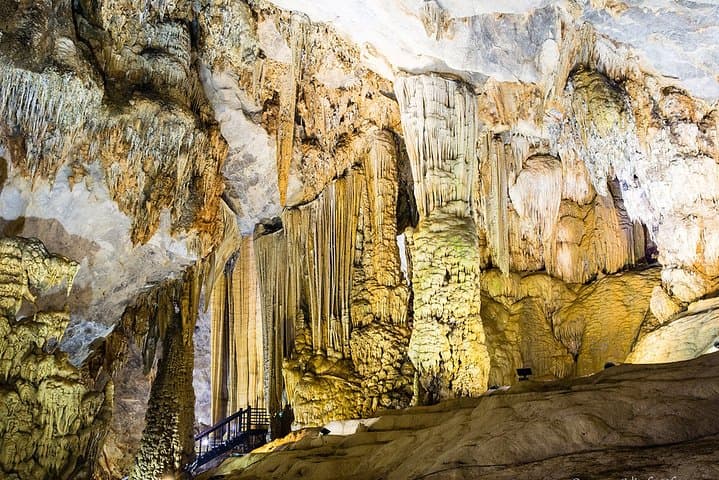
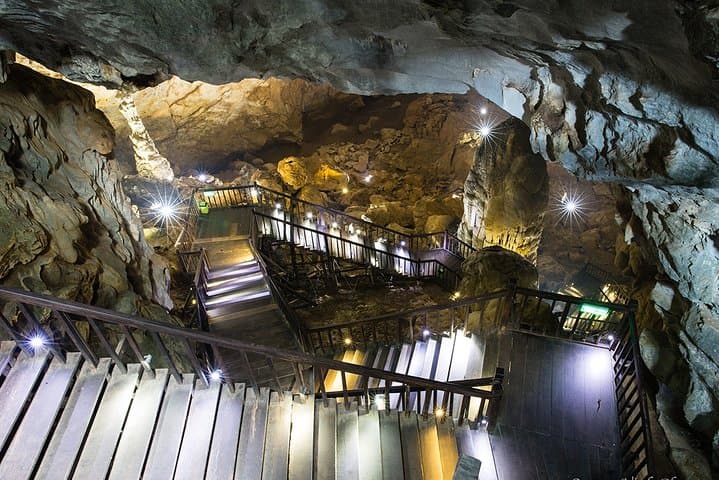
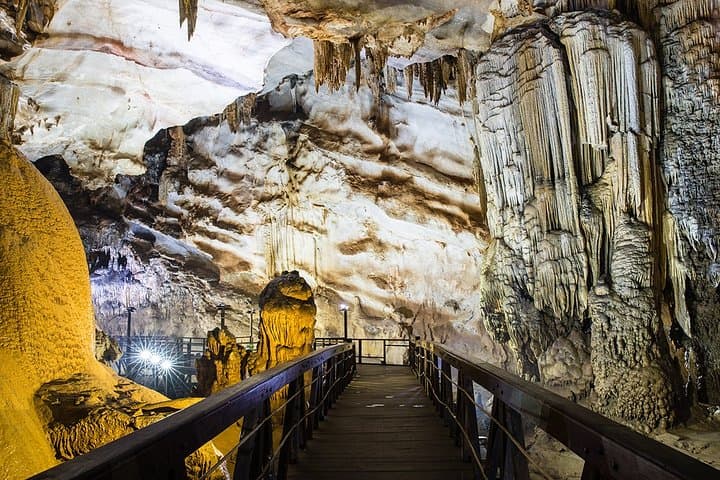
Inside Thien Duong (Paradise Cave) a 1-kilometer tourist route unspools across wooden boardwalks beneath towering columns and curtains of calcite. The cave’s chambers open and close like pages, stalactites hanging in slow, patient rows formed over millennia by dripping water. Geologically this is karst country—limestone reef folded, eroded and hollowed by underground rivers—part of the UNESCO-listed Phong Nha–Ke Bang system.
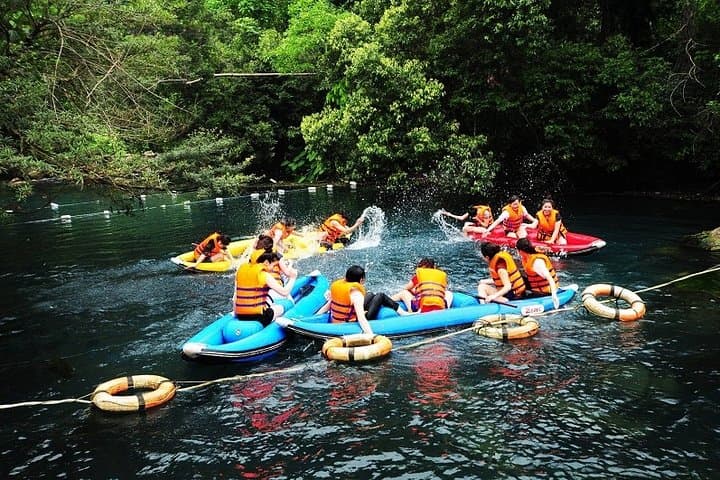
Lunch in the nearby village brings grilled chicken, sticky rice and local herbs; the food is honest and the people are straightforward, proud of their landscape. After the cave the emerald pool at Suoi Nuoc Mooc invites you in: the spring’s current dares you to jump, kayaks bob on glassy water, and shaded trails offer quiet spots to listen to swiftlets and distant waterfalls.
Practical details: expect a 68 km drive from Dong Hoi and a six-hour excursion with about 1 km of cave walking on boardwalks—no technical climbing or major elevation gain. Bring swimwear, water shoes, sun protection and a small dry bag; life jackets and kayaks provided. Visit early to avoid heat and crowds; follow park rules (don’t touch formations) and carry Vietnamese dong. This route pairs big karst views with straightforward logistics. Guides can arrange transfers and tickets.
moderate.
6 hours.
Light to moderate fitness — able to walk about 1 km on boardwalks and join light water activity.
The guided visitor route through Paradise Cave is about 1 km and typically takes 60–90 minutes including stops for photos.
Yes — the spring is clear and generally shallow in visitor areas; life jackets and kayaks are provided for safety.
Yes; the activity is family-friendly. Infants may need to sit on an adult's lap during transport and close supervision is recommended at the spring.
Most operators offer English-speaking guides; check in advance if you require another language or private guiding services.
Paradise Cave was explored and surveyed only recently (first public exploration in 2005) and sits within the ancient karst massif of Phong Nha–Ke Bang, formed from uplifted limestone reef.
Phong Nha–Ke Bang is a UNESCO World Heritage site; visitors should stick to paths, avoid touching formations and minimize waste to protect fragile karst ecosystems.
Netin Travel operates guided outdoor trips and adventures with an emphasis on safety, stewardship, and memorable experiences.
Morning light slices into a limestone gorge as the minivan eases off the Ho Chi Minh route and the jungle leans in. You step onto compacted earth beneath a canopy of fig and fern; a hush hangs at the cave mouth while airflow from the depths cools your face.
Morning light slices into a limestone gorge as the minivan eases off the Ho Chi Minh route and the jungle leans in. You step onto compacted earth beneath a canopy of fig and fern; a hush hangs at the cave mouth while airflow from the depths cools your face.
Inside Thien Duong (Paradise Cave) a 1-kilometer tourist route unspools across wooden boardwalks beneath towering columns and curtains of calcite. The cave’s chambers open and close like pages, stalactites hanging in slow, patient rows formed over millennia by dripping water. Geologically this is karst country—limestone reef folded, eroded and hollowed by underground rivers—part of the UNESCO-listed Phong Nha–Ke Bang system.
Lunch in the nearby village brings grilled chicken, sticky rice and local herbs; the food is honest and the people are straightforward, proud of their landscape. After the cave the emerald pool at Suoi Nuoc Mooc invites you in: the spring’s current dares you to jump, kayaks bob on glassy water, and shaded trails offer quiet spots to listen to swiftlets and distant waterfalls.
Practical details: expect a 68 km drive from Dong Hoi and a six-hour excursion with about 1 km of cave walking on boardwalks—no technical climbing or major elevation gain. Bring swimwear, water shoes, sun protection and a small dry bag; life jackets and kayaks provided. Visit early to avoid heat and crowds; follow park rules (don’t touch formations) and carry Vietnamese dong. This route pairs big karst views with straightforward logistics. Guides can arrange transfers and tickets.