THE ADVENTURE COLLECTIVE® · Independent discovery and booking for outdoor travel

Travel from Hue to Phong Nha for a day that pairs Vietnam’s wartime history with the hush of Asia’s longest dry cave. Walk under towering chambers, ride a forest tram, and learn the region’s geology and stories.
Travel from Hue to Phong Nha for a day that pairs Vietnam’s wartime history with the hush of Asia’s longest dry cave. Walk under towering chambers, ride a forest tram, and learn the region’s geology and stories.
Morning light breaks over the Perfume River as the van pulls out of Hue and the day stretches toward the limestone throat of Phong Nha-Ke Bang. Rice paddies and war-era roadside markers blur past; by midday you sit under a simple restaurant’s awning in Phong Nha, the air thick with heat and the promise of underground cool.
Verified experiences and guided adventures in the surrounding area.
Operated by Asia Tour Booking · Phong Nha, Quang Binh
Morning light breaks over the Perfume River as the van pulls out of Hue and the day stretches toward the limestone throat of Phong Nha-Ke Bang. Rice paddies and war-era roadside markers blur past; by midday you sit under a simple restaurant’s awning in Phong Nha, the air thick with heat and the promise of underground cool.
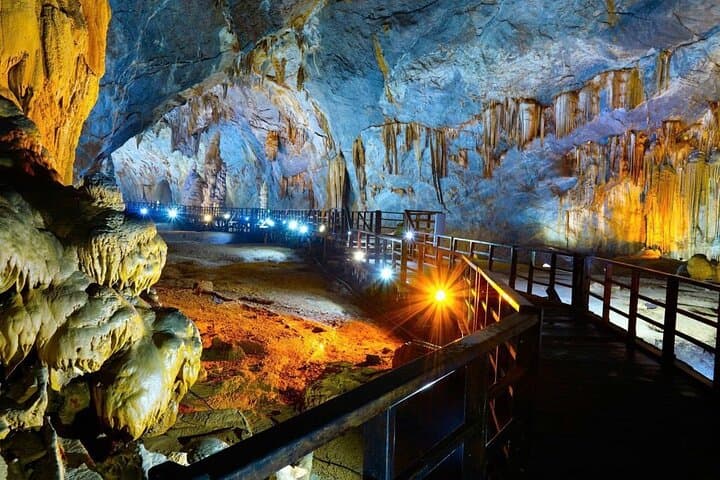
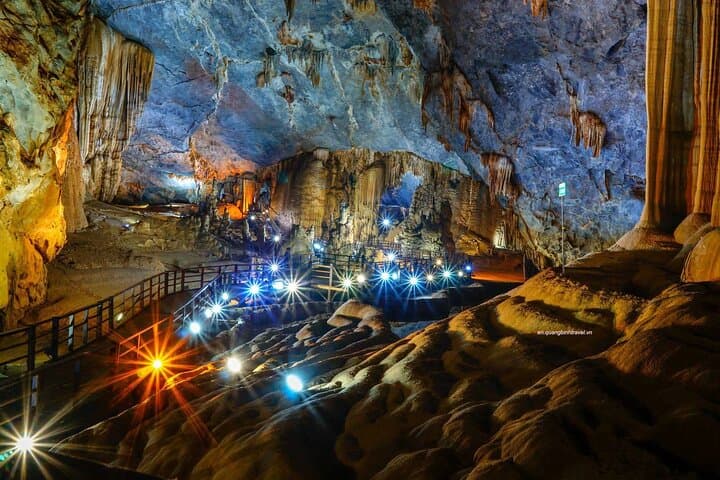
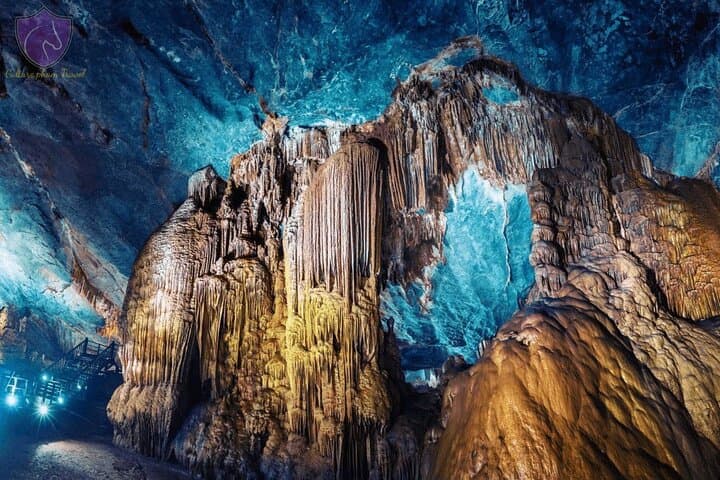
Paradise Cave (Hang Thiên Đường) was opened to the public after British explorers documented it in 2005. The cave sits in some of the oldest karst in Asia — rainwater and time have carved multi-level chambers and formed curtains, stalactites and columns that look like terraces and towers. The tour layers cultural landmarks — La Vang Holy Land, Quang Tri Citadel, Hien Luong Bridge and Ben Hai River — onto natural history, weaving a day of wartime memory and geological deep time.
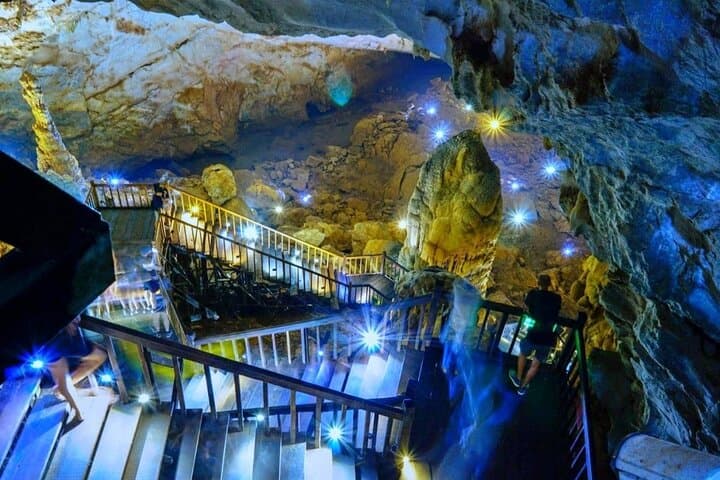
You transfer to a tram that threads a primeval canopy; the cave’s narrow mouth explodes into a ceilinged hall where cool air dares you deeper. Look for formations named Thien Ha Waterfall and Champa Tower and the pockets of silence that only caves keep.
Practical guidance: this is an easy, full-day outing (expect 10–12 hours door-to-door) with some uneven steps and damp surfaces inside the cave. Wear grippy shoes, bring a reusable water bottle, and keep a light layer for the cavern chill. The route is not wheelchair accessible; follow marked paths and avoid touching formations to preserve fragile calcite surfaces. Start early from Hue to avoid midday traffic and get the most time in the park.
easy.
10–12 hours.
Suitable for most fitness levels; expect short walks, stairs, and uneven surfaces inside the cave.
The main show cave walk is about 1–2 hours at a relaxed pace with boardwalks and steps; the full tour day including travel is 10–12 hours.
No—entrances and internal steps mean the tour is not wheelchair accessible.
Yes; the tour includes lunch at a local restaurant in Phong Nha before the cave visit.
Yes—this tour includes admission to Paradise Cave and the tram transfer from the parking lot to the cave foothills.
Paradise Cave was scientifically documented by British explorers in 2005; the day's route also visits Quang Tri, a heavily contested zone during the Vietnam War and the former DMZ along the Ben Hai River.
Phong Nha-Ke Bang is a UNESCO World Heritage site—stay on marked paths, avoid flash photography close to formations, and do not remove rocks or vegetation to limit visitor impact.
Asia Tour Booking operates guided outdoor trips and adventures with an emphasis on safety, stewardship, and memorable experiences.
Morning light breaks over the Perfume River as the van pulls out of Hue and the day stretches toward the limestone throat of Phong Nha-Ke Bang. Rice paddies and war-era roadside markers blur past; by midday you sit under a simple restaurant’s awning in Phong Nha, the air thick with heat and the promise of underground cool.
Morning light breaks over the Perfume River as the van pulls out of Hue and the day stretches toward the limestone throat of Phong Nha-Ke Bang. Rice paddies and war-era roadside markers blur past; by midday you sit under a simple restaurant’s awning in Phong Nha, the air thick with heat and the promise of underground cool.
Paradise Cave (Hang Thiên Đường) was opened to the public after British explorers documented it in 2005. The cave sits in some of the oldest karst in Asia — rainwater and time have carved multi-level chambers and formed curtains, stalactites and columns that look like terraces and towers. The tour layers cultural landmarks — La Vang Holy Land, Quang Tri Citadel, Hien Luong Bridge and Ben Hai River — onto natural history, weaving a day of wartime memory and geological deep time.
You transfer to a tram that threads a primeval canopy; the cave’s narrow mouth explodes into a ceilinged hall where cool air dares you deeper. Look for formations named Thien Ha Waterfall and Champa Tower and the pockets of silence that only caves keep.
Practical guidance: this is an easy, full-day outing (expect 10–12 hours door-to-door) with some uneven steps and damp surfaces inside the cave. Wear grippy shoes, bring a reusable water bottle, and keep a light layer for the cavern chill. The route is not wheelchair accessible; follow marked paths and avoid touching formations to preserve fragile calcite surfaces. Start early from Hue to avoid midday traffic and get the most time in the park.