THE ADVENTURE COLLECTIVE® · Independent discovery and booking for outdoor travel

Leave Hue before sunrise for a full-day drive into Quảng Bình and the UNESCO karst of Phong Nha–Kẻ Bàng. Visit La Vang and the 17th Parallel, then step into Paradise Cave’s cathedral-like chambers — a best-in-region day trip that combines history and geology.
Leave Hue before sunrise for a full-day drive into Quảng Bình and the UNESCO karst of Phong Nha–Kẻ Bàng. Visit La Vang and the 17th Parallel, then step into Paradise Cave’s cathedral-like chambers — a best-in-region day trip that combines history and geology.
A pre-dawn van eases out of Hue and the rice paddies blur into karst towers; by midmorning the road narrows and limestone teeth slice the sky. You pause at La Vang Holy Land, a quiet basilica framed by manicured gardens, then cross the Ben Hai River and Hien Luong Bridge — a slender ribbon of memory between North and South that slows conversation and quickens curiosity.
Verified experiences and guided adventures in the surrounding area.
Operated by Gen Z Tours · Phong Nha, Quang Binh
A pre-dawn van eases out of Hue and the rice paddies blur into karst towers; by midmorning the road narrows and limestone teeth slice the sky. You pause at La Vang Holy Land, a quiet basilica framed by manicured gardens, then cross the Ben Hai River and Hien Luong Bridge — a slender ribbon of memory between North and South that slows conversation and quickens curiosity.
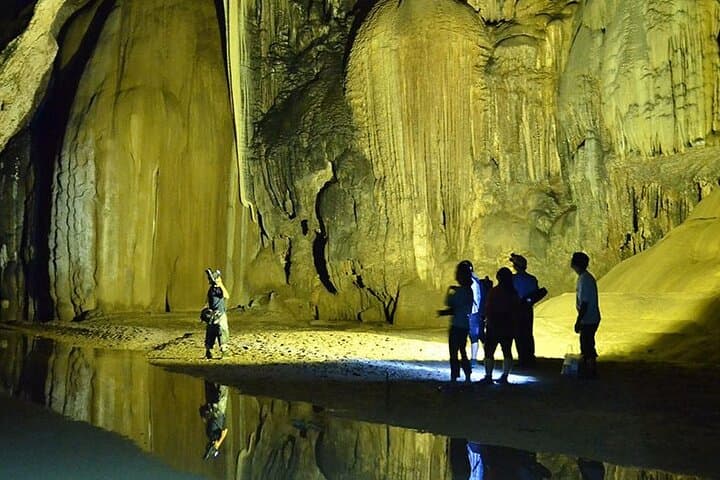
Further north the landscape becomes uncompromising: steep limestone slopes, sinkholes, and caves carved over millions of years. Phong Nha–Kẻ Bàng is UNESCO-listed for this karst geology, and Paradise Cave (Hang Thiên Đường) is its signature cavern — roughly 31 kilometers mapped in total, with enormous chambers and curtains of calcite that fall from the ceiling like frozen waterfalls.
Visitors explore the lit “show” section via a raised wooden walkway and steps; ceilings soar above you and stalactites and stalagmites take on sculptural forms under strategic illumination. The tour pairs natural history with human history — memorials at Ben Hai and the pilgrimage site at La Vang frame the day with cultural context before you enter the cool hush of the cave.
Practical notes: tours are full-day (about 10–11 hours round trip from Hue), lunch and entrance fees are included, and an electric vehicle is used inside the cave area for short transfers. Wear sturdy walking shoes, pack a light layer for the cave’s steady cool, and bring a charged camera — lighting is dramatic but low. Plan for steady but easy walking on stairs and boardwalks; mobility is manageable for most visitors. Late afternoon returns to Hue give time to reflect on both the region’s history and one of Asia’s most striking subterranean landscapes.
easy.
10–11 hours.
Suitable for people with average fitness; involves walking on stairs and boardwalks but no technical climbing.
Expect a full day: roughly 10–11 hours total including pickups, cultural stops, transfers, and the cave visit.
No — the visitor route is a maintained walkway with steps; it’s rated easy and suitable for most ages, though some stair climbing is required.
Yes — the tour typically includes entrance fees, lunch, bottled water, and the electric car transfer near the cave.
Yes — photography is allowed, but bring extra batteries and stabilize your camera for low-light shots; flash can be used but may wash out details.
The itinerary threads local history into the landscape: La Vang is a major Catholic pilgrimage site, and Ben Hai River/Hien Luong Bridge mark the former 17th Parallel dividing Vietnam.
Phong Nha–Kẻ Bàng is UNESCO-protected; visitors should stay on boardwalks, avoid touching formations, and follow local guides to reduce impact on fragile cave ecosystems.
Gen Z Tours operates guided outdoor trips and adventures with an emphasis on safety, stewardship, and memorable experiences.


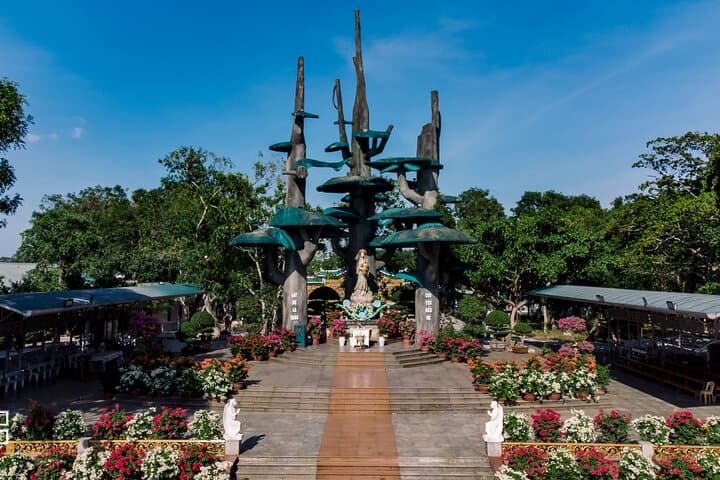
A pre-dawn van eases out of Hue and the rice paddies blur into karst towers; by midmorning the road narrows and limestone teeth slice the sky. You pause at La Vang Holy Land, a quiet basilica framed by manicured gardens, then cross the Ben Hai River and Hien Luong Bridge — a slender ribbon of memory between North and South that slows conversation and quickens curiosity.
A pre-dawn van eases out of Hue and the rice paddies blur into karst towers; by midmorning the road narrows and limestone teeth slice the sky. You pause at La Vang Holy Land, a quiet basilica framed by manicured gardens, then cross the Ben Hai River and Hien Luong Bridge — a slender ribbon of memory between North and South that slows conversation and quickens curiosity.
Further north the landscape becomes uncompromising: steep limestone slopes, sinkholes, and caves carved over millions of years. Phong Nha–Kẻ Bàng is UNESCO-listed for this karst geology, and Paradise Cave (Hang Thiên Đường) is its signature cavern — roughly 31 kilometers mapped in total, with enormous chambers and curtains of calcite that fall from the ceiling like frozen waterfalls.
Visitors explore the lit “show” section via a raised wooden walkway and steps; ceilings soar above you and stalactites and stalagmites take on sculptural forms under strategic illumination. The tour pairs natural history with human history — memorials at Ben Hai and the pilgrimage site at La Vang frame the day with cultural context before you enter the cool hush of the cave.
Practical notes: tours are full-day (about 10–11 hours round trip from Hue), lunch and entrance fees are included, and an electric vehicle is used inside the cave area for short transfers. Wear sturdy walking shoes, pack a light layer for the cave’s steady cool, and bring a charged camera — lighting is dramatic but low. Plan for steady but easy walking on stairs and boardwalks; mobility is manageable for most visitors. Late afternoon returns to Hue give time to reflect on both the region’s history and one of Asia’s most striking subterranean landscapes.