THE ADVENTURE COLLECTIVE® · Independent discovery and booking for outdoor travel

Spend a full day from Lima exploring Ballestas Islands wildlife, touring South America’s oldest vineyards with pisco tastings, and finishing with sunset buggies and sandboarding at Huacachina. This all-inclusive run covers transport, meals, and activities for a single, long coastal desert day.
Spend a full day from Lima exploring Ballestas Islands wildlife, touring South America’s oldest vineyards with pisco tastings, and finishing with sunset buggies and sandboarding at Huacachina. This all-inclusive run covers transport, meals, and activities for a single, long coastal desert day.
A salt spray prickles the air as the highway loosens Lima behind you — desert opens like a folded map, pale and wide. By midmorning the sea narrows into the Ballestas archipelago: speedboat wakes carve through kelp beds while colonies of sea lions roar and Humboldt penguins bob among cormorants. Later, sun-bleached vineyards spill across low terraces in Ica, where the region’s long pisco tradition is laid out over barrels and tasting flights. The day closes at Huacachina: a pocket of green around a small lagoon, its dunes glowing gold as buggies climb ridgelines and sandboards whistle down steep faces at sunset.
Verified experiences and guided adventures in the surrounding area.
Operated by Berrios Travel · Paracas, Ica
A salt spray prickles the air as the highway loosens Lima behind you — desert opens like a folded map, pale and wide. By midmorning the sea narrows into the Ballestas archipelago: speedboat wakes carve through kelp beds while colonies of sea lions roar and Humboldt penguins bob among cormorants. Later, sun-bleached vineyards spill across low terraces in Ica, where the region’s long pisco tradition is laid out over barrels and tasting flights. The day closes at Huacachina: a pocket of green around a small lagoon, its dunes glowing gold as buggies climb ridgelines and sandboards whistle down steep faces at sunset.
This route threads history and geology — Paracas culture pottery and textile fragments date back over two millennia, and the enigmatic Paracas Candelabra geoglyph marks the coastal cliffs. The coastal desert is part of the southern Peruvian arid belt shaped by upwelling Humboldt currents and wind-scoured dunes, which both concentrate marine life offshore and create the raw slopes of Huacachina.
Practical guidance: it’s a long but accessible day (roughly 15–16 hours door-to-door from Lima). Expect transfers on paved highways, a 60–90 minute speedboat segment, a 2-hour vineyard visit with tasting, and dune buggy/sandboarding on soft sand with minimal elevation gain but unstable footing. Bring sun protection, seasickness meds if prone, and closed-toe shoes for the dunes. The schedule targets sunset for sandboarding — plan hydration and layered clothes for a rapid temperature drop after dark. Book a private transfer for flexibility and look for operators who follow wildlife viewing distances in the Ballestas to protect colonies.
moderate.
15–16 hours.
Suitable for most fitness levels; expect multiple short walks, sand travel and some bumpy vehicle rides
The tour runs roughly 15–16 hours door-to-door, typically starting early morning and returning late evening.
Yes — Ballestas commonly hosts Humboldt penguins, sea lions, pelicans and various seabirds; sightings are frequent but not guaranteed.
No — operators provide basic instruction and dust-off practice runs; expect some falls on steep dunes but guides usually accommodate beginners.
Yes — the itinerary lists breakfast, bottled water, a la carte lunch at the vineyard and non-alcoholic drinks; a Pisco Sour is typically offered with lunch.
The Paracas region has archaeological sites and textiles dating back over 2,000 years; the Candelabra geoglyph predates the Inca and its purpose remains debated.
Ballestas lies adjacent to Paracas National Reserve — respect viewing distances, avoid throwing objects from boats, and follow guides to reduce disturbance to breeding colonies.
Berrios Travel operates guided outdoor trips and adventures with an emphasis on safety, stewardship, and memorable experiences.

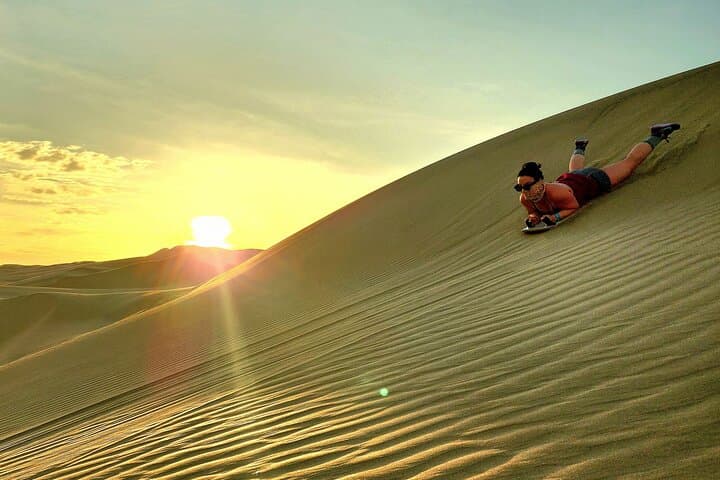
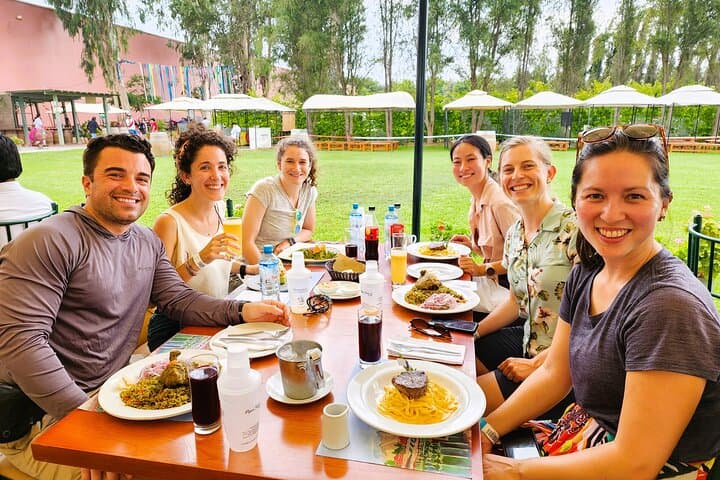
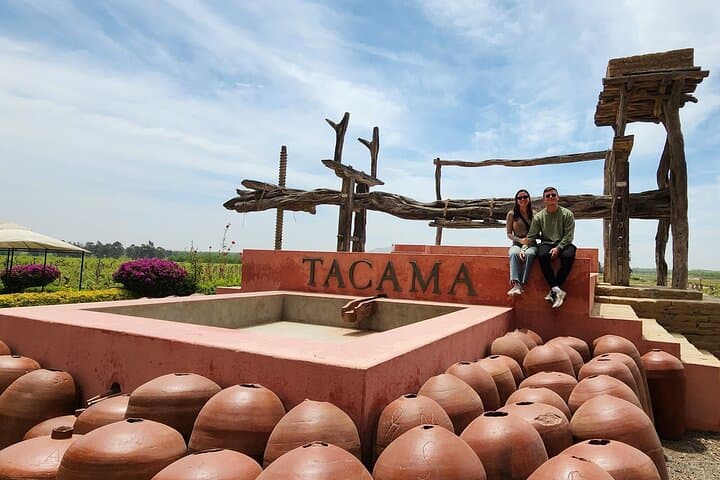
A salt spray prickles the air as the highway loosens Lima behind you — desert opens like a folded map, pale and wide. By midmorning the sea narrows into the Ballestas archipelago: speedboat wakes carve through kelp beds while colonies of sea lions roar and Humboldt penguins bob among cormorants. Later, sun-bleached vineyards spill across low terraces in Ica, where the region’s long pisco tradition is laid out over barrels and tasting flights. The day closes at Huacachina: a pocket of green around a small lagoon, its dunes glowing gold as buggies climb ridgelines and sandboards whistle down steep faces at sunset.
A salt spray prickles the air as the highway loosens Lima behind you — desert opens like a folded map, pale and wide. By midmorning the sea narrows into the Ballestas archipelago: speedboat wakes carve through kelp beds while colonies of sea lions roar and Humboldt penguins bob among cormorants. Later, sun-bleached vineyards spill across low terraces in Ica, where the region’s long pisco tradition is laid out over barrels and tasting flights. The day closes at Huacachina: a pocket of green around a small lagoon, its dunes glowing gold as buggies climb ridgelines and sandboards whistle down steep faces at sunset.
This route threads history and geology — Paracas culture pottery and textile fragments date back over two millennia, and the enigmatic Paracas Candelabra geoglyph marks the coastal cliffs. The coastal desert is part of the southern Peruvian arid belt shaped by upwelling Humboldt currents and wind-scoured dunes, which both concentrate marine life offshore and create the raw slopes of Huacachina.
Practical guidance: it’s a long but accessible day (roughly 15–16 hours door-to-door from Lima). Expect transfers on paved highways, a 60–90 minute speedboat segment, a 2-hour vineyard visit with tasting, and dune buggy/sandboarding on soft sand with minimal elevation gain but unstable footing. Bring sun protection, seasickness meds if prone, and closed-toe shoes for the dunes. The schedule targets sunset for sandboarding — plan hydration and layered clothes for a rapid temperature drop after dark. Book a private transfer for flexibility and look for operators who follow wildlife viewing distances in the Ballestas to protect colonies.