THE ADVENTURE COLLECTIVE® · Independent discovery and booking for outdoor travel

Experience Papandayan’s steam-shrouded craters at sunrise and pair the volcano walk with a visit to Kampung Naga and terrace ricefields. Early starts, volcanic terrain, and hydrothermal features make this a compact, elemental day trip from Garut.
Experience Papandayan’s steam-shrouded craters at sunrise and pair the volcano walk with a visit to Kampung Naga and terrace ricefields. Early starts, volcanic terrain, and hydrothermal features make this a compact, elemental day trip from Garut.
Before dawn you leave Garut’s streetlights behind and head into highland mist; the road climbs, villages thin out and the air sharpens. At the Papandayan trailhead the world opens to a moonscape of steaming fumaroles, turquoise seep-pools and a ring of jagged crater rims. Walks here feel elemental: the ground hisses, sulfur fumes carry, and peat-strewn grasslands roll toward distant ridgelines.
Verified experiences and guided adventures in the surrounding area.
Operated by Umien Moritz tours organizer · Garut, West Java
Before dawn you leave Garut’s streetlights behind and head into highland mist; the road climbs, villages thin out and the air sharpens. At the Papandayan trailhead the world opens to a moonscape of steaming fumaroles, turquoise seep-pools and a ring of jagged crater rims. Walks here feel elemental: the ground hisses, sulfur fumes carry, and peat-strewn grasslands roll toward distant ridgelines.
Geologically Papandayan is a complex stratovolcano (approx. 2,665 m) shaped by multiple eruptions, most notably 2002, which left dead forest and fresh volcanic stone. The area combines hydrothermal features—geysers, solfataras and acid pools—with grassy highlands used by local Sundanese communities. Cultural stops include Kampung Naga, a traditional Sundanese village known for strict preservation of ancestral architecture and rice terrace farming along the return route.
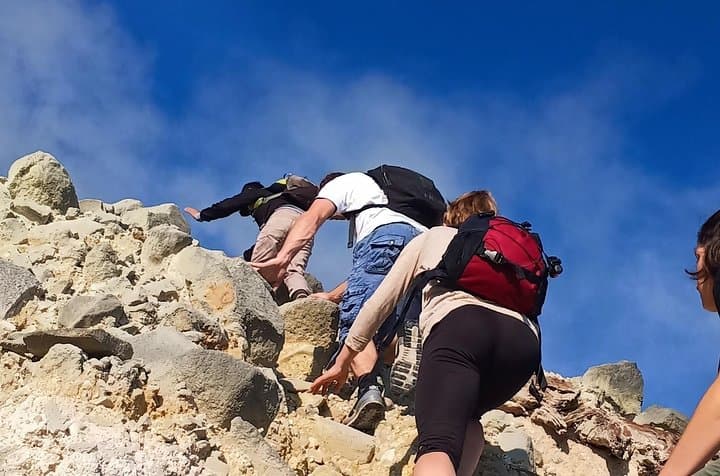
Practically, expect a day of early starts (sunrise options available), a 4–6 km round-trip on mixed terrain and roughly 300–450 m of elevation gain depending on your route. Trails alternate between muddy volcanic scree, compacted footpaths and short boardwalks near fragile fumaroles—closed or flagged routes protect unstable zones. Guides carry basic masks and torches; strong gases can make short detours necessary.
Bring layered clothing, a headlamp for pre-dawn sections, and sufficient water; plan for 8–10 hours including transfers. If time allows, relax in a nearby natural hot spring or walk the terrace ricefields after lunch. Respect marked boundaries around vents, follow your guide’s instructions and pack out all trash to protect the unique hydrothermal landscape.
moderate.
8–10 hours.
Suitable for reasonably fit travelers comfortable with 4–6 km of hiking and 300–450 m elevation gain; some uneven terrain.
Plan for roughly 4–6 km round-trip on the volcano portion, typically 2–3 hours depending on stops and pace.
Guides monitor gas conditions and keep visitors away from dangerous vents; those with respiratory issues should avoid the tour.
Sunrise programs usually offer pickups from Bandung (very early) or Garut (slightly later); confirm pickup time when booking.
This tour description indicates admission is included; verify final details with the operator before travel.
Papandayan’s modern landscape was reshaped by eruptions over centuries, with the 2002 event creating extensive dead forest and new geothermal features that define today’s trails.
The hydrothermal area is fragile—stay on trails, avoid collecting sulfur, and pack out waste; local guides help prevent damage and respect village customs.
Umien Moritz tours organizer operates guided outdoor trips and adventures with an emphasis on safety, stewardship, and memorable experiences.
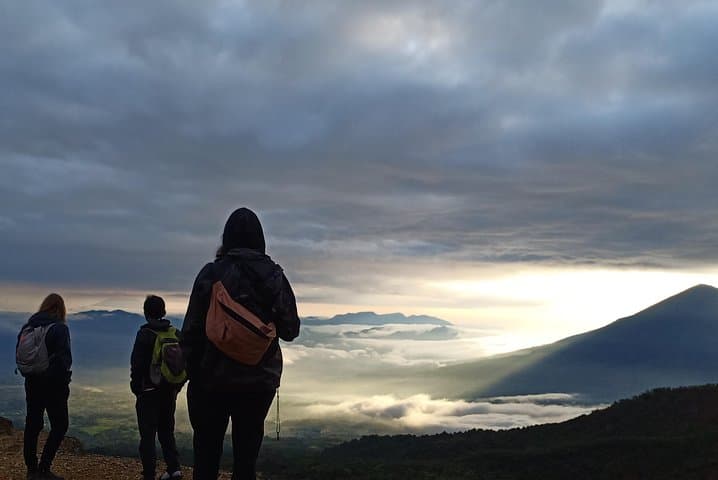


Before dawn you leave Garut’s streetlights behind and head into highland mist; the road climbs, villages thin out and the air sharpens. At the Papandayan trailhead the world opens to a moonscape of steaming fumaroles, turquoise seep-pools and a ring of jagged crater rims. Walks here feel elemental: the ground hisses, sulfur fumes carry, and peat-strewn grasslands roll toward distant ridgelines.
Before dawn you leave Garut’s streetlights behind and head into highland mist; the road climbs, villages thin out and the air sharpens. At the Papandayan trailhead the world opens to a moonscape of steaming fumaroles, turquoise seep-pools and a ring of jagged crater rims. Walks here feel elemental: the ground hisses, sulfur fumes carry, and peat-strewn grasslands roll toward distant ridgelines.
Geologically Papandayan is a complex stratovolcano (approx. 2,665 m) shaped by multiple eruptions, most notably 2002, which left dead forest and fresh volcanic stone. The area combines hydrothermal features—geysers, solfataras and acid pools—with grassy highlands used by local Sundanese communities. Cultural stops include Kampung Naga, a traditional Sundanese village known for strict preservation of ancestral architecture and rice terrace farming along the return route.
Practically, expect a day of early starts (sunrise options available), a 4–6 km round-trip on mixed terrain and roughly 300–450 m of elevation gain depending on your route. Trails alternate between muddy volcanic scree, compacted footpaths and short boardwalks near fragile fumaroles—closed or flagged routes protect unstable zones. Guides carry basic masks and torches; strong gases can make short detours necessary.
Bring layered clothing, a headlamp for pre-dawn sections, and sufficient water; plan for 8–10 hours including transfers. If time allows, relax in a nearby natural hot spring or walk the terrace ricefields after lunch. Respect marked boundaries around vents, follow your guide’s instructions and pack out all trash to protect the unique hydrothermal landscape.