THE ADVENTURE COLLECTIVE® · Independent discovery and booking for outdoor travel

Escape Oslo for a half-day guided hike into the highlands and stand above the fjord where forested ridges yield sweeping water views. This accessible outing mixes serene lake crossings, glacial geology, and panoramic summits within easy reach of the city.
Escape Oslo for a half-day guided hike into the highlands and stand above the fjord where forested ridges yield sweeping water views. This accessible outing mixes serene lake crossings, glacial geology, and panoramic summits within easy reach of the city.
You step away from the roar of trams at Jernbanetorget, the tiger statue shrinking behind you, and the city’s edges melt into a quiet of spruce and old birch.
Verified experiences and guided adventures in the surrounding area.
Operated by Oslo Efoil · Oslo, Oslo
You step away from the roar of trams at Jernbanetorget, the tiger statue shrinking behind you, and the city’s edges melt into a quiet of spruce and old birch.
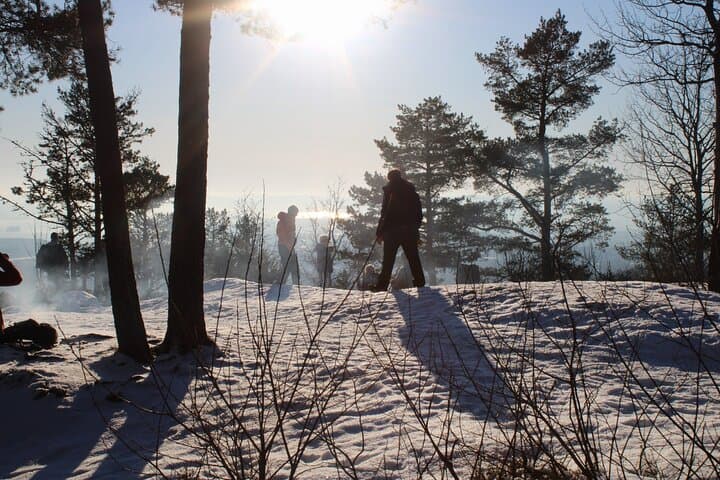
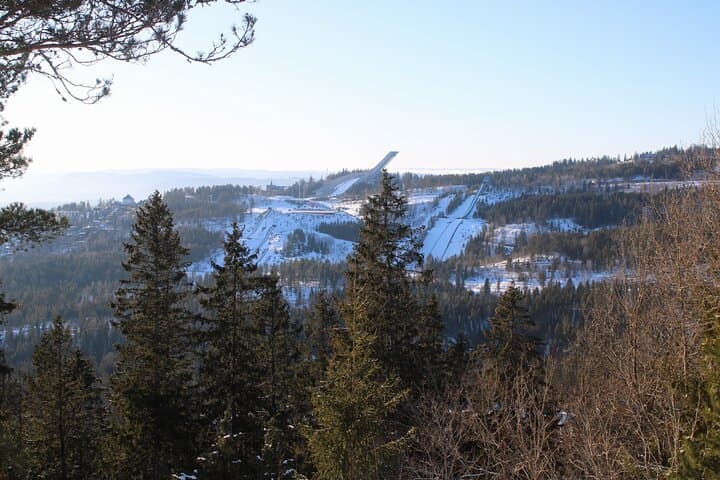
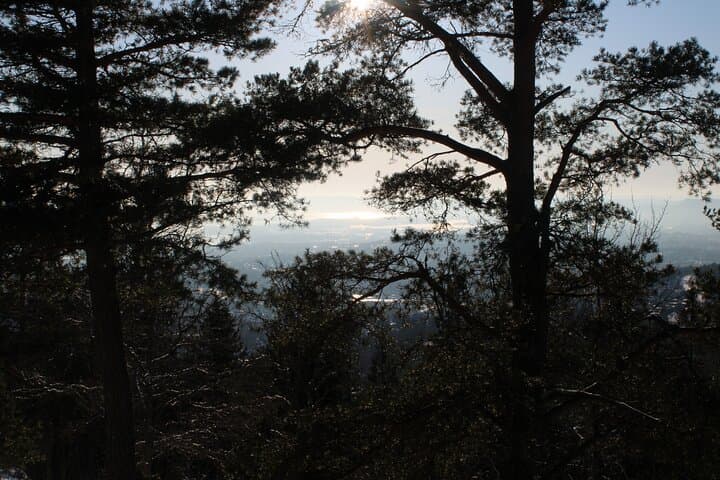
The trail climbs through highland ridges where the forest opens in unexpected frames of water—fjords threading toward the sea like ink on paper. Wind teases the treetops and the fjord below seems to dare you to keep moving until a viewpoint rewards the effort with a sweeping, layered panorama of blue water and distant islands.
This landscape owes its shape to the last ice age: glacial scouring left rocky ridges and kettle lakes that now hold clear, cold water. The woodlands here were worked for timber in the 18th and 19th centuries and later set aside as recreation for Oslo’s growing population; today the trails balance local outdoor traditions and modern conservation.
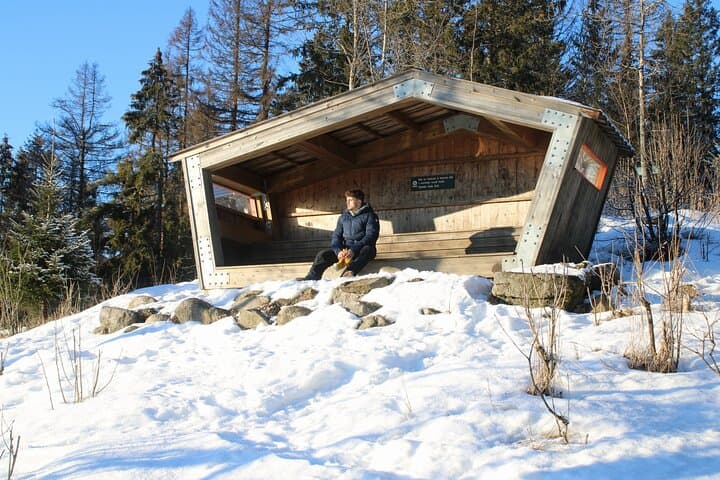
Expect a mix of packed forest paths, rock slabs, and short steeper pitches—typical of Nordmarka-style terrain—across roughly 8–12 km with about 300–500 m of elevation gain depending on route. In summer the trail is soft and green, in winter it becomes a hush of snow and ice that demands traction.
Practical guidance: plan for 4–5 hours on a guided outing, bring layered waterproofs, traction in winter, and enough water (1–1.5 L). Public transport from Oslo Central to trailheads is frequent; the meeting point at Jernbanetorget is easy to reach. Leave no trace, watch for rapidly changing weather, and time your ascent for morning or late afternoon light when fjord views sharpen and the forest seems to breathe with you.
moderate.
4–5 hours.
Comfortable on varied terrain and able to handle steady uphill sections; good for regular walkers and moderately fit hikers.
Expect about 4–5 hours on a guided route of roughly 8–12 km with 300–500 m elevation gain; it’s moderate with short steep sections but suitable for regular walkers.
Yes—guides modulate pace and the route is chosen for accessibility, though participants should be able to handle steady uphill walking.
Yes—the tour meets at Jernbanetorget near Oslo Central Station, which is served by metro, tram, and buses for easy access.
Layered insulating clothing, a waterproof outer layer, warm gloves, hat, and traction devices like microspikes are recommended for icy trails.
The highland woodlands around Oslo were historically used for timber and hunting; by the 19th century they became important urban recreational areas and remain managed for public access today.
Many of these forests and lakes are part of municipal water catchments and recreational reserves—follow leave-no-trace principles and avoid contaminating water sources.
Oslo Efoil operates guided outdoor trips and adventures with an emphasis on safety, stewardship, and memorable experiences.
You step away from the roar of trams at Jernbanetorget, the tiger statue shrinking behind you, and the city’s edges melt into a quiet of spruce and old birch.
You step away from the roar of trams at Jernbanetorget, the tiger statue shrinking behind you, and the city’s edges melt into a quiet of spruce and old birch.
The trail climbs through highland ridges where the forest opens in unexpected frames of water—fjords threading toward the sea like ink on paper. Wind teases the treetops and the fjord below seems to dare you to keep moving until a viewpoint rewards the effort with a sweeping, layered panorama of blue water and distant islands.
This landscape owes its shape to the last ice age: glacial scouring left rocky ridges and kettle lakes that now hold clear, cold water. The woodlands here were worked for timber in the 18th and 19th centuries and later set aside as recreation for Oslo’s growing population; today the trails balance local outdoor traditions and modern conservation.
Expect a mix of packed forest paths, rock slabs, and short steeper pitches—typical of Nordmarka-style terrain—across roughly 8–12 km with about 300–500 m of elevation gain depending on route. In summer the trail is soft and green, in winter it becomes a hush of snow and ice that demands traction.
Practical guidance: plan for 4–5 hours on a guided outing, bring layered waterproofs, traction in winter, and enough water (1–1.5 L). Public transport from Oslo Central to trailheads is frequent; the meeting point at Jernbanetorget is easy to reach. Leave no trace, watch for rapidly changing weather, and time your ascent for morning or late afternoon light when fjord views sharpen and the forest seems to breathe with you.