THE ADVENTURE COLLECTIVE® · Independent discovery and booking for outdoor travel

Launch from Riffelberg or Blauherd and float 15–20 minutes in tandem with a Swiss-certified pilot, with the Matterhorn framed below. This Zermatt paragliding experience combines raw alpine views with accessible, safety-focused flying.
Launch from Riffelberg or Blauherd and float 15–20 minutes in tandem with a Swiss-certified pilot, with the Matterhorn framed below. This Zermatt paragliding experience combines raw alpine views with accessible, safety-focused flying.
The air above Zermatt tastes like cold stone and altitude; you sprint with your pilot, the wing fills, and the valley loosens beneath you. For 15–20 minutes the Matterhorn stands like a sharp compass point as the paraglider drifts across glaciers, knife-edged ridges and sun-bright pastures, the village of Zermatt a tight cluster below.
Verified experiences and guided adventures in the surrounding area.
Operated by Matterhorn Paragliding · Zermatt, Valais
The air above Zermatt tastes like cold stone and altitude; you sprint with your pilot, the wing fills, and the valley loosens beneath you. For 15–20 minutes the Matterhorn stands like a sharp compass point as the paraglider drifts across glaciers, knife-edged ridges and sun-bright pastures, the village of Zermatt a tight cluster below.
This is alpine flying in classic Swiss terrain: Pennine Alps granite and metamorphic folds carved by Pleistocene glaciers. Zermatt grew from a remote pastoral hamlet into a mountaineering hub after the Matterhorn’s first ascent in 1865; today paragliding joins climbing and skiing as a way to read the landscape from a new angle. Local pilots are Swiss-certified and familiar with thermals, föhn winds and the microclimates that complicate flights around horn-like peaks.
Practically, flights launch from Riffelberg or Blauherd (~2,600 m) depending on weather, and land back in Zermatt. You’ll meet at the base of the Gornergrat railway station; pilots provide helmets, gloves and suits if needed. Bring a halffare or SwissPass if you want a discounted lift to takeoff, and expect staff to advise on the same day if conditions shift.
This is an introductory tandem: no prior experience required, but organizers set age, weight and health limits for safety. Time your flight for morning or late afternoon light, when thermals are gentler. Hydrate, layer, and leave bulky bags in town—then let the wind do the telling.
moderate.
1–1.5 hours (total meeting-to-return); 15–20 minutes in-air.
Moderate fitness for a short run at launch and stable core control during landing; able-bodied participants preferred
Flights over Zermatt typically last 15–20 minutes in the air; the full meeting, lift and briefing window is about 60–90 minutes.
Meeting point is the bottom station of the Gornergrat railway (outside under the clock); landings are in Zermatt village near the rendezvous area.
Yes—operators limit participants by weight (about 100 kg/220 lbs), maximum age restrictions and health considerations; disclose any spinal, pregnancy or serious medical issues when booking.
No—the cable car/rail ticket to takeoff is not included, but pilots can assist with purchasing on site; SwissPass or halffare cards may reduce the fare.
Zermatt’s ascent to an international mountaineering center began after the Matterhorn’s 1865 first ascent; local guiding traditions evolved alongside the arrival of tourist railways in the late 19th century.
The high-alpine environment is sensitive—stick to marked paths, pack out waste and follow pilot guidance to minimize disturbance to wildlife and vegetation.
Matterhorn Paragliding operates guided outdoor trips and adventures with an emphasis on safety, stewardship, and memorable experiences.
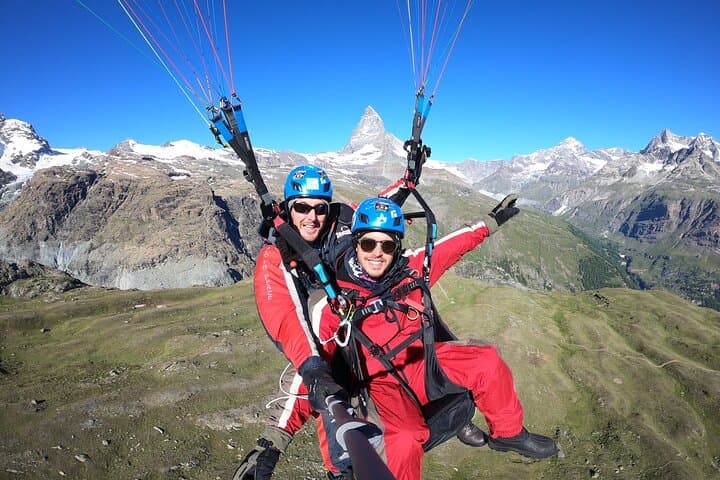
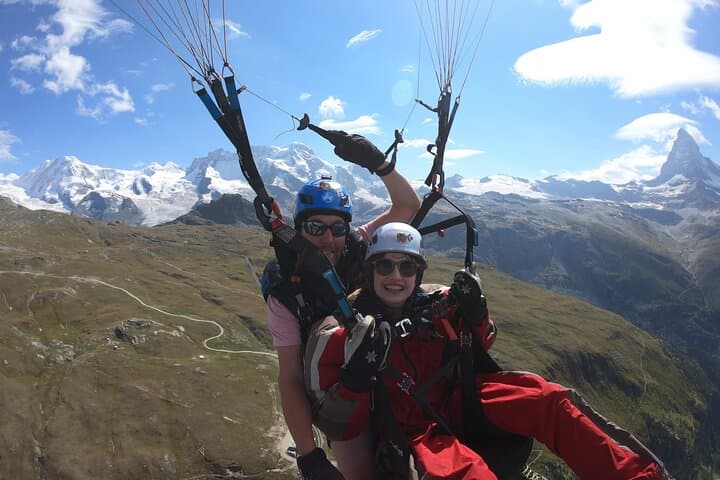
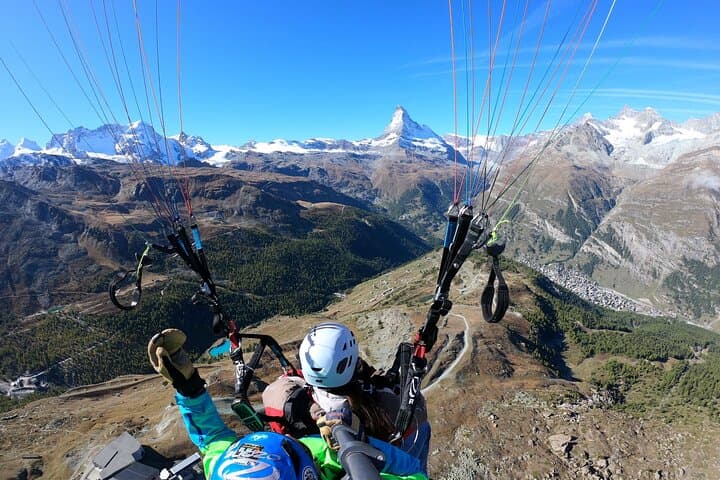
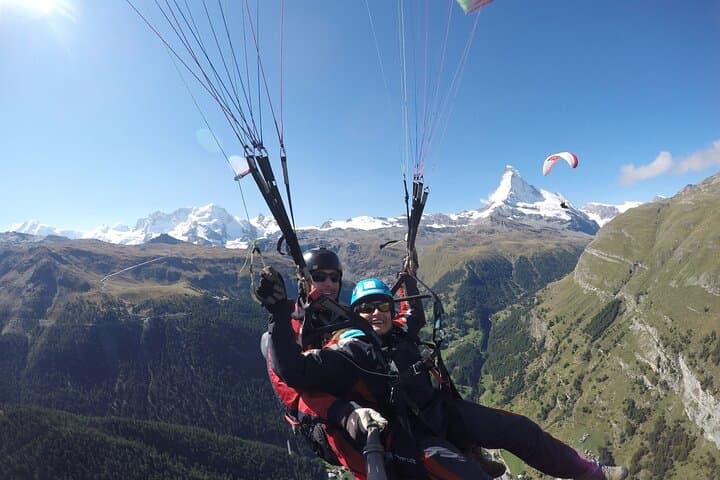
The air above Zermatt tastes like cold stone and altitude; you sprint with your pilot, the wing fills, and the valley loosens beneath you. For 15–20 minutes the Matterhorn stands like a sharp compass point as the paraglider drifts across glaciers, knife-edged ridges and sun-bright pastures, the village of Zermatt a tight cluster below.
The air above Zermatt tastes like cold stone and altitude; you sprint with your pilot, the wing fills, and the valley loosens beneath you. For 15–20 minutes the Matterhorn stands like a sharp compass point as the paraglider drifts across glaciers, knife-edged ridges and sun-bright pastures, the village of Zermatt a tight cluster below.
This is alpine flying in classic Swiss terrain: Pennine Alps granite and metamorphic folds carved by Pleistocene glaciers. Zermatt grew from a remote pastoral hamlet into a mountaineering hub after the Matterhorn’s first ascent in 1865; today paragliding joins climbing and skiing as a way to read the landscape from a new angle. Local pilots are Swiss-certified and familiar with thermals, föhn winds and the microclimates that complicate flights around horn-like peaks.
Practically, flights launch from Riffelberg or Blauherd (~2,600 m) depending on weather, and land back in Zermatt. You’ll meet at the base of the Gornergrat railway station; pilots provide helmets, gloves and suits if needed. Bring a halffare or SwissPass if you want a discounted lift to takeoff, and expect staff to advise on the same day if conditions shift.
This is an introductory tandem: no prior experience required, but organizers set age, weight and health limits for safety. Time your flight for morning or late afternoon light, when thermals are gentler. Hydrate, layer, and leave bulky bags in town—then let the wind do the telling.