THE ADVENTURE COLLECTIVE® · Independent discovery and booking for outdoor travel

A steep, panoramic circuit from Mostar’s Old Town to the Fortica lookout with sweeping views over the Neretva and a traditional Bosnian meal to finish. Expect rocky trails, 1.5–2 hours of uphill walking and optional suspension-bridge or zipline thrills.
A steep, panoramic circuit from Mostar’s Old Town to the Fortica lookout with sweeping views over the Neretva and a traditional Bosnian meal to finish. Expect rocky trails, 1.5–2 hours of uphill walking and optional suspension-bridge or zipline thrills.
You start on the Bunur footbridge, the river’s jade current slicing the Old Town beneath you as voices and mosque calls drift uphill.
Verified experiences and guided adventures in the surrounding area.
Operated by Profimaxx LifeCoach · Mostar, Herzegovina-Neretva
You start on the Bunur footbridge, the river’s jade current slicing the Old Town beneath you as voices and mosque calls drift uphill.
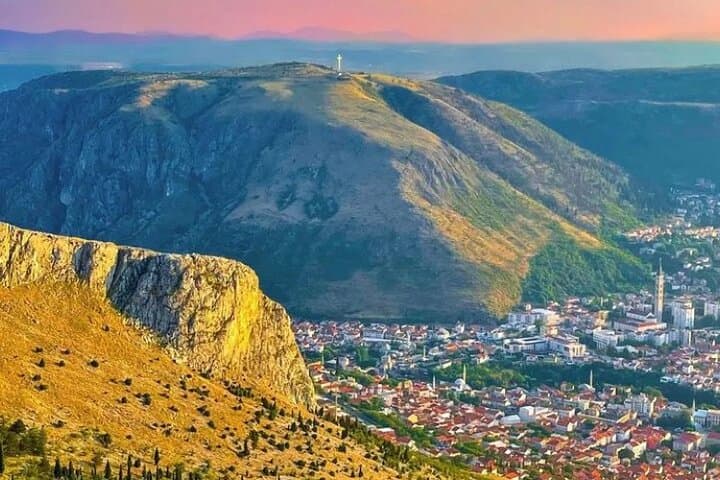
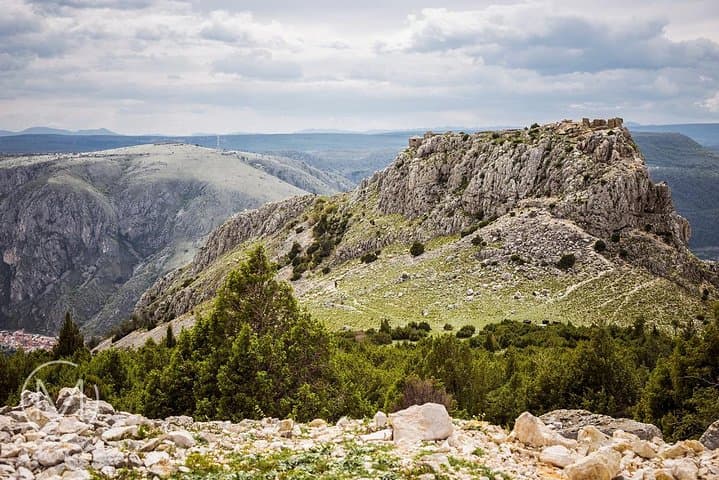
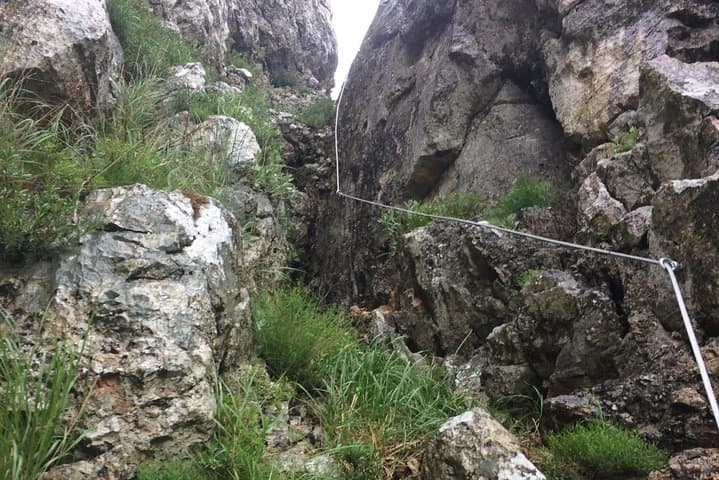
The route pushes quickly out of cobbled streets and into scrub and stone. After a brief urban stretch you round the Orthodox church and the path turns steep — a stair of loose rock, exposed ridges and deeply eroded gullies that mark where water and fire have reshaped the slopes. The Fortica viewpoint opens like a stage: a wide sweep over the Neretva gorge, the Old Bridge a white thread, roofs and minarets clustered below.
Mostar’s landscape is as much geology as history. Limestone and marl create the steep, fractured cliffs and the river’s turquoise color is a product of karst-fed springs. Culturally, the Old Town is a 16th-century Ottoman imprint layered with Austro-Hungarian architecture; the walk ends with a Bosnian meal in a garden restaurant, a fitting local close.
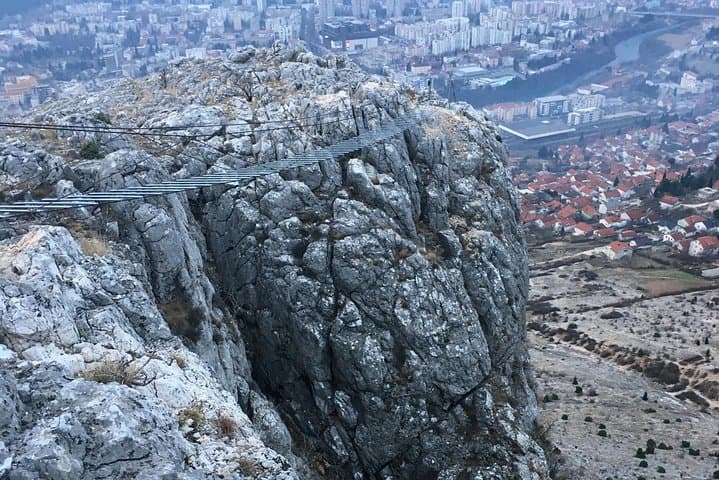
Expect 1.5–2 hours of uphill travel each way depending on fitness — roughly 250–350 m of elevation gain — across rocky, sometimes loose terrain. There are optional adrenaline features at the rim: a suspension bridge and a zipline (operator fee ~25 €) but safety equipment is not provided by the hike.
Practical: wear grippy hiking shoes, carry 1–2 L water, sunscreen and a wind layer. Start early in summer to avoid heat, and plan for firm footing on uneven drainage channels. The reward is panoramic perspective: the river daring you to look down while the town waits, compact and human, below.
challenging.
2–3 hours.
Should be in good cardiovascular shape and comfortable with sustained uphill walking and uneven terrain.
The meeting point is Bunur footbridge over the Neretva in Mostar’s Old Town; the tour returns to the same location.
The trail is physically demanding with roughly 1.5–2 hours of uphill walking and about 250–350 m of elevation gain, on rocky and sometimes loose ground.
No — crossing the suspension bridge requires your own safety equipment and the zipline is an optional extra (about 25 €) run by a separate operator when available.
Yes — the tour includes a drink at Fortica and a typical Bosnian meal in a garden restaurant back in the old town.
Mostar grew around the 16th-century Ottoman Stari Most (Old Bridge); the town’s skyline reflects Ottoman and later Austro-Hungarian influences visible from the Fortica rim.
Trails cross erosion-prone karst slopes; stick to marked paths and avoid disturbing regrowth zones to limit erosion and protect local scrub habitat.
Profimaxx LifeCoach operates guided outdoor trips and adventures with an emphasis on safety, stewardship, and memorable experiences.
You start on the Bunur footbridge, the river’s jade current slicing the Old Town beneath you as voices and mosque calls drift uphill.
You start on the Bunur footbridge, the river’s jade current slicing the Old Town beneath you as voices and mosque calls drift uphill.
The route pushes quickly out of cobbled streets and into scrub and stone. After a brief urban stretch you round the Orthodox church and the path turns steep — a stair of loose rock, exposed ridges and deeply eroded gullies that mark where water and fire have reshaped the slopes. The Fortica viewpoint opens like a stage: a wide sweep over the Neretva gorge, the Old Bridge a white thread, roofs and minarets clustered below.
Mostar’s landscape is as much geology as history. Limestone and marl create the steep, fractured cliffs and the river’s turquoise color is a product of karst-fed springs. Culturally, the Old Town is a 16th-century Ottoman imprint layered with Austro-Hungarian architecture; the walk ends with a Bosnian meal in a garden restaurant, a fitting local close.
Expect 1.5–2 hours of uphill travel each way depending on fitness — roughly 250–350 m of elevation gain — across rocky, sometimes loose terrain. There are optional adrenaline features at the rim: a suspension bridge and a zipline (operator fee ~25 €) but safety equipment is not provided by the hike.
Practical: wear grippy hiking shoes, carry 1–2 L water, sunscreen and a wind layer. Start early in summer to avoid heat, and plan for firm footing on uneven drainage channels. The reward is panoramic perspective: the river daring you to look down while the town waits, compact and human, below.