THE ADVENTURE COLLECTIVE® · Independent discovery and booking for outdoor travel

Descend from Glacier Point on the Panorama Trail and pass Illilouette, Nevada and Vernal Falls while watching Half Dome redraw the horizon. This full-day guided hike is a steep, 8.5-mile route with dramatic viewpoints and a shuttle return to Yosemite Valley.
Descend from Glacier Point on the Panorama Trail and pass Illilouette, Nevada and Vernal Falls while watching Half Dome redraw the horizon. This full-day guided hike is a steep, 8.5-mile route with dramatic viewpoints and a shuttle return to Yosemite Valley.
The morning opens cold at Glacier Point. A line of pines leans into the light while Half Dome rises across the valley—an enormous, sheer face that seems to rearrange the horizon. From this rim the Panorama Trail steps off the cliff and immediately gives the day its purpose: a long, relentless descent that crops up breathtaking perspectives at every switchback.
Verified experiences and guided adventures in the surrounding area.
Operated by Lasting Adventures · Yosemite Valley, California
The morning opens cold at Glacier Point. A line of pines leans into the light while Half Dome rises across the valley—an enormous, sheer face that seems to rearrange the horizon. From this rim the Panorama Trail steps off the cliff and immediately gives the day its purpose: a long, relentless descent that crops up breathtaking perspectives at every switchback.
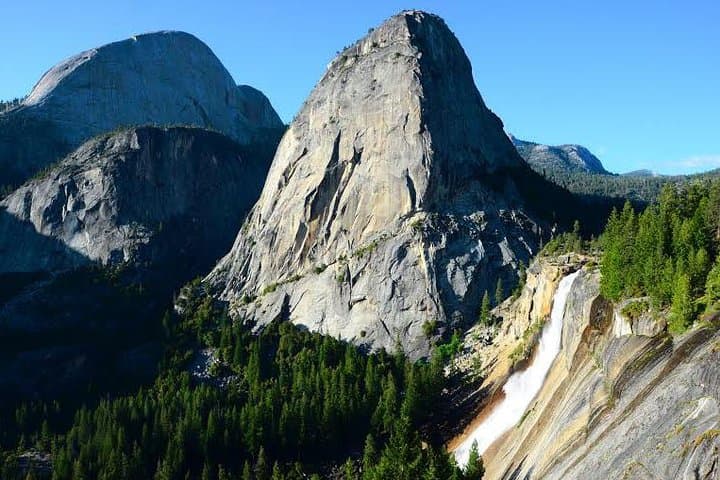
The hike threads granite slabs, sequoia-sprinkled ridges and river-corridor forest as it drops more than 3,000 feet over roughly 8.5 miles to the valley floor. Along the way the route brushes three of Yosemite’s headline waterfalls—Illilouette, Nevada and Vernal—each one an expression of the park’s glacial past. The river-carved canyons and exposed domes here are legible geology: glaciation gouged U-shaped valleys, leaving polished granite shoulders and hanging valleys that feed the falls.
For centuries the Ahwahneechee and other Indigenous people moved through these high-country routes. Later, 19th-century U.S. geologists and early visitors began mapping and naming features; Glacier Point itself became a popular vista after improved road access in the early 20th century. Today the Panorama Trail offers a window into those layers of natural and human history while demanding steady feet and attention.
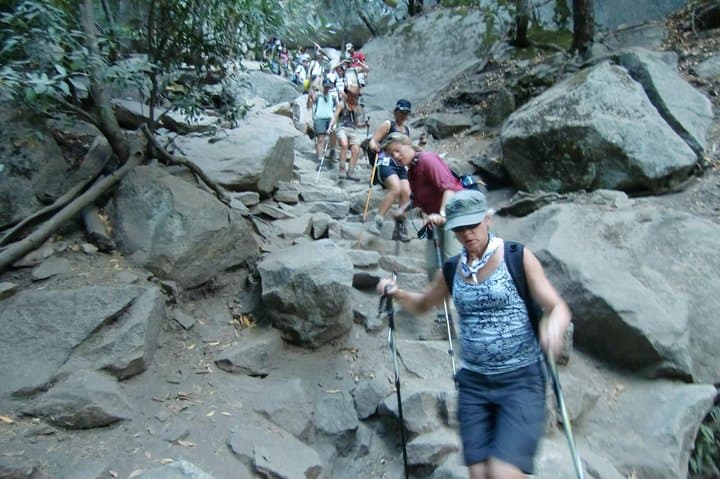
Practicalities shape the experience. The route is managed for day-use—trails are well-marked but steep, with sections on the Mist Trail where spray can make stone slick. The guided option typically runs May through October, when snowmelt swells the falls and the Glacier Point road is open. Guides manage group logistics, coordinate the return shuttle to Yosemite Valley Lodge, and carry first aid and water-purification methods—but participants must bring their own food, hydration and layered clothing.
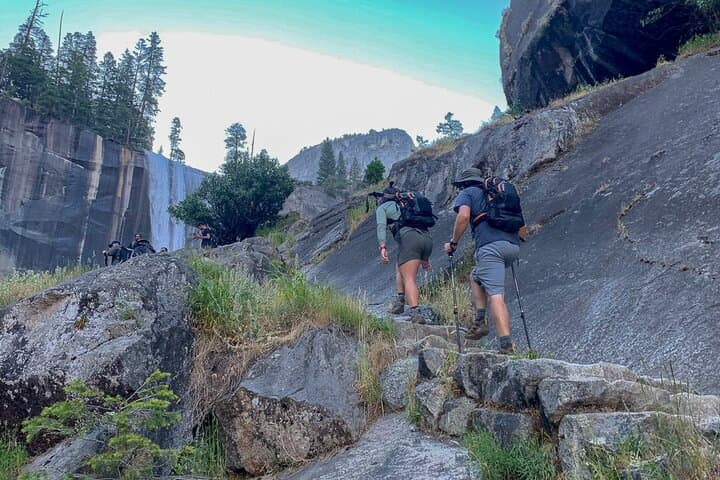
On-trail rhythm shifts constantly: a brisk climb over exposed granite, then a mellow walk through mixed-conifer shade, then a scramble alongside thundering water. Hikers who move deliberately will have time for photos at the Glacier Point overlook, a pause near Nevada Fall’s viewpoint, and a close approach to Vernal Fall if conditions allow.
Expect a long day—roughly 8–10 hours with shuttle time—so plan pre-hike nutrition, conservatively generous water, and footwear with sure traction. Start early to catch softer light and cooler air, and be prepared to respect park rules about food storage: Yosemite’s wildlife is curious and capable. For travelers who want both spectacle and context, the Panorama Trail is a complete day in the park: physically demanding, visually uncompromising, and quietly educational.
moderate.
8–10 hours.
Good cardiovascular fitness and strong knees are required for sustained downhill sections and long mileage.
It's moderately strenuous: 8.5 miles with roughly 3,000 feet of descent—expect steep sections and a full day of hiking.
The tour runs May through October, when the Glacier Point road is typically open and the trail is free of winter snow.
Yes—guests must have Yosemite National Park entry (and any reservation system in effect) though the tour may include reservation handling; confirm at booking.
Physically fit beginners accustomed to long uphill/downhill days can join, but it's not recommended for those with mobility limits or significant back/heart issues.
Pit toilets are available at major trailheads, but not on the full route; plan accordingly before departure.
Store food in park-approved lockers or bear canisters where provided, follow your guide's instructions, and keep distance from animals at all times.
Glacier Point and the surrounding valley were shaped by repeated glaciation; Indigenous Ahwahneechee people used these high-country corridors for millennia prior to Euro-American exploration.
Stay on durable surfaces, pack out all waste, and follow food-storage rules—these measures protect fragile alpine soils and keep wildlife safe.
Lasting Adventures operates guided outdoor trips and adventures with an emphasis on safety, stewardship, and memorable experiences.
The morning opens cold at Glacier Point. A line of pines leans into the light while Half Dome rises across the valley—an enormous, sheer face that seems to rearrange the horizon. From this rim the Panorama Trail steps off the cliff and immediately gives the day its purpose: a long, relentless descent that crops up breathtaking perspectives at every switchback.
The morning opens cold at Glacier Point. A line of pines leans into the light while Half Dome rises across the valley—an enormous, sheer face that seems to rearrange the horizon. From this rim the Panorama Trail steps off the cliff and immediately gives the day its purpose: a long, relentless descent that crops up breathtaking perspectives at every switchback.
The hike threads granite slabs, sequoia-sprinkled ridges and river-corridor forest as it drops more than 3,000 feet over roughly 8.5 miles to the valley floor. Along the way the route brushes three of Yosemite’s headline waterfalls—Illilouette, Nevada and Vernal—each one an expression of the park’s glacial past. The river-carved canyons and exposed domes here are legible geology: glaciation gouged U-shaped valleys, leaving polished granite shoulders and hanging valleys that feed the falls.
For centuries the Ahwahneechee and other Indigenous people moved through these high-country routes. Later, 19th-century U.S. geologists and early visitors began mapping and naming features; Glacier Point itself became a popular vista after improved road access in the early 20th century. Today the Panorama Trail offers a window into those layers of natural and human history while demanding steady feet and attention.
Practicalities shape the experience. The route is managed for day-use—trails are well-marked but steep, with sections on the Mist Trail where spray can make stone slick. The guided option typically runs May through October, when snowmelt swells the falls and the Glacier Point road is open. Guides manage group logistics, coordinate the return shuttle to Yosemite Valley Lodge, and carry first aid and water-purification methods—but participants must bring their own food, hydration and layered clothing.
On-trail rhythm shifts constantly: a brisk climb over exposed granite, then a mellow walk through mixed-conifer shade, then a scramble alongside thundering water. Hikers who move deliberately will have time for photos at the Glacier Point overlook, a pause near Nevada Fall’s viewpoint, and a close approach to Vernal Fall if conditions allow.
Expect a long day—roughly 8–10 hours with shuttle time—so plan pre-hike nutrition, conservatively generous water, and footwear with sure traction. Start early to catch softer light and cooler air, and be prepared to respect park rules about food storage: Yosemite’s wildlife is curious and capable. For travelers who want both spectacle and context, the Panorama Trail is a complete day in the park: physically demanding, visually uncompromising, and quietly educational.