THE ADVENTURE COLLECTIVE® · Independent discovery and booking for outdoor travel

Drive the Panorama Route from Hazyview for an eight‑hour sweep of Mpumalanga’s escarpment: God’s Window, the Three Rondawels, and the swirling Bourke’s Luck Potholes. This day tour mixes short walks, geology-rich viewpoints, and a village lunch in Graskop.
Drive the Panorama Route from Hazyview for an eight‑hour sweep of Mpumalanga’s escarpment: God’s Window, the Three Rondawels, and the swirling Bourke’s Luck Potholes. This day tour mixes short walks, geology-rich viewpoints, and a village lunch in Graskop.
You step out of the air‑conditioned minibus at the edge of the escarpment and the Lowveld unfolds beneath you like a living map—deep green folds cut by the copper ribbon of the Blyde River. The guide sets a steady pace: short walks to cliff-edge viewpoints, a coffee stop in Graskop, then the echoing churn of water at Bourke’s Luck Potholes where ancient currents bored cylindrical hollows into basalt and quartzite.
Verified experiences and guided adventures in the surrounding area.
Operated by Watch Out Promotions CC T/A Elephant Herd Tours and Safaris · Hazyview, Mpumalanga
You step out of the air‑conditioned minibus at the edge of the escarpment and the Lowveld unfolds beneath you like a living map—deep green folds cut by the copper ribbon of the Blyde River. The guide sets a steady pace: short walks to cliff-edge viewpoints, a coffee stop in Graskop, then the echoing churn of water at Bourke’s Luck Potholes where ancient currents bored cylindrical hollows into basalt and quartzite.
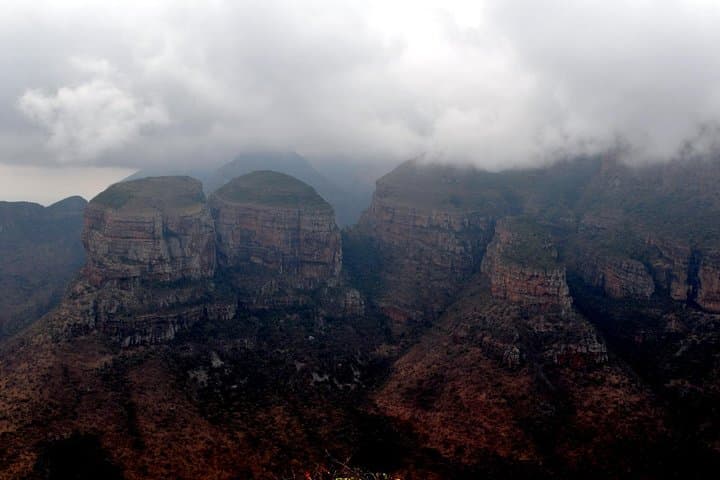
The route follows a geologic cross-section of Mpumalanga: highveld basalt layers give way to the dramatic drop of the Drakensberg escarpment, producing one of the largest green canyons on Earth. God’s Window offers a near-vertical panorama of the Lowveld; on clear days you can scan toward the distant Lebombo range. The Three Rondawels—three rounded dolerite outcrops carved by millennia of erosion—stand like oversized beehives on the canyon’s lip. Bourke’s Luck Potholes, created where the Treur meets the Blyde, are both museum and machine: swirling eddies grinding rock into amphitheaters and channels.
Culturally, the Panorama Route has long been a crossroads. Indigenous Tsonga and Swazi peoples moved through these valleys; 19th-century prospectors chased quartz veins and named features after themselves, leaving a patchwork of place‑names and small towns such as Graskop that grew around trade and timber. Today the corridor balances tourism with agriculture and conservation—local guides emphasize staying on paths and not disturbing the delicate montane flora.
Practical guidance: the tour is a full 8‑hour loop from Hazyview with multiple short walks—expect 100–800m of walking at each stop and a few flights of stairs at lookout areas. Elevation on the escarpment ranges roughly from 1,200–1,800 meters above sea level; mornings can be cool and clear, while afternoons often bring showers in summer.
Bring sturdy walking shoes for wet boardwalks and uneven bedrock, a light rain shell during summer (November–March), and a hat and sunscreen for open viewpoints. Water is provided on board, but bring a refillable bottle to reduce plastic. Lunch is in Graskop with time to browse curio stalls—carry small notes for purchases. Photography rewards patience: slow-shutter waterfall shots and wide-angle canyon panoramas are the order of the day. If you’re prone to motion sickness, request a forward seat in the vehicle; roads along the escarpment are winding but well maintained.
This tour is ideal for travelers who want a compact, interpretive sweep of Mpumalanga’s major sights in a single day—good boots, moderate fitness, and curiosity will turn the views into a memorable slice of South African highland wilderness.
moderate.
8 hours.
Moderate fitness for several short walks and stairs; accessible for most active travelers.
Pickup from Hazyview-area hotels is included—confirm your pickup point when you book and expect a scheduled time window.
Expect multiple short walks of 100–800m at viewpoints, including stairs and boardwalks; nothing more than moderate walking ability is required.
Admissions to major viewpoints listed in the itinerary are included; check the voucher for specifics and any optional extras.
Yes—children are welcome but must be supervised at cliff-edge viewpoints and around moving water; infant seats are available on request.
The tour operates in light rain; if severe weather forces cancellation, refund or rescheduling follows the supplier’s policy—cancel at least 24 hours for a full refund.
Tipping is customary for good service; consider 10–15% of the tour price shared among driver-guides if you enjoyed the experience.
The Panorama Route traces the escarpment where 19th‑century prospectors explored for gold; many place names reflect that mining era alongside older indigenous routes.
Trails and viewing platforms concentrate visitor impact—stick to marked paths, don’t feed wildlife, and use refillable bottles to reduce plastic.
Watch Out Promotions CC T/A Elephant Herd Tours and Safaris operates guided outdoor trips and adventures with an emphasis on safety, stewardship, and memorable experiences.



You step out of the air‑conditioned minibus at the edge of the escarpment and the Lowveld unfolds beneath you like a living map—deep green folds cut by the copper ribbon of the Blyde River. The guide sets a steady pace: short walks to cliff-edge viewpoints, a coffee stop in Graskop, then the echoing churn of water at Bourke’s Luck Potholes where ancient currents bored cylindrical hollows into basalt and quartzite.
You step out of the air‑conditioned minibus at the edge of the escarpment and the Lowveld unfolds beneath you like a living map—deep green folds cut by the copper ribbon of the Blyde River. The guide sets a steady pace: short walks to cliff-edge viewpoints, a coffee stop in Graskop, then the echoing churn of water at Bourke’s Luck Potholes where ancient currents bored cylindrical hollows into basalt and quartzite.
The route follows a geologic cross-section of Mpumalanga: highveld basalt layers give way to the dramatic drop of the Drakensberg escarpment, producing one of the largest green canyons on Earth. God’s Window offers a near-vertical panorama of the Lowveld; on clear days you can scan toward the distant Lebombo range. The Three Rondawels—three rounded dolerite outcrops carved by millennia of erosion—stand like oversized beehives on the canyon’s lip. Bourke’s Luck Potholes, created where the Treur meets the Blyde, are both museum and machine: swirling eddies grinding rock into amphitheaters and channels.
Culturally, the Panorama Route has long been a crossroads. Indigenous Tsonga and Swazi peoples moved through these valleys; 19th-century prospectors chased quartz veins and named features after themselves, leaving a patchwork of place‑names and small towns such as Graskop that grew around trade and timber. Today the corridor balances tourism with agriculture and conservation—local guides emphasize staying on paths and not disturbing the delicate montane flora.
Practical guidance: the tour is a full 8‑hour loop from Hazyview with multiple short walks—expect 100–800m of walking at each stop and a few flights of stairs at lookout areas. Elevation on the escarpment ranges roughly from 1,200–1,800 meters above sea level; mornings can be cool and clear, while afternoons often bring showers in summer.
Bring sturdy walking shoes for wet boardwalks and uneven bedrock, a light rain shell during summer (November–March), and a hat and sunscreen for open viewpoints. Water is provided on board, but bring a refillable bottle to reduce plastic. Lunch is in Graskop with time to browse curio stalls—carry small notes for purchases. Photography rewards patience: slow-shutter waterfall shots and wide-angle canyon panoramas are the order of the day. If you’re prone to motion sickness, request a forward seat in the vehicle; roads along the escarpment are winding but well maintained.
This tour is ideal for travelers who want a compact, interpretive sweep of Mpumalanga’s major sights in a single day—good boots, moderate fitness, and curiosity will turn the views into a memorable slice of South African highland wilderness.