THE ADVENTURE COLLECTIVE® · Independent discovery and booking for outdoor travel

Spend a day volunteering at Dujiangyan Panda Base: prepare food, clean enclosures, and assist keepers while learning about panda conservation. This private full-day from Chengdu blends hands-on work with educational insight into one of the world’s leading panda care centers.
Spend a day volunteering at Dujiangyan Panda Base: prepare food, clean enclosures, and assist keepers while learning about panda conservation. This private full-day from Chengdu blends hands-on work with educational insight into one of the world’s leading panda care centers.
Dawn in Chengdu feels like a whisper—steam from teahouses, traffic thinning as your vehicle threads west toward the foothills. After roughly 1.5 hours along river-cut roads you arrive at the Dujiangyan Panda Base, where bamboo gardens rustle and the animals move with deliberate curiosity. The morning begins with a short briefing and the green uniform of volunteers; soon you’re sweeping enclosures, carrying bamboo, and preparing panda cakes under keepers’ supervision.
Verified experiences and guided adventures in the surrounding area.
Operated by China Theme Tour · Dujiangyan, Sichuan
Dawn in Chengdu feels like a whisper—steam from teahouses, traffic thinning as your vehicle threads west toward the foothills. After roughly 1.5 hours along river-cut roads you arrive at the Dujiangyan Panda Base, where bamboo gardens rustle and the animals move with deliberate curiosity. The morning begins with a short briefing and the green uniform of volunteers; soon you’re sweeping enclosures, carrying bamboo, and preparing panda cakes under keepers’ supervision.
The Dujiangyan Base is part of the China Conservation and Research Center network established to treat, breed and study giant pandas; its work runs alongside the centuries-old engineering of the Dujiangyan irrigation system and the cultural landscape of nearby Qingcheng Mountain. Geologically, the base sits on the western edge of the Sichuan Basin where streams have carved terraces and created a humid, bamboo-friendly microclimate that pandas favor.
You’ll learn keeper routines: record-keeping, simple behavioral observation, and diet preparation, all guided by trained staff. The program balances hands-on tasks with interpretation—documentaries and a short walk let you put faces to the names of the pandas you just helped feed.
Practical notes: volunteers must provide passport copy and a health certificate, and a conservation donation is collected on-site. Work is gentle but active—closed-toe shoes and layered clothing are sensible. Plan for a full day away from Chengdu, and leave your expectations open: this is conservation support, not petting; the reward is an up-close perspective on a global recovery effort and a volunteer certificate to take home.
easy.
8 hours (full day).
Suitable for people in general good health who can stand, squat, and carry light loads for short periods
No; the program follows strict safety and health rules—contact is limited and guided by keepers to protect both pandas and volunteers.
You must provide a passport copy and a health certificate; the operator requests these at booking and before arrival.
The program is suitable for most adults but not recommended for pregnant travelers or those with serious heart or spinal conditions; follow operator guidance.
The on-site donation supports the panda base’s non-profit research, veterinary care, and conservation programs.
The Dujiangyan area combines modern conservation work with ancient irrigation engineering—Dujiangyan’s waterworks date to 3rd century BCE and shaped local agriculture and settlement.
The base operates as a research and veterinary center focused on disease prevention, breeding, and reintroduction research; volunteer fees and donations help fund on-site care and scientific programs.
China Theme Tour operates guided outdoor trips and adventures with an emphasis on safety, stewardship, and memorable experiences.
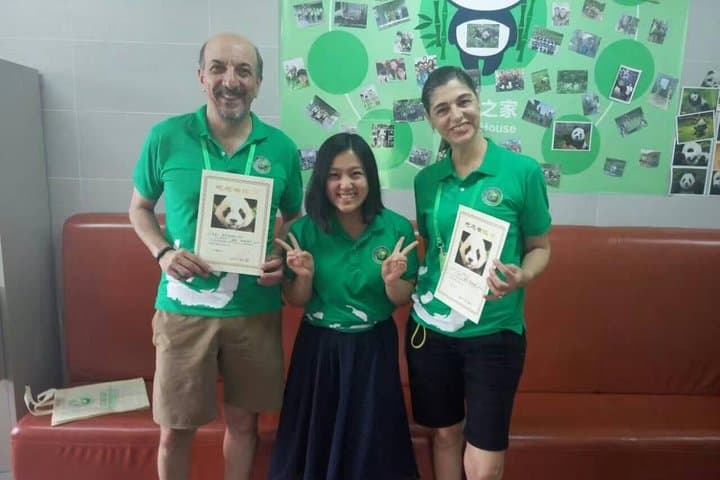
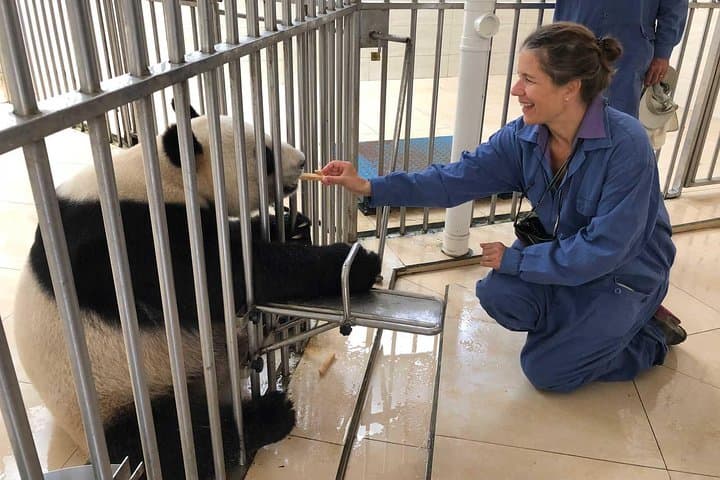

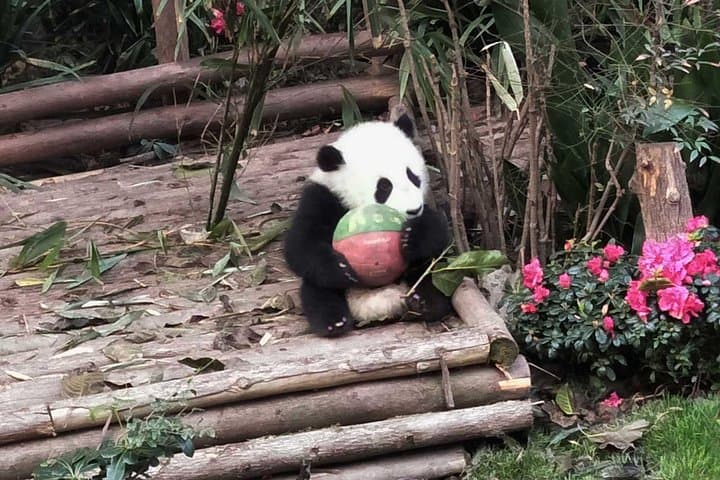
Dawn in Chengdu feels like a whisper—steam from teahouses, traffic thinning as your vehicle threads west toward the foothills. After roughly 1.5 hours along river-cut roads you arrive at the Dujiangyan Panda Base, where bamboo gardens rustle and the animals move with deliberate curiosity. The morning begins with a short briefing and the green uniform of volunteers; soon you’re sweeping enclosures, carrying bamboo, and preparing panda cakes under keepers’ supervision.
Dawn in Chengdu feels like a whisper—steam from teahouses, traffic thinning as your vehicle threads west toward the foothills. After roughly 1.5 hours along river-cut roads you arrive at the Dujiangyan Panda Base, where bamboo gardens rustle and the animals move with deliberate curiosity. The morning begins with a short briefing and the green uniform of volunteers; soon you’re sweeping enclosures, carrying bamboo, and preparing panda cakes under keepers’ supervision.
The Dujiangyan Base is part of the China Conservation and Research Center network established to treat, breed and study giant pandas; its work runs alongside the centuries-old engineering of the Dujiangyan irrigation system and the cultural landscape of nearby Qingcheng Mountain. Geologically, the base sits on the western edge of the Sichuan Basin where streams have carved terraces and created a humid, bamboo-friendly microclimate that pandas favor.
You’ll learn keeper routines: record-keeping, simple behavioral observation, and diet preparation, all guided by trained staff. The program balances hands-on tasks with interpretation—documentaries and a short walk let you put faces to the names of the pandas you just helped feed.
Practical notes: volunteers must provide passport copy and a health certificate, and a conservation donation is collected on-site. Work is gentle but active—closed-toe shoes and layered clothing are sensible. Plan for a full day away from Chengdu, and leave your expectations open: this is conservation support, not petting; the reward is an up-close perspective on a global recovery effort and a volunteer certificate to take home.