THE ADVENTURE COLLECTIVE® · Independent discovery and booking for outdoor travel

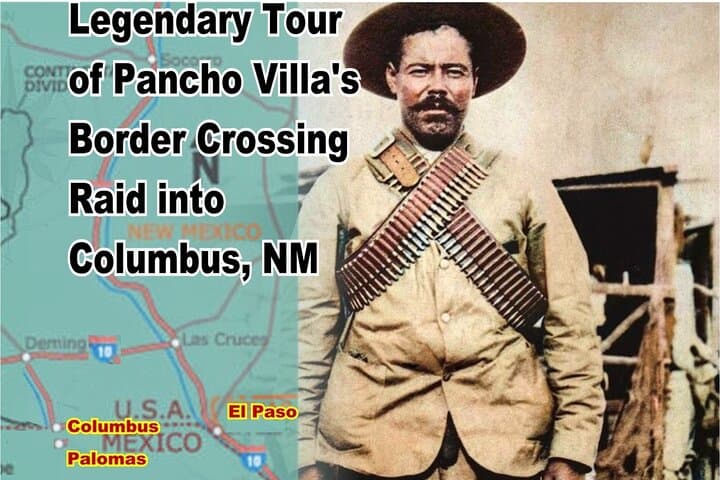
Trace the route of Pancho Villa’s 1916 raid through Columbus, New Mexico—visit gravesites, Camp Furlong remnants, and the small museums that preserve a pivotal borderlands moment. This guided 2–3 hour tour blends short walks with museum time and local storytelling.
Trace the route of Pancho Villa’s 1916 raid through Columbus, New Mexico—visit gravesites, Camp Furlong remnants, and the small museums that preserve a pivotal borderlands moment. This guided 2–3 hour tour blends short walks with museum time and local storytelling.
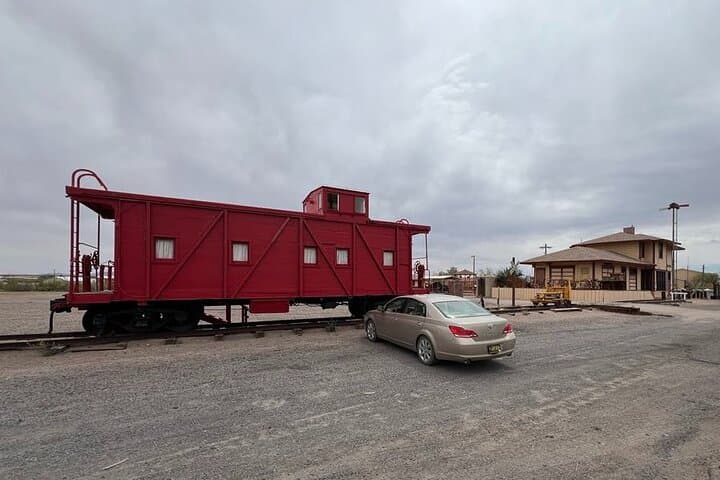
You step out into a hard, bright morning at the old railroad depot; the desert wind nudges the caboose like a curious onlooker and the town’s low-slung buildings hold the silence of a century-old story. The guide gathers the group at 9:30 a.m., maps and dates ready, and the walk begins through a village whose streets still keep the outlines of an explosive night.
Verified experiences and guided adventures in the surrounding area.
Operated by Hole in the Wall Getaway · Columbus, New Mexico
You step out into a hard, bright morning at the old railroad depot; the desert wind nudges the caboose like a curious onlooker and the town’s low-slung buildings hold the silence of a century-old story. The guide gathers the group at 9:30 a.m., maps and dates ready, and the walk begins through a village whose streets still keep the outlines of an explosive night.
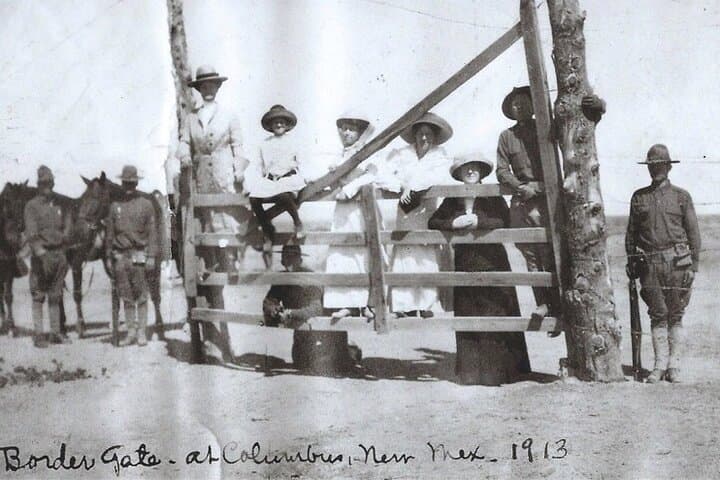
On March 9, 1916, more than 600 Villaistas crossed the border in an attack that killed soldiers and civilians and reshaped U.S.–Mexico military policy. This two- to three-hour guided route moves from Valley Heights Cemetery—where headstones mark the casualties—to the small downtown where building facades and footprints of Camp Furlong remain. Pancho Villa State Park and the Railroad Depot Museum close the loop with artifacts, a Jenny biplane replica, and armored relics that put context to the raid’s scale.
Geology here is plainspoken: wide Chihuahuan Desert flats, sage and creosote, shallow arroyo cuts that once directed movement across the borderlands. Culturally, Columbus is a living border town—ranching and cross-border family ties shape local memory and the museum’s volunteer stewards keep first-hand accounts alive.
Practicalities: the tour involves short walks on compacted dirt and pavement; most stops are a few minutes on foot. Bring sun protection, a refillable water bottle, and modest footwear; museum access and park admission (vehicle fee applies) can vary. If you want quieter photos, ask for a slower pace at the cemetery and visit the state park after the tour for air-conditioned exhibits and ranger insights.
easy.
2–3 hours.
Suitable for most fitness levels; involves short walks and standing at exhibits.
The tour lasts about 2–3 hours with several short walks between stops; most walking is on flat, easy terrain.
Yes—there is a nominal per-vehicle fee charged by the state park if you visit after the tour concludes.
Many stops are adjacent to parking and paved surfaces, but some paths in the cemetery and camp grounds are compact dirt—contact the operator to confirm accessibility accommodations.
Yes—the Railroad Depot Museum and Pancho Villa State Park allow independent visits; check seasonal hours and possible closures before you go.
The March 1916 attack on Columbus led to the U.S. Punitive Expedition into Mexico and influenced early 20th-century border security and military aviation developments.
The site sits in the Chihuahuan Desert—practice Leave No Trace principles, respect fragile desert plants, and support the local historical society’s preservation efforts with donations.
Hole in the Wall Getaway operates guided outdoor trips and adventures with an emphasis on safety, stewardship, and memorable experiences.
You step out into a hard, bright morning at the old railroad depot; the desert wind nudges the caboose like a curious onlooker and the town’s low-slung buildings hold the silence of a century-old story. The guide gathers the group at 9:30 a.m., maps and dates ready, and the walk begins through a village whose streets still keep the outlines of an explosive night.
You step out into a hard, bright morning at the old railroad depot; the desert wind nudges the caboose like a curious onlooker and the town’s low-slung buildings hold the silence of a century-old story. The guide gathers the group at 9:30 a.m., maps and dates ready, and the walk begins through a village whose streets still keep the outlines of an explosive night.
On March 9, 1916, more than 600 Villaistas crossed the border in an attack that killed soldiers and civilians and reshaped U.S.–Mexico military policy. This two- to three-hour guided route moves from Valley Heights Cemetery—where headstones mark the casualties—to the small downtown where building facades and footprints of Camp Furlong remain. Pancho Villa State Park and the Railroad Depot Museum close the loop with artifacts, a Jenny biplane replica, and armored relics that put context to the raid’s scale.
Geology here is plainspoken: wide Chihuahuan Desert flats, sage and creosote, shallow arroyo cuts that once directed movement across the borderlands. Culturally, Columbus is a living border town—ranching and cross-border family ties shape local memory and the museum’s volunteer stewards keep first-hand accounts alive.
Practicalities: the tour involves short walks on compacted dirt and pavement; most stops are a few minutes on foot. Bring sun protection, a refillable water bottle, and modest footwear; museum access and park admission (vehicle fee applies) can vary. If you want quieter photos, ask for a slower pace at the cemetery and visit the state park after the tour for air-conditioned exhibits and ranger insights.