THE ADVENTURE COLLECTIVE® · Independent discovery and booking for outdoor travel

A short, multi-day ridge hike southwest of Pokhara, Panchase offers 360° views of Annapurna and Dhaulagiri, friendly Gurung villages, and mixed forest terrain ideal for first-time Himalayan trekkers. Practical for families, this route blends big-mountain panoramas with cultural homestays.
A short, multi-day ridge hike southwest of Pokhara, Panchase offers 360° views of Annapurna and Dhaulagiri, friendly Gurung villages, and mixed forest terrain ideal for first-time Himalayan trekkers. Practical for families, this route blends big-mountain panoramas with cultural homestays.
Fog lifts off terraced rice fields as hikers step from a narrow village lane into a rhododendron-scented ridge; the sky opens and the Annapurna massif arranges itself like a hard-edged horizon. Panchase sits at roughly 2,500 m above sea level, a short drive southwest from Pokhara, and the trail feels part forest walk, part mountain vantage — a place where wind seems to push you toward the peaks.
Verified experiences and guided adventures in the surrounding area.
Fog lifts off terraced rice fields as hikers step from a narrow village lane into a rhododendron-scented ridge; the sky opens and the Annapurna massif arranges itself like a hard-edged horizon. Panchase sits at roughly 2,500 m above sea level, a short drive southwest from Pokhara, and the trail feels part forest walk, part mountain vantage — a place where wind seems to push you toward the peaks.
Geologically, Panchase is a ridge carved by tributaries of the Seti and Modi rivers, its slopes dropping into deep gorges and river valleys that carry glacial melt toward the lowlands. Culturally the route threads through Gurung villages — stone houses, prayer flags, and terraced paddies — reminding walkers that this landscape has supported mountain agriculture and trade for generations.
Expect varied terrain: packed dirt tracks, short switchbacks, and forested steps through rhododendron and oak. Birdsong and the occasional call of langur punctuate the climb; distant glaciers glitter on clear mornings. The most dramatic moments come at first light and late afternoon, when Machhapuchhre (Fishtail), Annapurna South, Dhaulagiri, Manaslu and Lamjung line up along the skyline.
Practical guidance: allow 3–4 days for a relaxed itinerary that includes Bhadaure and Sarangkot, carry layered clothing for rapid weather shifts, and use sturdy hiking boots for mixed terrain. Local homestays offer simple meals and cultural exchange; tipping and small community fees help sustain trails. Start early to beat afternoon clouds and bring water treatment — taps exist in villages but are intermittent. Panchase is an accessible Himalayan introduction: scenic, sociable and distinctly mountain in scale.
easy.
3–4 days.
Suitable for people with regular aerobic activity who can manage daily walks of 4–6 hours and sustained uphill sections.
No special national permit is required for short Panchase treks, but some local community fees or homestay contributions may apply; confirm with your operator before departure.
Panchase routes vary; typical multi-day itineraries rise to around 2,500 m from Pokhara (~820 m), so expect cumulative elevation gains of 1,200–1,700 m over several days.
Guides are not strictly required for the main Panchase routes, but a local guide enhances cultural exchange, navigation on less-marked paths, and supports village economies.
Most trekkers take a 45–75 minute private or shared jeep ride to Bhadaure or neighboring trailheads; road conditions vary by season and operator.
The Panchase ridge has long been part of local Gurung agricultural and pilgrimage life; villages here functioned historically as seasonal grazing and trade stops between valleys.
Parts of Panchase lie within community-managed forest areas; stick to marked trails, minimize waste, and use registered homestays to support sustainable local economies.
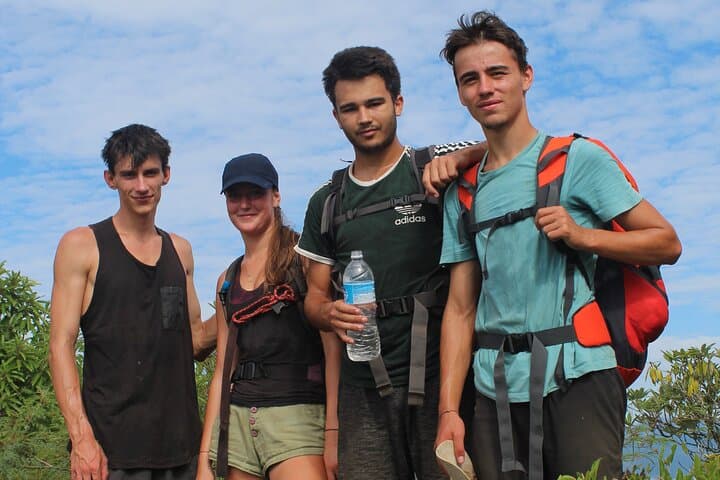
Fog lifts off terraced rice fields as hikers step from a narrow village lane into a rhododendron-scented ridge; the sky opens and the Annapurna massif arranges itself like a hard-edged horizon. Panchase sits at roughly 2,500 m above sea level, a short drive southwest from Pokhara, and the trail feels part forest walk, part mountain vantage — a place where wind seems to push you toward the peaks.
Fog lifts off terraced rice fields as hikers step from a narrow village lane into a rhododendron-scented ridge; the sky opens and the Annapurna massif arranges itself like a hard-edged horizon. Panchase sits at roughly 2,500 m above sea level, a short drive southwest from Pokhara, and the trail feels part forest walk, part mountain vantage — a place where wind seems to push you toward the peaks.
Geologically, Panchase is a ridge carved by tributaries of the Seti and Modi rivers, its slopes dropping into deep gorges and river valleys that carry glacial melt toward the lowlands. Culturally the route threads through Gurung villages — stone houses, prayer flags, and terraced paddies — reminding walkers that this landscape has supported mountain agriculture and trade for generations.
Expect varied terrain: packed dirt tracks, short switchbacks, and forested steps through rhododendron and oak. Birdsong and the occasional call of langur punctuate the climb; distant glaciers glitter on clear mornings. The most dramatic moments come at first light and late afternoon, when Machhapuchhre (Fishtail), Annapurna South, Dhaulagiri, Manaslu and Lamjung line up along the skyline.
Practical guidance: allow 3–4 days for a relaxed itinerary that includes Bhadaure and Sarangkot, carry layered clothing for rapid weather shifts, and use sturdy hiking boots for mixed terrain. Local homestays offer simple meals and cultural exchange; tipping and small community fees help sustain trails. Start early to beat afternoon clouds and bring water treatment — taps exist in villages but are intermittent. Panchase is an accessible Himalayan introduction: scenic, sociable and distinctly mountain in scale.