THE ADVENTURE COLLECTIVE® · Independent discovery and booking for outdoor travel

A brisk two-day trek from Pokhara to Panchase Hill climbs to roughly 2,300–2,500 m for a sunrise view across the Annapurna range. Expect forested paths, village teahouses, and an accessible but rewarding ridge-top panorama.
A brisk two-day trek from Pokhara to Panchase Hill climbs to roughly 2,300–2,500 m for a sunrise view across the Annapurna range. Expect forested paths, village teahouses, and an accessible but rewarding ridge-top panorama.
Morning mist peels back over terraced fields as you leave Pokhara’s lakeside and climb toward Panchase. The trail begins in Naudanda, threading village lanes and forest tracks that open into sweeping ridgelines; by sunrise the Annapurna range fills the horizon with hard-edged light across a 180° panorama.
Verified experiences and guided adventures in the surrounding area.
Operated by Couch Adventure Nepal (CAN) · Pokhara, Gandaki Province
Morning mist peels back over terraced fields as you leave Pokhara’s lakeside and climb toward Panchase. The trail begins in Naudanda, threading village lanes and forest tracks that open into sweeping ridgelines; by sunrise the Annapurna range fills the horizon with hard-edged light across a 180° panorama.
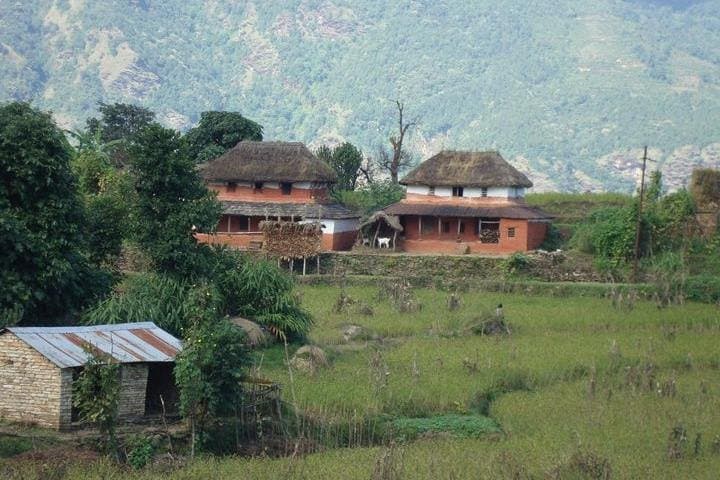
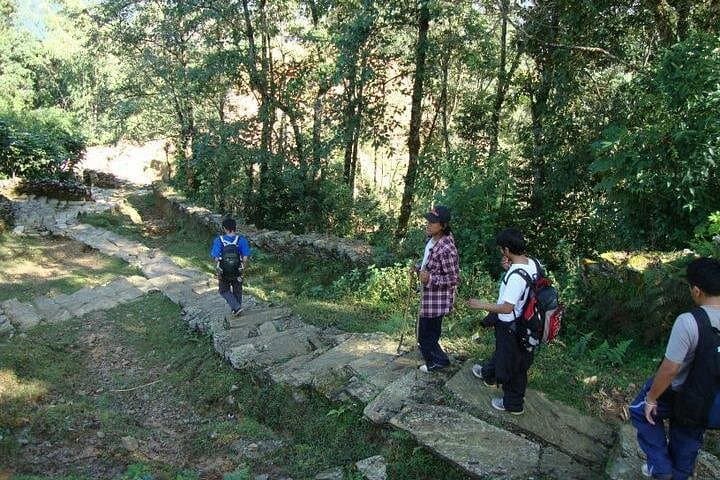
Panchase sits at roughly 2,300–2,500 m and has long been a local vantage used for religious shrines and seasonal grazing. Geologically the ridge is part of the Lesser Himalaya—granite and metamorphic outcrops folded by tectonic lift—so expect steep, stony tread and occasional stone steps built by villagers. Cultural notes: small Gurung and Brahmin settlements dot the route; teahouses and guesthouses handle basic stays and serve dal bhat and local tea.
Day one is a steady uphill through mixed oak and rhododendron forest, roughly 4–6 hours to the Panchase bhanjyang guesthouse. Day two begins pre-dawn for sunrise on the summit, then a descent of about 4–5 hours to Ghatichhina and a shared bus back to Lakeside. Expect altitude gains but not technical climbing—this is a walk that rewards planning more than gear.
Practical tips: start early to avoid afternoon clouds, carry layers for cold mornings, bring sun protection for exposed ridgelines, and budget time for tea stops and acclimatization if you’re sensitive to altitude. With a moderate fitness base this two-day circuit delivers high-mountain views and a close look at rural Himalayan life without the commitment of a longer trek.
moderate.
2 days (6–8 hours/day of trekking).
Moderate: regular walkers who can handle sustained uphill and downhill on uneven terrain.
It’s moderate: trails are well-established with guesthouse accommodation, but require sustained uphill walking and basic fitness.
Panchase reaches around 2,300–2,500 m—mild altitude effects are possible; ascend slowly, stay hydrated, and descends if symptoms worsen.
Simple guesthouses at Panchase bhanjyang offer basic rooms and home-cooked meals; expect shared facilities and traditional hospitality.
Spring and autumn offer the clearest mountain views and stable weather; mornings are best for sunrise vistas year-round.
Panchase ridge has been a local religious and grazing area for centuries, with small shrines marking traditional routes between villages.
Stick to established trails and teahouses to limit erosion; carry out plastic and support local guesthouses that maintain trail access.
Couch Adventure Nepal (CAN) operates guided outdoor trips and adventures with an emphasis on safety, stewardship, and memorable experiences.
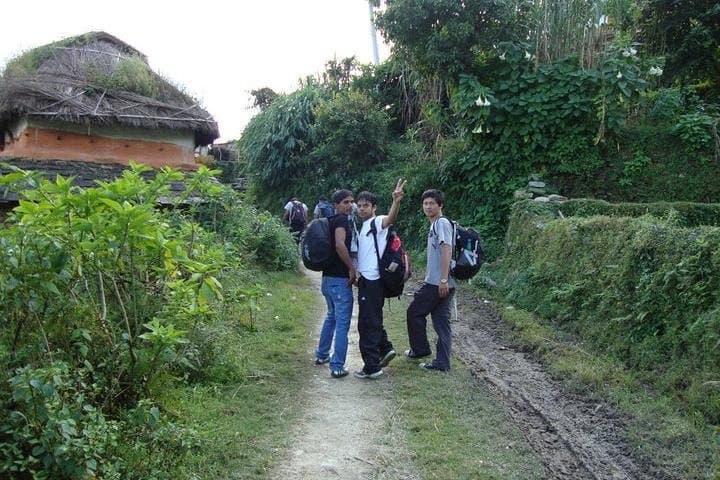
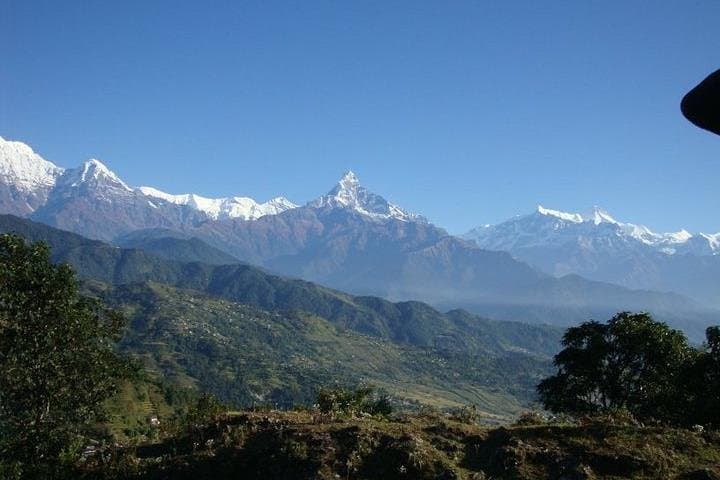
Morning mist peels back over terraced fields as you leave Pokhara’s lakeside and climb toward Panchase. The trail begins in Naudanda, threading village lanes and forest tracks that open into sweeping ridgelines; by sunrise the Annapurna range fills the horizon with hard-edged light across a 180° panorama.
Morning mist peels back over terraced fields as you leave Pokhara’s lakeside and climb toward Panchase. The trail begins in Naudanda, threading village lanes and forest tracks that open into sweeping ridgelines; by sunrise the Annapurna range fills the horizon with hard-edged light across a 180° panorama.
Panchase sits at roughly 2,300–2,500 m and has long been a local vantage used for religious shrines and seasonal grazing. Geologically the ridge is part of the Lesser Himalaya—granite and metamorphic outcrops folded by tectonic lift—so expect steep, stony tread and occasional stone steps built by villagers. Cultural notes: small Gurung and Brahmin settlements dot the route; teahouses and guesthouses handle basic stays and serve dal bhat and local tea.
Day one is a steady uphill through mixed oak and rhododendron forest, roughly 4–6 hours to the Panchase bhanjyang guesthouse. Day two begins pre-dawn for sunrise on the summit, then a descent of about 4–5 hours to Ghatichhina and a shared bus back to Lakeside. Expect altitude gains but not technical climbing—this is a walk that rewards planning more than gear.
Practical tips: start early to avoid afternoon clouds, carry layers for cold mornings, bring sun protection for exposed ridgelines, and budget time for tea stops and acclimatization if you’re sensitive to altitude. With a moderate fitness base this two-day circuit delivers high-mountain views and a close look at rural Himalayan life without the commitment of a longer trek.