THE ADVENTURE COLLECTIVE® · Independent discovery and booking for outdoor travel

Hear hammered oil drums sing and taste a freshly made Trinidadian roti on a short, guided visit to a working pan yard in Port of Spain. This 2–3 hour urban cultural tour combines music history, live rehearsal listening, and local food in one compact experience.
Hear hammered oil drums sing and taste a freshly made Trinidadian roti on a short, guided visit to a working pan yard in Port of Spain. This 2–3 hour urban cultural tour combines music history, live rehearsal listening, and local food in one compact experience.
You step into Port of Spain before the city warms—traffic hums, and a short drive delivers you to a working pan yard squeezed into a low-rise car park. A vendor prepares a fresh roti on a roadside griddle; its steam and spice are the first promise of an afternoon rooted in island craft and rhythm.
Verified experiences and guided adventures in the surrounding area.
Operated by Sensational Tour · Port of Spain, Trinidad
You step into Port of Spain before the city warms—traffic hums, and a short drive delivers you to a working pan yard squeezed into a low-rise car park. A vendor prepares a fresh roti on a roadside griddle; its steam and spice are the first promise of an afternoon rooted in island craft and rhythm.
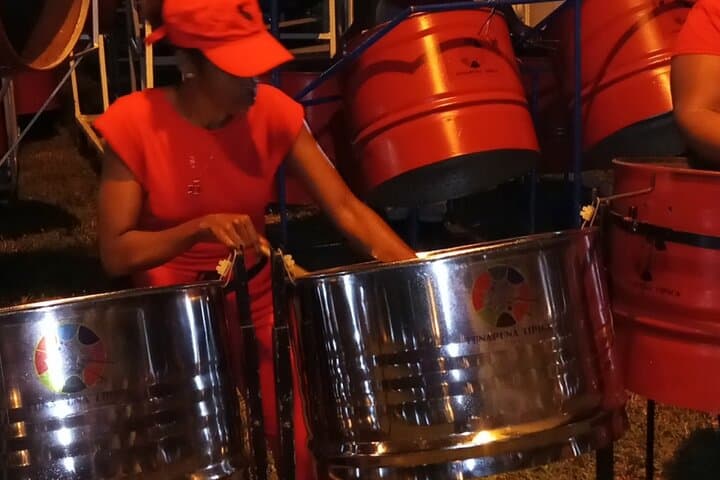
The tour traces a compact arc of history: the steelpan was born here in the mid-20th century when oil drums were reshaped into tuned notes that could carry across streets and Carnival fields. The yard itself is pragmatic—concrete, corrugated roofs, stacks of old shells—yet every surface is scored by decades of practice and repair. Musicians rehearse in clusters, their steel pans answering one another and the occasional Caribbean breeze.
Geology and city meet nearby—the flat coastal plain gives way to the green rise of the Northern Range to the north, a reminder that Trinidad’s landscapes shape its communities. Culturally, the pan is both protest and party: a creative reuse of discarded metal that became a national voice.
Practicalities are simple and local: the 2–3 hour outing includes hotel pickup, a roti tasting, a guided walk through rehearsal spaces and time to listen to live players. Photography is allowed but video is restricted; be ready to remove shoes for cramped areas, carry small bills for snacks and tips, and mind your volume—these are working spaces and rehearsal times.
This is an urban, sensory visit—close enough to hear hammer strikes and conversation, organized enough for first-time visitors, and intimate enough to feel the pan’s history pulse under your hands.
easy.
2–3 hours.
Suitable for most fitness levels; involves short walks and standing during performances.
Yes—the tour includes round-trip pickup from central Port of Spain hotels; confirm your exact pickup point when booking.
Video recording is generally not permitted; still photography is allowed but always check with the guide and musicians first.
Yes—infant seats are available in vehicles and the tour is physically easy, though spaces can be crowded and noisy.
The tour requires a minimum of two people to run, per the booking policy.
The steelpan evolved in Trinidad during the 1930s–50s from repurposed oil drums and became central to Carnival culture and national identity.
The steelpan’s origin in upcycling oil drums is a local example of reuse; support authentic makers and avoid single-use plastics during visits.
Sensational Tour operates guided outdoor trips and adventures with an emphasis on safety, stewardship, and memorable experiences.



You step into Port of Spain before the city warms—traffic hums, and a short drive delivers you to a working pan yard squeezed into a low-rise car park. A vendor prepares a fresh roti on a roadside griddle; its steam and spice are the first promise of an afternoon rooted in island craft and rhythm.
You step into Port of Spain before the city warms—traffic hums, and a short drive delivers you to a working pan yard squeezed into a low-rise car park. A vendor prepares a fresh roti on a roadside griddle; its steam and spice are the first promise of an afternoon rooted in island craft and rhythm.
The tour traces a compact arc of history: the steelpan was born here in the mid-20th century when oil drums were reshaped into tuned notes that could carry across streets and Carnival fields. The yard itself is pragmatic—concrete, corrugated roofs, stacks of old shells—yet every surface is scored by decades of practice and repair. Musicians rehearse in clusters, their steel pans answering one another and the occasional Caribbean breeze.
Geology and city meet nearby—the flat coastal plain gives way to the green rise of the Northern Range to the north, a reminder that Trinidad’s landscapes shape its communities. Culturally, the pan is both protest and party: a creative reuse of discarded metal that became a national voice.
Practicalities are simple and local: the 2–3 hour outing includes hotel pickup, a roti tasting, a guided walk through rehearsal spaces and time to listen to live players. Photography is allowed but video is restricted; be ready to remove shoes for cramped areas, carry small bills for snacks and tips, and mind your volume—these are working spaces and rehearsal times.
This is an urban, sensory visit—close enough to hear hammer strikes and conversation, organized enough for first-time visitors, and intimate enough to feel the pan’s history pulse under your hands.