THE ADVENTURE COLLECTIVE® · Independent discovery and booking for outdoor travel

Walk the chalk-white terraces of Pamukkale and explore the ancient spa city of Hierapolis on a compact small-group day tour. Expect geology, Roman ruins, a thermal dip option and practical guidance for navigating crowds and fragile formations.
Walk the chalk-white terraces of Pamukkale and explore the ancient spa city of Hierapolis on a compact small-group day tour. Expect geology, Roman ruins, a thermal dip option and practical guidance for navigating crowds and fragile formations.
A pale slope of terraces unfolds ahead, the calcium-rich water catching the sun and turning the hillside into sheets of white that feel otherworldly underfoot. On a typical small-group day tour from Pamukkale you move between these travertine terraces and the archaeological remains of Hierapolis, trading the cool hiss of thermal runoff for columns, stairways and a Roman theater that still holds a hush.
Verified experiences and guided adventures in the surrounding area.
Operated by Private Istanbul Shorex Tours · Pamukkale, Denizli Province
A pale slope of terraces unfolds ahead, the calcium-rich water catching the sun and turning the hillside into sheets of white that feel otherworldly underfoot. On a typical small-group day tour from Pamukkale you move between these travertine terraces and the archaeological remains of Hierapolis, trading the cool hiss of thermal runoff for columns, stairways and a Roman theater that still holds a hush.
Geology here is the star: mineral-laden springs deposit calcite as they cool, building the stepped pools over millennia. Hierapolis grew beside those springs in the Hellenistic era—later Roman additions include baths, a necropolis and the theater—so the site reads like a layered history of spa culture in Anatolia.
Local culture is present in practical ways: small vendors near the site, traditional Turkish lunches included on many tours, and hot springs used continuously since antiquity. Conservation rules shape the visit—certain terraces are closed to protect active deposits and swimming is limited to designated zones.
Plan for six to eight hours on this excursion. Comfortable, easy-to-remove footwear and a refillable water bottle are essential; some walking is on uneven stone and there are stairs through the ruins. Morning or late afternoon departures reduce heat and crowds. Bring a swimsuit if you want a dip in the designated thermal pool, and carry cash for museum entry or optional extras. Guide-led tours simplify logistics—transport, entrance fees and lunch are often included—so you can focus on the sharp contrast between bright calcium, warm water and ancient stone.
easy.
6–8 hours.
Suitable for most fitness levels; expect several hundred meters of uneven walking and some stairs.
Many small-group tours include the official site entrance; confirm at booking—this specific tour notes admission to Pamukkale & Hierapolis is included.
Visitors may access designated terraces barefoot only; follow on-site rules and the guide to avoid restricted or rehabilitated areas.
Swimming is permitted only in designated thermal pools, often for an extra local fee and under strict conservation rules—check with your guide.
Parts of Hierapolis and the terrace area have stairs and uneven surfaces; wheelchair access is limited and assistance may be required for some sections.
Hierapolis was founded in the Hellenistic period and expanded under Roman rule as a spa city built around thermal springs.
Active protection limits access to regenerating travertine; follow paths, avoid soaps or lotions in waters, and heed guide instructions to reduce visitor impact.
Private Istanbul Shorex Tours operates guided outdoor trips and adventures with an emphasis on safety, stewardship, and memorable experiences.
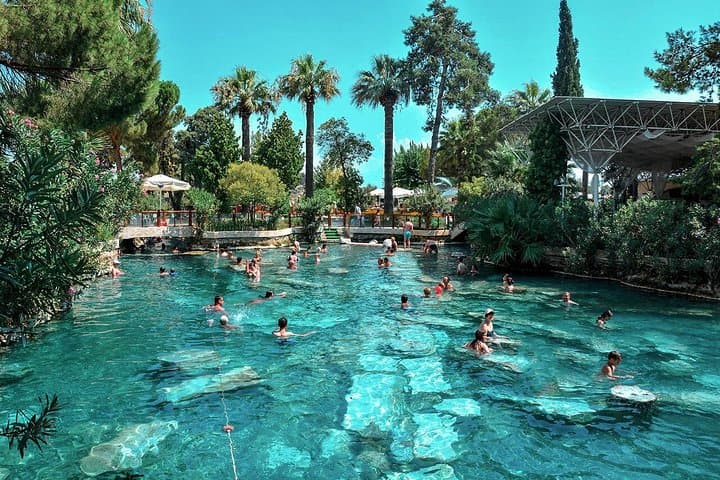
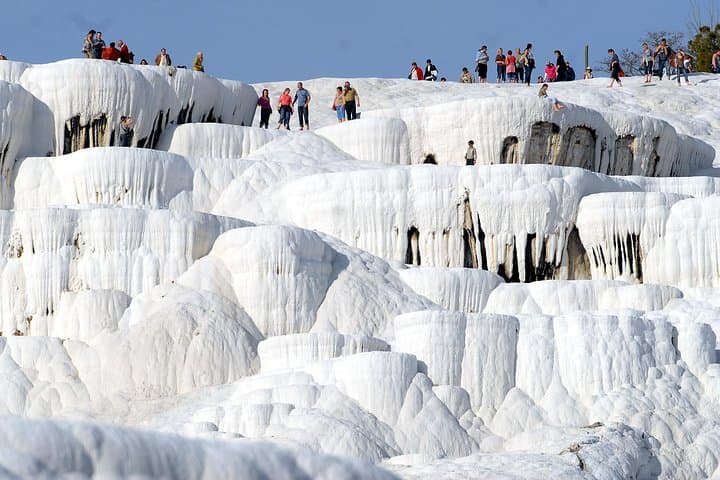
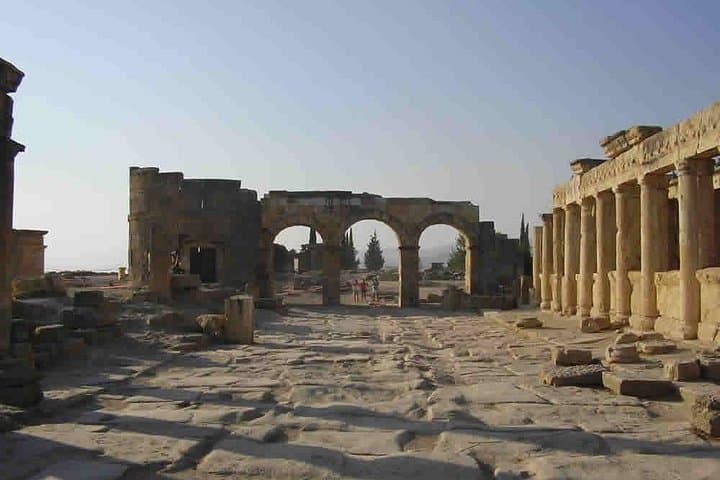
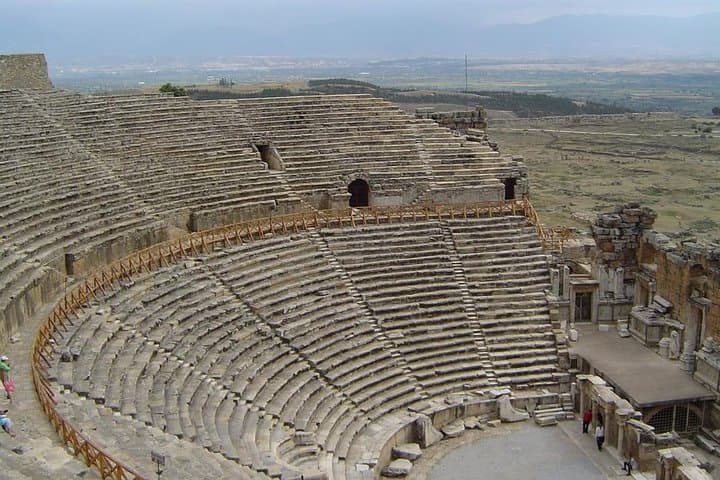
A pale slope of terraces unfolds ahead, the calcium-rich water catching the sun and turning the hillside into sheets of white that feel otherworldly underfoot. On a typical small-group day tour from Pamukkale you move between these travertine terraces and the archaeological remains of Hierapolis, trading the cool hiss of thermal runoff for columns, stairways and a Roman theater that still holds a hush.
A pale slope of terraces unfolds ahead, the calcium-rich water catching the sun and turning the hillside into sheets of white that feel otherworldly underfoot. On a typical small-group day tour from Pamukkale you move between these travertine terraces and the archaeological remains of Hierapolis, trading the cool hiss of thermal runoff for columns, stairways and a Roman theater that still holds a hush.
Geology here is the star: mineral-laden springs deposit calcite as they cool, building the stepped pools over millennia. Hierapolis grew beside those springs in the Hellenistic era—later Roman additions include baths, a necropolis and the theater—so the site reads like a layered history of spa culture in Anatolia.
Local culture is present in practical ways: small vendors near the site, traditional Turkish lunches included on many tours, and hot springs used continuously since antiquity. Conservation rules shape the visit—certain terraces are closed to protect active deposits and swimming is limited to designated zones.
Plan for six to eight hours on this excursion. Comfortable, easy-to-remove footwear and a refillable water bottle are essential; some walking is on uneven stone and there are stairs through the ruins. Morning or late afternoon departures reduce heat and crowds. Bring a swimsuit if you want a dip in the designated thermal pool, and carry cash for museum entry or optional extras. Guide-led tours simplify logistics—transport, entrance fees and lunch are often included—so you can focus on the sharp contrast between bright calcium, warm water and ancient stone.