THE ADVENTURE COLLECTIVE® · Independent discovery and booking for outdoor travel

Two days of thermal terraces, Roman baths and classical libraries: this semi-private tour links Pamukkale, Hierapolis, Laodicea and Ephesus with an overnight in Kuşadası. Expect walking on uneven stone, guided archaeology, and optional extras like the Antique Pool or paragliding.
Two days of thermal terraces, Roman baths and classical libraries: this semi-private tour links Pamukkale, Hierapolis, Laodicea and Ephesus with an overnight in Kuşadası. Expect walking on uneven stone, guided archaeology, and optional extras like the Antique Pool or paragliding.
White terraces shine like frozen rivers as you step onto Pamukkale’s calcium-rich slopes and feel warm mineral water tug at your sandals. The air carries a faint sulfur scent; steam rises from springs that have drawn visitors for millennia. Over two days you move from thermal travertines and ruined Roman baths to the marble colonnades and theater of Ephesus, with a coastal night in Kuşadası between.
Verified experiences and guided adventures in the surrounding area.
Operated by Turkey Experiences · Pamukkale, Denizli
White terraces shine like frozen rivers as you step onto Pamukkale’s calcium-rich slopes and feel warm mineral water tug at your sandals. The air carries a faint sulfur scent; steam rises from springs that have drawn visitors for millennia. Over two days you move from thermal travertines and ruined Roman baths to the marble colonnades and theater of Ephesus, with a coastal night in Kuşadası between.
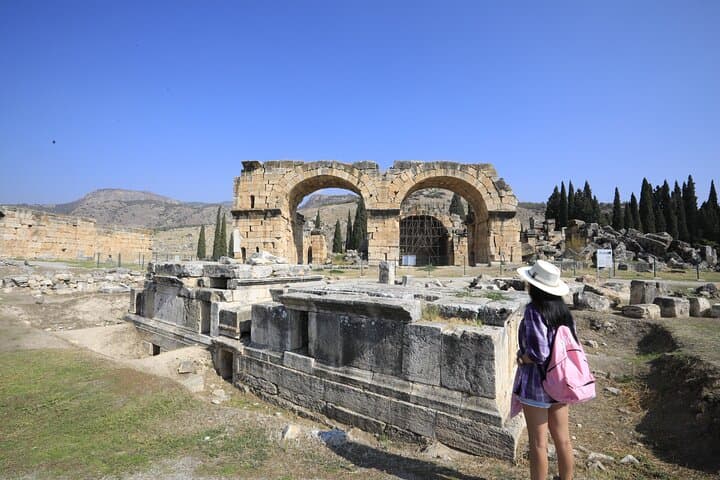
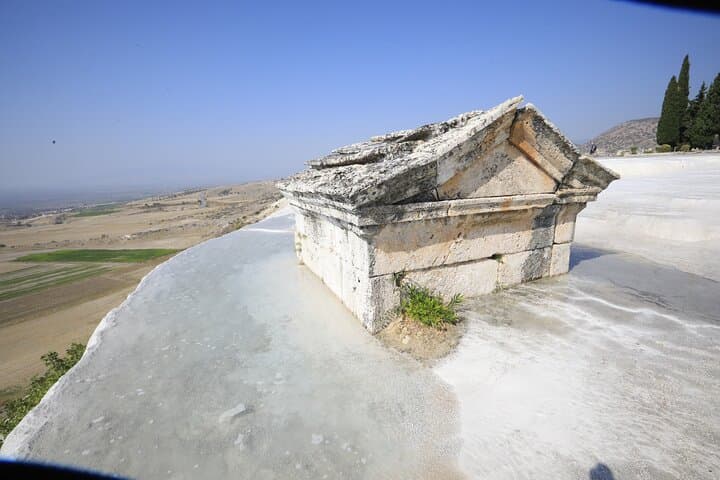
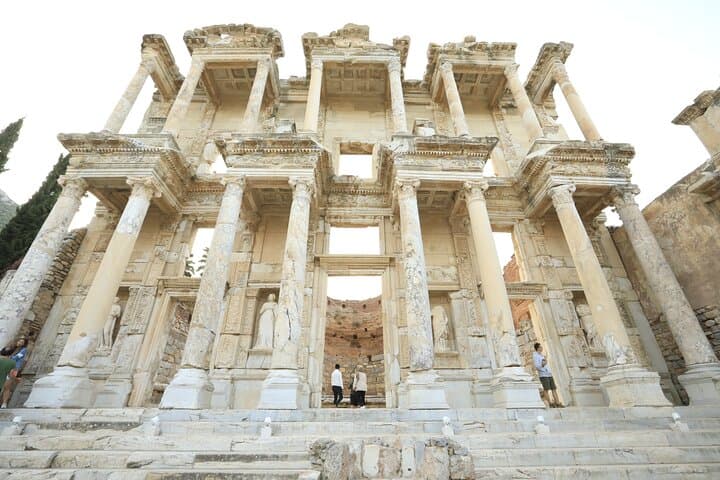
Geology here is literal storytelling: hot, mineral-laden springs deposit calcite to build the brilliant travertine shelves that feed Hierapolis’s ancient spa pools. Hierapolis and Laodicea trace layers of Anatolian civilizations — Hellenistic foundations, Roman urbanism and early Christian communities visible in basilicas and inscriptions. Ephesus was a major harbor and cultural hub; the Library of Celsus and the Great Theater still convey its scale. Local culture appears in village handicraft co-ops and the markets of Kuşadası, where Aegean olive oil and spices shape the meals you’ll taste.
Practical rhythm: expect two full days of walking on uneven stone, some short transfers and guided museum stops. Start early to avoid heat and crowds at Ephesus and bring modest clothing for religious sites like the House of the Virgin Mary. The Antique Pool and optional paragliding are extra-cost choices; entrance logistics and domestic flights may be handled by your operator. Hydrate, wear grippy shoes for wet travertine, and save time at dusk for a quieter view of terraces and the coast — nature here has an insistence that rewards slow attention.
moderate.
2 days (approx. 48 hours).
Suitable for travelers with moderate fitness: expect several hours of walking on uneven stone and short transfers.
The tour covers many inclusions but some optional attractions, like Cleopatra’s Antique Pool and paragliding, require extra fees—confirm specifics when booking.
Expect several hours of walking each day on uneven stone, stairs and gravel; comfortable shoes and moderate fitness are recommended.
Yes—most packages offer an option to connect to Cappadocia by domestic flight; check which package tier includes the flight.
Semi-private format is family-friendly, but the route through ruins and terraces is not ideal for limited mobility—advise the operator in advance.
Hierapolis grew as a Roman spa city around Pamukkale’s hot springs; Ephesus was a major Roman port and religious center, later significant in early Christian history.
Pamukkale is a UNESCO World Heritage Site with restricted access to protect travertine formations; visitors should follow marked paths and local rules to limit erosion and pollution.
Turkey Experiences operates guided outdoor trips and adventures with an emphasis on safety, stewardship, and memorable experiences.
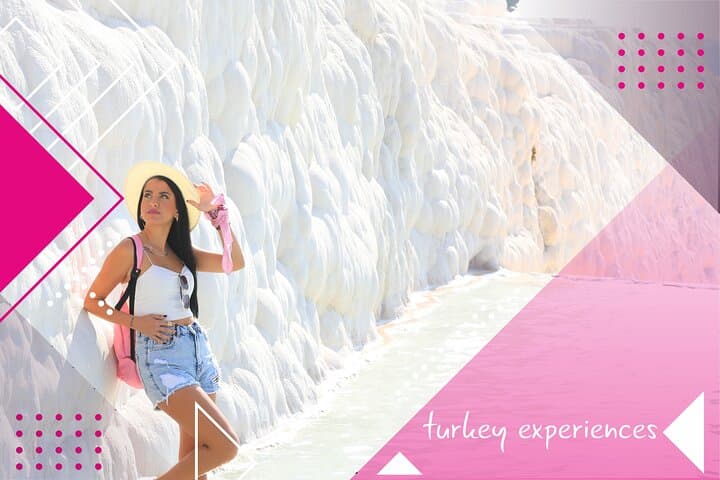
White terraces shine like frozen rivers as you step onto Pamukkale’s calcium-rich slopes and feel warm mineral water tug at your sandals. The air carries a faint sulfur scent; steam rises from springs that have drawn visitors for millennia. Over two days you move from thermal travertines and ruined Roman baths to the marble colonnades and theater of Ephesus, with a coastal night in Kuşadası between.
White terraces shine like frozen rivers as you step onto Pamukkale’s calcium-rich slopes and feel warm mineral water tug at your sandals. The air carries a faint sulfur scent; steam rises from springs that have drawn visitors for millennia. Over two days you move from thermal travertines and ruined Roman baths to the marble colonnades and theater of Ephesus, with a coastal night in Kuşadası between.
Geology here is literal storytelling: hot, mineral-laden springs deposit calcite to build the brilliant travertine shelves that feed Hierapolis’s ancient spa pools. Hierapolis and Laodicea trace layers of Anatolian civilizations — Hellenistic foundations, Roman urbanism and early Christian communities visible in basilicas and inscriptions. Ephesus was a major harbor and cultural hub; the Library of Celsus and the Great Theater still convey its scale. Local culture appears in village handicraft co-ops and the markets of Kuşadası, where Aegean olive oil and spices shape the meals you’ll taste.
Practical rhythm: expect two full days of walking on uneven stone, some short transfers and guided museum stops. Start early to avoid heat and crowds at Ephesus and bring modest clothing for religious sites like the House of the Virgin Mary. The Antique Pool and optional paragliding are extra-cost choices; entrance logistics and domestic flights may be handled by your operator. Hydrate, wear grippy shoes for wet travertine, and save time at dusk for a quieter view of terraces and the coast — nature here has an insistence that rewards slow attention.