THE ADVENTURE COLLECTIVE® · Independent discovery and booking for outdoor travel

Walk the milky-white travertine terraces of Pamukkale, explore the Roman spa town of Hierapolis, and float among submerged columns in Cleopatra’s Antique Pool. This private day tour from Antalya pairs dramatic geology with classical ruins for a full-day sensory experience.
Walk the milky-white travertine terraces of Pamukkale, explore the Roman spa town of Hierapolis, and float among submerged columns in Cleopatra’s Antique Pool. This private day tour from Antalya pairs dramatic geology with classical ruins for a full-day sensory experience.
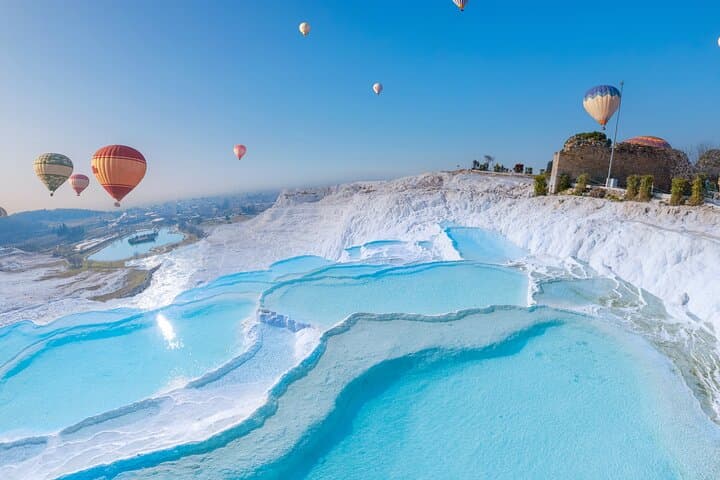
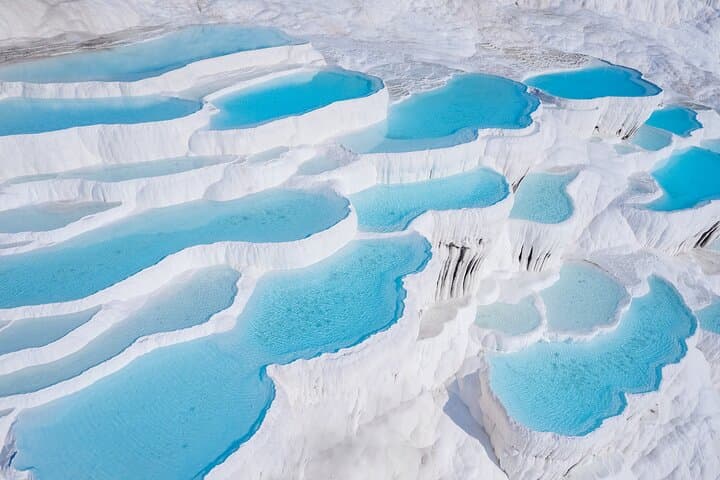
You arrive to a bright field of white—terraces of travertine catching the light, pools steaming softly like warm mirrors. Mineral-rich water threads down the slopes, daring you to pad barefoot across its calcified steps while the valley below widens toward the Aegean.
Verified experiences and guided adventures in the surrounding area.
Operated by Welcome Pickups · Pamukkale, Denizli
You arrive to a bright field of white—terraces of travertine catching the light, pools steaming softly like warm mirrors. Mineral-rich water threads down the slopes, daring you to pad barefoot across its calcified steps while the valley below widens toward the Aegean.
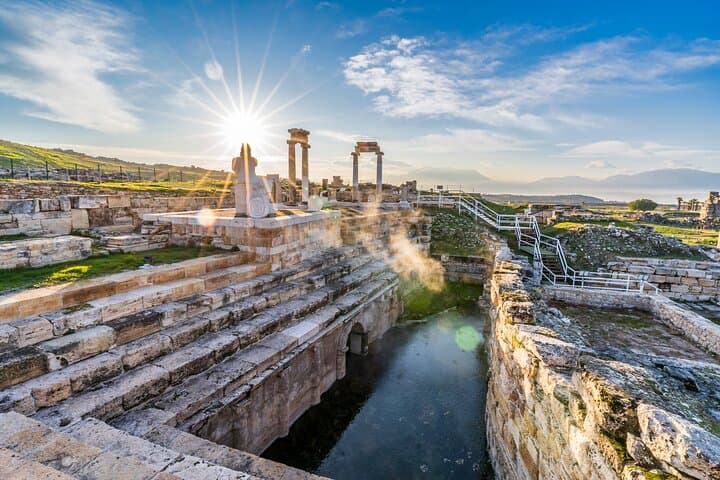
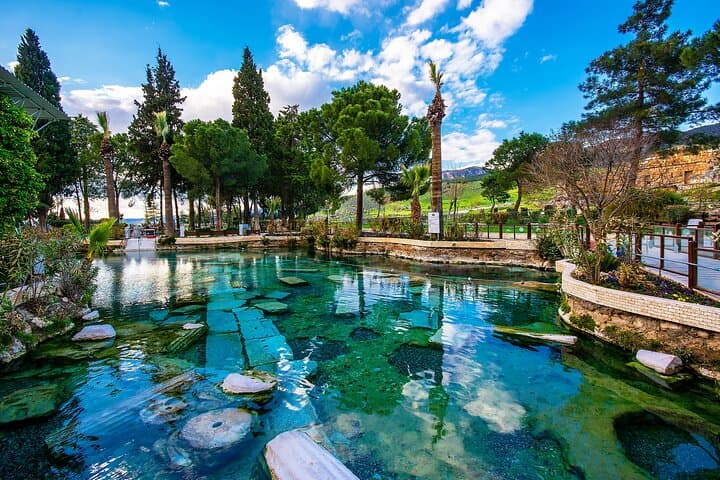
Geology and history are folded together here. The terraces are formed by millennia of calcium‑carbonate deposits from hot springs; above them, Hierapolis perches like an ancient spa city, its Roman theater, necropolis and colonnaded streets hinting at a culture built around healing waters. Cleopatra’s Antique Pool keeps its own story: submerged marble columns that rose from the sea of a different era, now framing swimmers in warm, silvery water.
Local insights matter: the red thermal vents of Karahayıt and the small Hierapolis Museum offer quieter windows into the area’s geology and daily life. Conservation measures—closed sections, footwear rules—keep the fragile travertine intact, so plan to respect the marked paths.
Practical guidance: most private tours run as full days from Antalya (expect a multi-hour drive each way) and include hotel pickup in air‑conditioned vehicles; entrance fees are paid on site. Walk the terraces barefoot, carry water, wear sun protection, and bring swimwear if you plan to enter Cleopatra’s Pool. Cameras and phones are great for photos, but be ready to shield lenses from mineral spray.
This itinerary pairs geological spectacle with Roman ruins—an accessible, sensory day that rewards early starts and patient exploration.
easy.
8–10 hours.
Suitable for travelers in average physical condition who can walk short distances on uneven surfaces and remove footwear for sections.
Expect roughly 3–4 hours each way by road depending on traffic; private tours typically allocate the full day to allow time at each site.
No—entrance to Pamukkale terraces and Cleopatra’s Pool are paid on site; the operator notes current approximate fees of €30 and €6–7 respectively.
Yes—visitors walk barefoot on specific terrace sections; follow signage and staff instructions to protect fragile formations.
The terraces and park have uneven surfaces; infants can be carried, and strollers are sometimes usable on paved areas, but close supervision is needed.
Hierapolis developed as a Roman and Hellenistic spa town around natural hot springs; many surviving ruins relate to its role as a healing and pilgrimage center.
The travertine terraces are fragile—authorities restrict footwear and access to certain pools to limit erosion and mineral damage; follow all posted rules to reduce impact.
Welcome Pickups operates guided outdoor trips and adventures with an emphasis on safety, stewardship, and memorable experiences.
You arrive to a bright field of white—terraces of travertine catching the light, pools steaming softly like warm mirrors. Mineral-rich water threads down the slopes, daring you to pad barefoot across its calcified steps while the valley below widens toward the Aegean.
You arrive to a bright field of white—terraces of travertine catching the light, pools steaming softly like warm mirrors. Mineral-rich water threads down the slopes, daring you to pad barefoot across its calcified steps while the valley below widens toward the Aegean.
Geology and history are folded together here. The terraces are formed by millennia of calcium‑carbonate deposits from hot springs; above them, Hierapolis perches like an ancient spa city, its Roman theater, necropolis and colonnaded streets hinting at a culture built around healing waters. Cleopatra’s Antique Pool keeps its own story: submerged marble columns that rose from the sea of a different era, now framing swimmers in warm, silvery water.
Local insights matter: the red thermal vents of Karahayıt and the small Hierapolis Museum offer quieter windows into the area’s geology and daily life. Conservation measures—closed sections, footwear rules—keep the fragile travertine intact, so plan to respect the marked paths.
Practical guidance: most private tours run as full days from Antalya (expect a multi-hour drive each way) and include hotel pickup in air‑conditioned vehicles; entrance fees are paid on site. Walk the terraces barefoot, carry water, wear sun protection, and bring swimwear if you plan to enter Cleopatra’s Pool. Cameras and phones are great for photos, but be ready to shield lenses from mineral spray.
This itinerary pairs geological spectacle with Roman ruins—an accessible, sensory day that rewards early starts and patient exploration.