THE ADVENTURE COLLECTIVE® · Independent discovery and booking for outdoor travel

Rise with the burners over Pamukkale’s chalk-white travertines and Roman ruins. This sunrise balloon flight offers panoramic views, a short lecture from your pilot, and hotel pickup for a seamless early-morning experience.
Rise with the burners over Pamukkale’s chalk-white travertines and Roman ruins. This sunrise balloon flight offers panoramic views, a short lecture from your pilot, and hotel pickup for a seamless early-morning experience.
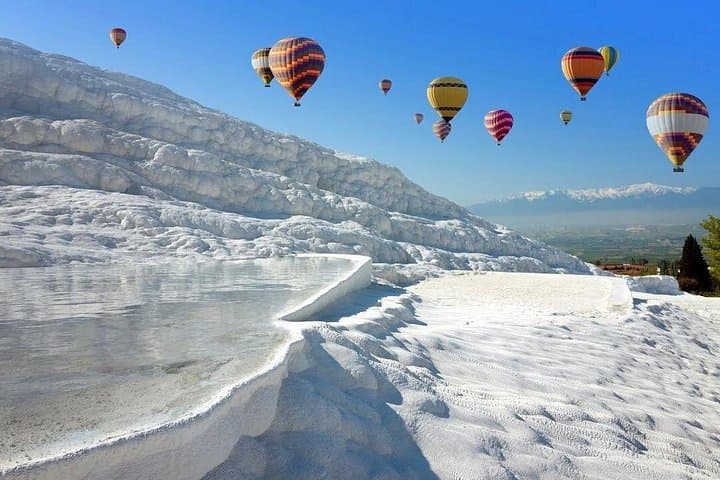
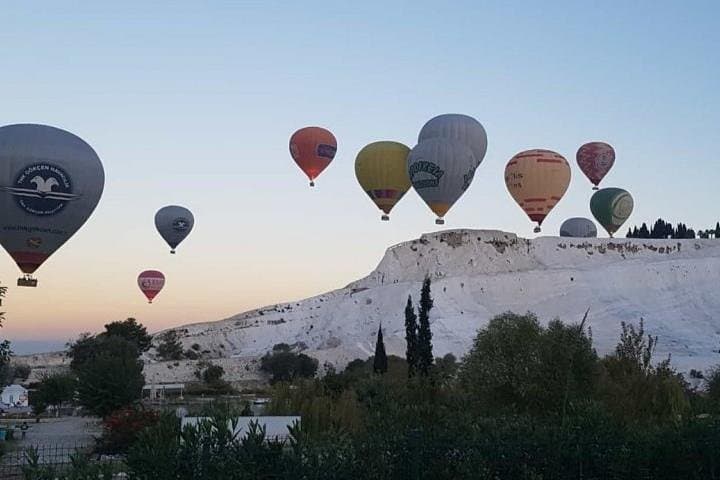
Before dawn, the balloons sit like giant lanterns on the limestone plateau, stitched to the earth by ropes and patient crews. As the burner coughs to life, the basket lifts and the light of sunrise pours over Pamukkale’s white terraces, throwing clean shadows across the calcite formations and the pale pools that have been building since antiquity.
Verified experiences and guided adventures in the surrounding area.
Operated by Enka Travel · Pamukkale, Denizli Province
Before dawn, the balloons sit like giant lanterns on the limestone plateau, stitched to the earth by ropes and patient crews. As the burner coughs to life, the basket lifts and the light of sunrise pours over Pamukkale’s white terraces, throwing clean shadows across the calcite formations and the pale pools that have been building since antiquity.
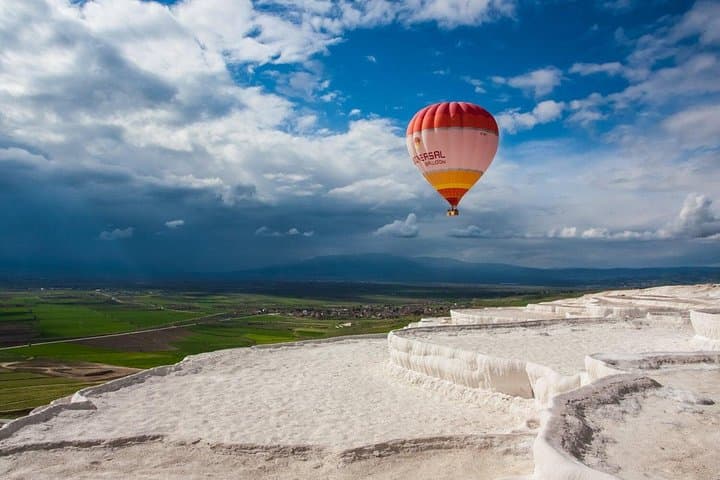
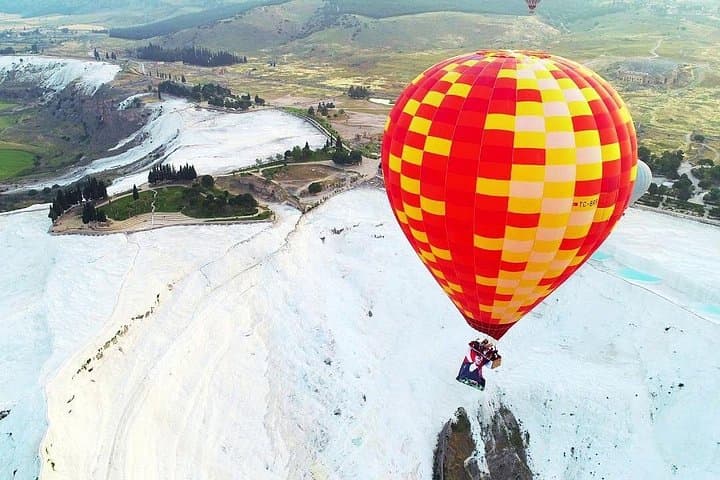
The terraces themselves are a geological ledger: millennia of mineral-rich thermal waters depositing travertine create broad, scalloped steps that look otherworldly from above. This landscape powered ancient Hierapolis, a Roman spa city that clung to the warm springs and erected baths, necropoleis, and a theater now visible from the air. Locals still treat the springs as part of daily life—farmers, shepherds, and hot-spring visitors sharing a slow, sunlit rhythm.
Expect 45–60 minutes aloft depending on wind, with a total tour window of roughly three hours including transfers. Pilots trained to national civil aviation standards steer by reading thermals and negotiating landing zones across fields and gentle valleys; wind dictates route more than any fixed itinerary. You’ll taste the dry mineral air, see farmers’ plots and the distant Taurus range, and feel the balloon’s gentle pacing as currents nudge you.
Practical notes: dress in layers for cool mornings, wear closed-toe shoes for uneven terrain at launch and landing, and bring a camera with a wrist strap. Tours run year-round weather permitting, so mornings with steady winds and clear visibility give the best photographic results.
easy.
3 hours.
Minimal fitness required—able to stand for the flight and step in/out of a basket over uneven ground.
The airborne portion is typically 45–60 minutes, with the full tour (pickup, flight, celebration, and drop-off) lasting about three hours.
Operators use licensed pilots and maintenance-regulated balloons; pilots brief passengers on safety procedures and the company carries liability insurance.
Sunrise flights provide the best light and stable morning thermals; book in advance during high season to secure a slot.
This operator lists all sales final and flights run weather permitting, so check scheduling flexibility and travel insurance before booking.
Pamukkale’s travertines formed from thermal waters used by ancient Hierapolis, a Roman spa and healing center whose ruins remain visible beside the white terraces.
The travertine terraces are fragile; water flow is managed and visitor access restricted in places to preserve deposits—respect posted paths and rules.
Enka Travel operates guided outdoor trips and adventures with an emphasis on safety, stewardship, and memorable experiences.
Before dawn, the balloons sit like giant lanterns on the limestone plateau, stitched to the earth by ropes and patient crews. As the burner coughs to life, the basket lifts and the light of sunrise pours over Pamukkale’s white terraces, throwing clean shadows across the calcite formations and the pale pools that have been building since antiquity.
Before dawn, the balloons sit like giant lanterns on the limestone plateau, stitched to the earth by ropes and patient crews. As the burner coughs to life, the basket lifts and the light of sunrise pours over Pamukkale’s white terraces, throwing clean shadows across the calcite formations and the pale pools that have been building since antiquity.
The terraces themselves are a geological ledger: millennia of mineral-rich thermal waters depositing travertine create broad, scalloped steps that look otherworldly from above. This landscape powered ancient Hierapolis, a Roman spa city that clung to the warm springs and erected baths, necropoleis, and a theater now visible from the air. Locals still treat the springs as part of daily life—farmers, shepherds, and hot-spring visitors sharing a slow, sunlit rhythm.
Expect 45–60 minutes aloft depending on wind, with a total tour window of roughly three hours including transfers. Pilots trained to national civil aviation standards steer by reading thermals and negotiating landing zones across fields and gentle valleys; wind dictates route more than any fixed itinerary. You’ll taste the dry mineral air, see farmers’ plots and the distant Taurus range, and feel the balloon’s gentle pacing as currents nudge you.
Practical notes: dress in layers for cool mornings, wear closed-toe shoes for uneven terrain at launch and landing, and bring a camera with a wrist strap. Tours run year-round weather permitting, so mornings with steady winds and clear visibility give the best photographic results.