THE ADVENTURE COLLECTIVE® · Independent discovery and booking for outdoor travel

Float over Pamukkale’s white travertines at sunrise on a one‑hour hot air balloon flight, watch Hierapolis awaken beneath you, and return to shore for a celebratory toast and a flight certificate. Perfect for early risers who want panoramic geology and history without a long trek.
Float over Pamukkale’s white travertines at sunrise on a one‑hour hot air balloon flight, watch Hierapolis awaken beneath you, and return to shore for a celebratory toast and a flight certificate. Perfect for early risers who want panoramic geology and history without a long trek.
Dawn breaks over white terraces and an ancient city, and the balloon rises as if the warm mineral springs themselves are pushing you skyward. From the basket, Pamukkale’s bleached travertines look like flowing ivory; below them, the ruins of Hierapolis sit like a patient city watching the sun climb.
Verified experiences and guided adventures in the surrounding area.
Operated by Payless · Pamukkale, Denizli Province
Dawn breaks over white terraces and an ancient city, and the balloon rises as if the warm mineral springs themselves are pushing you skyward. From the basket, Pamukkale’s bleached travertines look like flowing ivory; below them, the ruins of Hierapolis sit like a patient city watching the sun climb.
This landscape is geological theatre — travertine formed by calcium‑rich thermal waters depositing layers over millennia. The area has been a spa destination since Hellenistic and Roman times; Hierapolis was a thriving Roman healing center built beside those hot springs. Local culture still orients around the water: small spas, red mineral pools at nearby Karahayit and the restored Antique Pool where marble columns lie submerged.
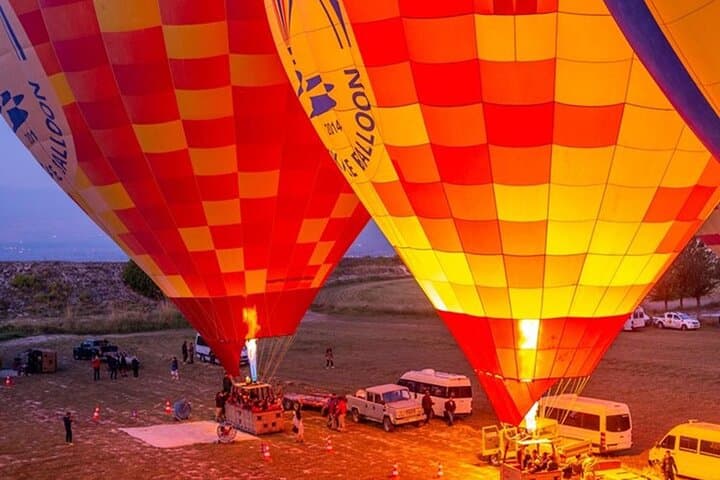
A morning flight offers changing light over terraces, the Roman theatre and agricultural plains toward Denizli. Winds determine the route, and experienced pilots choose launch sites to maximize views and safety. Landings are calm but can be bumpy; expect a short celebration with a non‑alcoholic toast and a personalized flight certificate before a transfer back to your hotel.
Practical tips: flights run at sunrise; dress in layers for cool mornings; wear sturdy, closed shoes for uneven field landings. Flights are weather‑dependent and can be canceled for safety. Bring a camera with a wide lens and keep phones secure while you lean to photograph the light on the travertines.
This is an accessible aerial experience that pairs cultural context with geological spectacle — a short, low‑impact way to see one of Turkey’s most singular landscapes.
easy.
2 hours (includes pickup and post‑flight celebration).
Light mobility required—participants should be able to stand for the flight and climb in/out of the basket; moderate fitness recommended for safe landings.
The airborne portion is typically about 45–60 minutes; total tour time including transfers and celebration is around two hours.
Flights are canceled for safety in unsuitable wind or weather; operators will refund or attempt to rebook you for the next available morning.
Children under 5 are usually not permitted; age and weight limits vary by operator, so check at booking.
Access to travertines is controlled for conservation—follow the site’s rules and designated barefoot paths; swimming in the terraces is generally prohibited, though the Antique Pool allows bathing.
Hierapolis was a Roman spa city founded in the 2nd century BCE; its ruins and the calcified terraces from thermal springs are part of a UNESCO World Heritage Site.
Pamukkale is protected to limit damage from foot traffic and uncontrolled bathing; follow signage, stick to designated routes and respect seasonal closures to preserve the travertines.
Payless operates guided outdoor trips and adventures with an emphasis on safety, stewardship, and memorable experiences.
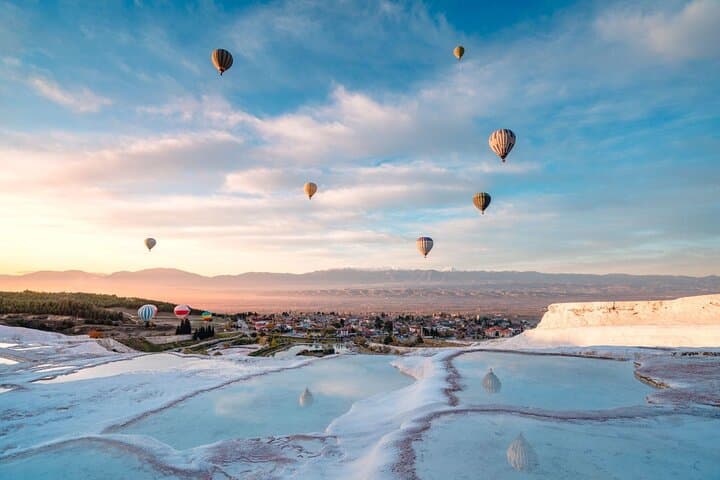

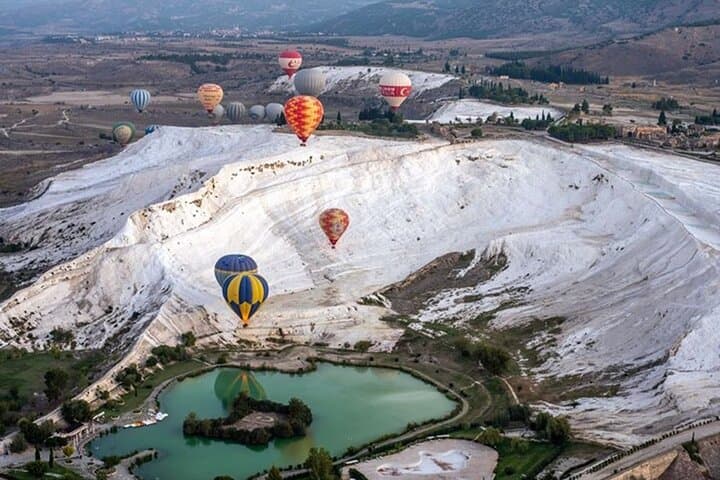
Dawn breaks over white terraces and an ancient city, and the balloon rises as if the warm mineral springs themselves are pushing you skyward. From the basket, Pamukkale’s bleached travertines look like flowing ivory; below them, the ruins of Hierapolis sit like a patient city watching the sun climb.
Dawn breaks over white terraces and an ancient city, and the balloon rises as if the warm mineral springs themselves are pushing you skyward. From the basket, Pamukkale’s bleached travertines look like flowing ivory; below them, the ruins of Hierapolis sit like a patient city watching the sun climb.
This landscape is geological theatre — travertine formed by calcium‑rich thermal waters depositing layers over millennia. The area has been a spa destination since Hellenistic and Roman times; Hierapolis was a thriving Roman healing center built beside those hot springs. Local culture still orients around the water: small spas, red mineral pools at nearby Karahayit and the restored Antique Pool where marble columns lie submerged.
A morning flight offers changing light over terraces, the Roman theatre and agricultural plains toward Denizli. Winds determine the route, and experienced pilots choose launch sites to maximize views and safety. Landings are calm but can be bumpy; expect a short celebration with a non‑alcoholic toast and a personalized flight certificate before a transfer back to your hotel.
Practical tips: flights run at sunrise; dress in layers for cool mornings; wear sturdy, closed shoes for uneven field landings. Flights are weather‑dependent and can be canceled for safety. Bring a camera with a wide lens and keep phones secure while you lean to photograph the light on the travertines.
This is an accessible aerial experience that pairs cultural context with geological spectacle — a short, low‑impact way to see one of Turkey’s most singular landscapes.