THE ADVENTURE COLLECTIVE® · Independent discovery and booking for outdoor travel

Soar over Pamukkale at sunrise to see the white travertines and ancient ruins of Hierapolis from a balloon. This guided sunrise flight includes hotel pickup and offers panoramic geology and history in 2–3 hours.
Soar over Pamukkale at sunrise to see the white travertines and ancient ruins of Hierapolis from a balloon. This guided sunrise flight includes hotel pickup and offers panoramic geology and history in 2–3 hours.
You lift off before dawn, the burner’s brief roar cutting the cold as the basket rises and Pamukkale unfolds beneath you: sheets of white travertine catch the first gold, thermal pools gleam like turquoise mirrors, and the ruins of Hierapolis lay quiet along the plateau.
Verified experiences and guided adventures in the surrounding area.
Operated by Turkey Trips and Excursions · Pamukkale, Denizli Province
You lift off before dawn, the burner’s brief roar cutting the cold as the basket rises and Pamukkale unfolds beneath you: sheets of white travertine catch the first gold, thermal pools gleam like turquoise mirrors, and the ruins of Hierapolis lay quiet along the plateau.
The travertines are not snow but mineral terraces—calcium carbonate deposited by hot springs over millennia—sculpting steps and basins that feed shallow thermal water. Hierapolis, founded in the 2nd century BCE by the Attalid kings, adds a human layer: ruined colonnades, a Roman theater and an ancient spa city that oriented local life around these springs. From the balloon you see geological processes and history side by side, and the landscape reads as both natural laboratory and cultural site.
Flights typically occur at sunrise for stable air and the best light; this tour lists a total duration of about 150 minutes including hotel transfers and ground handling, with shared baskets carrying up to around 15 passengers. Balloons operate low enough to show terrace detail but high enough for sweeping plains and surrounding mountains.
Practical guidance: expect chilly temperatures at altitude—dress in layers and wear closed-toe shoes for landing. Bring a camera with a secure strap; phones can be used but keep them tethered. Pregnant travelers and anyone with serious spinal or heart conditions should avoid ballooning. Confirm pickup times in advance and allow time for early-morning logistics. Respect UNESCO rules on the ground: terraces are protected—view from above and from designated walkways only.
easy.
2–3 hours.
Minimal fitness required—standing in the basket and boarding is the main physical demand.
The total tour time is about 150 minutes including transfers and ground handling; the airborne portion typically lasts around 45–60 minutes depending on conditions.
Many operators allow children but age policies vary—check booking rules and ensure children can stand for the flight and follow safety briefings.
Access to the terraces is controlled to protect the formations; visitors must follow designated paths and current site rules—bathing on terraces is not permitted.
Flights are canceled in unsafe weather; operators usually offer refunds or rescheduling—confirm the provider’s cancellation policy when booking.
Hierapolis was established in the 2nd century BCE and became a Roman spa city centered on thermal springs; the ruins visible today reflect centuries of Roman and Byzantine occupation.
Pamukkale is a UNESCO-listed site with strict access rules to protect the travertine deposits; visitors should stay on walkways and follow local regulations to limit impact.
Turkey Trips and Excursions operates guided outdoor trips and adventures with an emphasis on safety, stewardship, and memorable experiences.
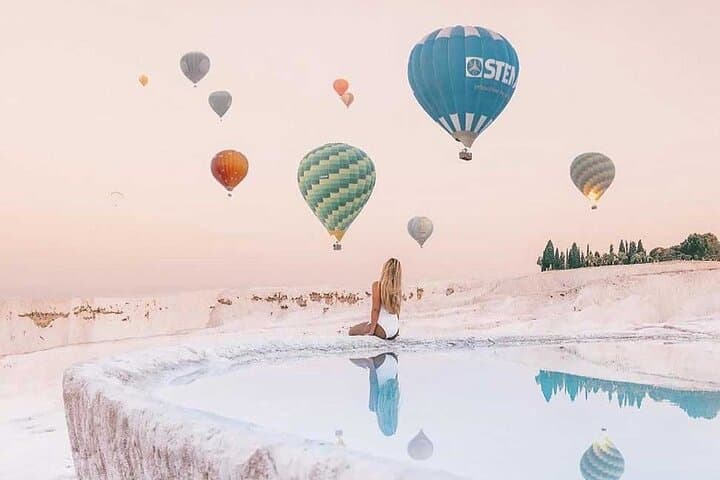
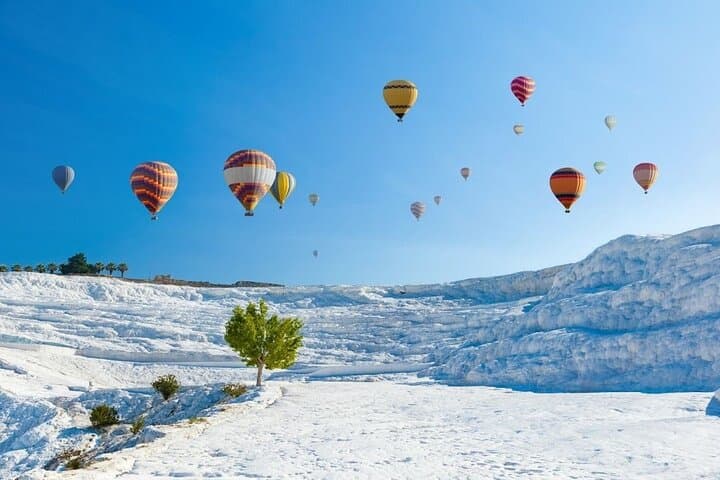
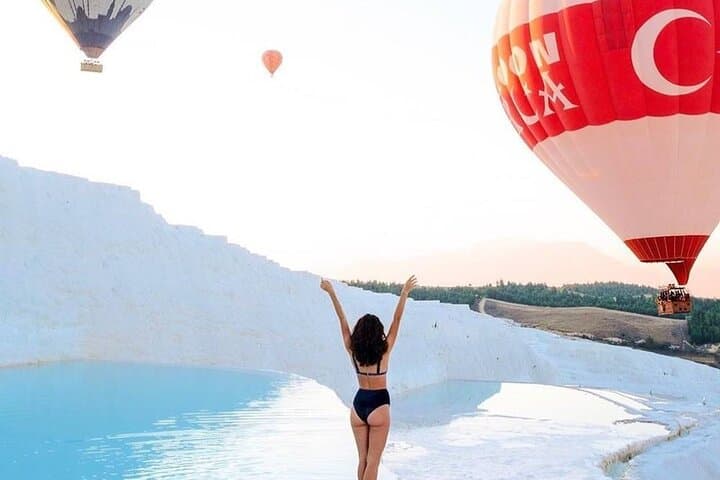
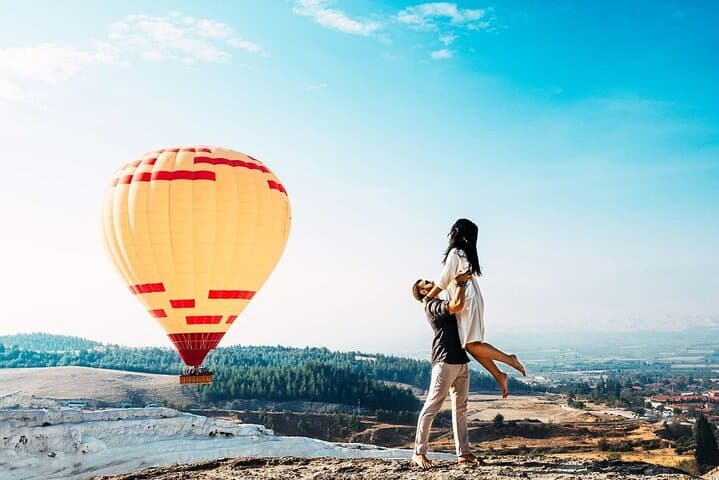
You lift off before dawn, the burner’s brief roar cutting the cold as the basket rises and Pamukkale unfolds beneath you: sheets of white travertine catch the first gold, thermal pools gleam like turquoise mirrors, and the ruins of Hierapolis lay quiet along the plateau.
You lift off before dawn, the burner’s brief roar cutting the cold as the basket rises and Pamukkale unfolds beneath you: sheets of white travertine catch the first gold, thermal pools gleam like turquoise mirrors, and the ruins of Hierapolis lay quiet along the plateau.
The travertines are not snow but mineral terraces—calcium carbonate deposited by hot springs over millennia—sculpting steps and basins that feed shallow thermal water. Hierapolis, founded in the 2nd century BCE by the Attalid kings, adds a human layer: ruined colonnades, a Roman theater and an ancient spa city that oriented local life around these springs. From the balloon you see geological processes and history side by side, and the landscape reads as both natural laboratory and cultural site.
Flights typically occur at sunrise for stable air and the best light; this tour lists a total duration of about 150 minutes including hotel transfers and ground handling, with shared baskets carrying up to around 15 passengers. Balloons operate low enough to show terrace detail but high enough for sweeping plains and surrounding mountains.
Practical guidance: expect chilly temperatures at altitude—dress in layers and wear closed-toe shoes for landing. Bring a camera with a secure strap; phones can be used but keep them tethered. Pregnant travelers and anyone with serious spinal or heart conditions should avoid ballooning. Confirm pickup times in advance and allow time for early-morning logistics. Respect UNESCO rules on the ground: terraces are protected—view from above and from designated walkways only.