THE ADVENTURE COLLECTIVE® · Independent discovery and booking for outdoor travel

Float above Pamukkale’s white travertines at dawn on a calm hot-air balloon ride that pairs sweeping geological views with a post-flight champagne toast. This early-morning flight blends easy logistics with unforgettable panoramas and a taste of the region’s spa-town history.
Float above Pamukkale’s white travertines at dawn on a calm hot-air balloon ride that pairs sweeping geological views with a post-flight champagne toast. This early-morning flight blends easy logistics with unforgettable panoramas and a taste of the region’s spa-town history.
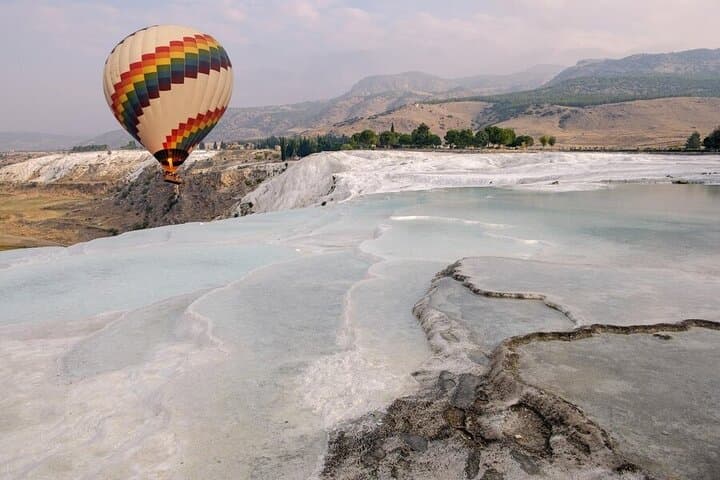
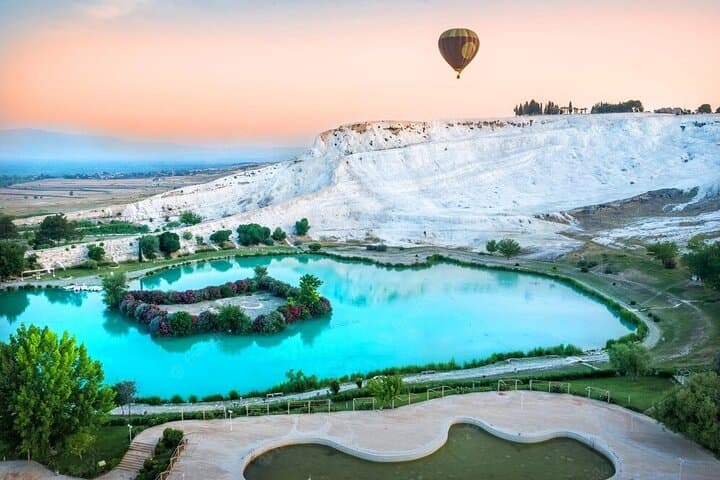
You lift off before sunrise and the valley exhales beneath you — a bowl of white terraces and steaming pools that catch the first pale light. Balloons bloom across the sky and the pilot eases you outward, the travertines of Pamukkale unfolding like a frozen river of chalk while thermal steam rises from the ground and the town of Pamukkale sits quiet below.
Verified experiences and guided adventures in the surrounding area.
Operated by Tempel Travel · Pamukkale, Denizli
You lift off before sunrise and the valley exhales beneath you — a bowl of white terraces and steaming pools that catch the first pale light. Balloons bloom across the sky and the pilot eases you outward, the travertines of Pamukkale unfolding like a frozen river of chalk while thermal steam rises from the ground and the town of Pamukkale sits quiet below.
Those white terraces are travertine, a geological record of mineral-rich thermal waters that have flowed here for millennia; the Romans built the spa city of Hierapolis above them and routed emperors and pilgrims to its baths. Today the landscape reads as both natural archive and cultural site: stone stairways, Greco-Roman ruins, and modern boardwalks that direct visitors to protect the deposits.
Expect gentle, largely passive flight — ballooning here is about light, patience, and broad panoramas rather than adrenaline. Typical departures are at dawn when winds are calm and visibility is best; flights last about an hour with hotel pickup and a short transfer making the total experience roughly two hours. Champagne and a participation certificate are often included in post-flight celebrations.
Practical notes: dress in layered clothes for cool pre-dawn temps, wear flat, closed-toe shoes for boarding and uneven landing fields, and carry a camera with a secure strap. Weather is the gatekeeper — flights cancel in strong wind or rain. Respect the protected terraces: stay on boardwalks and follow crew instructions. With straightforward logistics and unforgettable light, a Pamukkale balloon ride is a brief, elevated way to read the region’s geology and history from above.
easy.
2 hours (total; ~1 hour flight).
Suitable for most fitness levels; requires ability to step into and stand in a basket for the flight duration.
The airborne portion typically lasts around 45–60 minutes; the full pickup-to-dropoff experience is about two hours.
Yes; a small celebratory toast and a participation certificate are commonly included after landing.
Restrictions vary by operator; most accept children and seniors but may enforce weight limits for safety—check when booking.
Flights are canceled for unsafe wind or rain and operators usually offer a full refund or alternate date; confirm the specific policy at booking.
The terraces are travertine formed by mineral-rich hot springs; above them, the Roman spa city of Hierapolis developed as a healing center and left ruins visible today.
Pamukkale’s formations are sensitive to foot traffic and water diversion; staying on boardwalks and following park rules helps preserve the travertines for future visitors.
Tempel Travel operates guided outdoor trips and adventures with an emphasis on safety, stewardship, and memorable experiences.
You lift off before sunrise and the valley exhales beneath you — a bowl of white terraces and steaming pools that catch the first pale light. Balloons bloom across the sky and the pilot eases you outward, the travertines of Pamukkale unfolding like a frozen river of chalk while thermal steam rises from the ground and the town of Pamukkale sits quiet below.
You lift off before sunrise and the valley exhales beneath you — a bowl of white terraces and steaming pools that catch the first pale light. Balloons bloom across the sky and the pilot eases you outward, the travertines of Pamukkale unfolding like a frozen river of chalk while thermal steam rises from the ground and the town of Pamukkale sits quiet below.
Those white terraces are travertine, a geological record of mineral-rich thermal waters that have flowed here for millennia; the Romans built the spa city of Hierapolis above them and routed emperors and pilgrims to its baths. Today the landscape reads as both natural archive and cultural site: stone stairways, Greco-Roman ruins, and modern boardwalks that direct visitors to protect the deposits.
Expect gentle, largely passive flight — ballooning here is about light, patience, and broad panoramas rather than adrenaline. Typical departures are at dawn when winds are calm and visibility is best; flights last about an hour with hotel pickup and a short transfer making the total experience roughly two hours. Champagne and a participation certificate are often included in post-flight celebrations.
Practical notes: dress in layered clothes for cool pre-dawn temps, wear flat, closed-toe shoes for boarding and uneven landing fields, and carry a camera with a secure strap. Weather is the gatekeeper — flights cancel in strong wind or rain. Respect the protected terraces: stay on boardwalks and follow crew instructions. With straightforward logistics and unforgettable light, a Pamukkale balloon ride is a brief, elevated way to read the region’s geology and history from above.