THE ADVENTURE COLLECTIVE® · Independent discovery and booking for outdoor travel

Rise above Pamukkale’s white travertines at sunrise for aerial views of Hierapolis, thermal springs, and Denizli’s plains. This two-hour experience combines gentle flight with cultural and geological context—ideal for photographers and first-time balloonists.
Rise above Pamukkale’s white travertines at sunrise for aerial views of Hierapolis, thermal springs, and Denizli’s plains. This two-hour experience combines gentle flight with cultural and geological context—ideal for photographers and first-time balloonists.
Dawn cracks over chalk-white terraces as the burner hisses and the balloon lifts. From the wicker basket you watch the travertine plates of Pamukkale roll away like frozen waterfalls, while the ruins of Hierapolis and the low plain toward Denizli shrink into a mosaic below.
Verified experiences and guided adventures in the surrounding area.
Operated by Gezenthi Travel Agency · Pamukkale, Denizli
Dawn cracks over chalk-white terraces as the burner hisses and the balloon lifts. From the wicker basket you watch the travertine plates of Pamukkale roll away like frozen waterfalls, while the ruins of Hierapolis and the low plain toward Denizli shrink into a mosaic below.
The landscape here is geological show-and-tell: calcium-rich thermal waters have built the terraces over millennia, and the Greco-Roman city of Hierapolis—founded as a healing spa—sits perched above the white calcite shelves. Centuries of human use and modern tourism have shaped what you see from the air: ancient theatre walls, colonnaded streets, and the red springs at Karahayıt just beyond.
Local culture still centers on thermal traditions and agriculture; pilots usually narrate this context during flight, connecting the visual sweep to historic baths and the region’s geology.
Practical guidance: most flights include pickup from Pamukkale hotels, a safety briefing, and a light landing celebration before return transport. Flights commonly reach about 1,000 meters and last roughly an hour in the air within a two-hour window including transfers. Weather drives operations—wind or storms cancel flights and refunds are standard. Expect a preflight briefing about boarding and landing positions; moderate fitness is required to step into the basket and stand for the flight.
Pack a camera, warm layers for the pre-dawn chill, sturdy shoes for the transfer and landing, and plan for an early start. Confirm age and pregnancy policies with the operator and arrive ready to trade city noise for a quiet, airborne perspective on one of Turkey’s most visually striking landscapes.
moderate.
2 hours.
Should be able to stand for the duration of the flight and climb into a basket; a moderate level of mobility is needed for safe boarding and disembarking.
The full experience is typically scheduled for about two hours including pickup, briefing, and post-flight celebration; airborne time is usually around 45–60 minutes.
Flights run subject to weather and wind conditions—operators commonly confirm or cancel the day before or the morning of the flight and provide refunds for weather-related cancellations.
Pregnant travelers and people with serious cardiovascular conditions are generally advised not to fly; children under six may be restricted depending on conditions—check with the operator when booking.
No technical experience is required; the operator provides a safety briefing and the crew handles takeoff, navigation, and landing. Basic mobility to step into and out of the basket is needed.
Hierapolis developed as a thermal spa city in the Hellenistic and Roman periods; its ruins and the calcite terraces reflect both geological processes and centuries of human bathing culture.
The travertines are a protected landscape; access is managed via designated paths and footwear rules to limit erosion—respect barriers and local guidelines to preserve the formations.
Gezenthi Travel Agency operates guided outdoor trips and adventures with an emphasis on safety, stewardship, and memorable experiences.
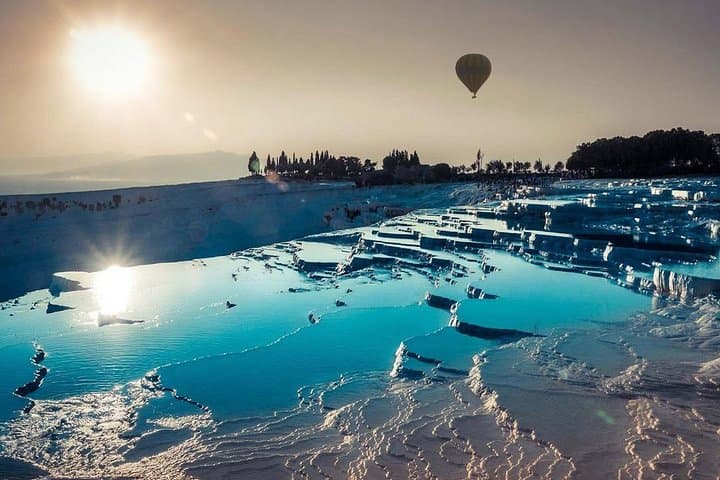
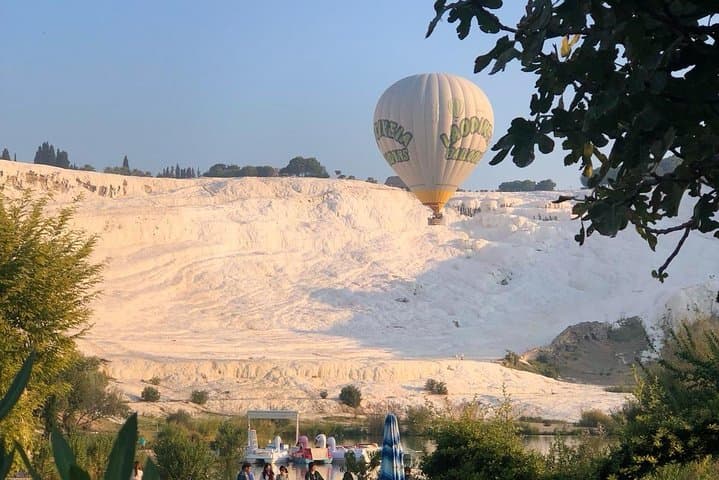
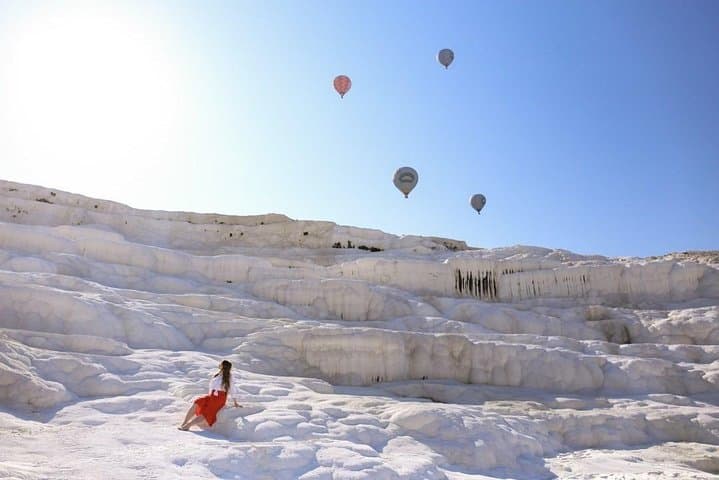
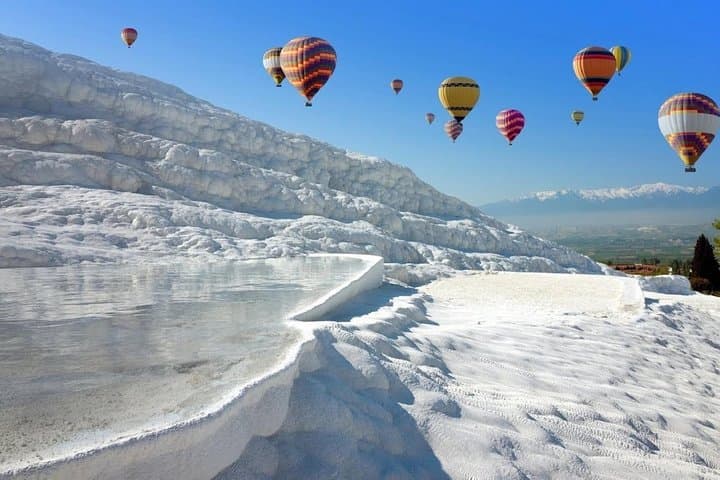
Dawn cracks over chalk-white terraces as the burner hisses and the balloon lifts. From the wicker basket you watch the travertine plates of Pamukkale roll away like frozen waterfalls, while the ruins of Hierapolis and the low plain toward Denizli shrink into a mosaic below.
Dawn cracks over chalk-white terraces as the burner hisses and the balloon lifts. From the wicker basket you watch the travertine plates of Pamukkale roll away like frozen waterfalls, while the ruins of Hierapolis and the low plain toward Denizli shrink into a mosaic below.
The landscape here is geological show-and-tell: calcium-rich thermal waters have built the terraces over millennia, and the Greco-Roman city of Hierapolis—founded as a healing spa—sits perched above the white calcite shelves. Centuries of human use and modern tourism have shaped what you see from the air: ancient theatre walls, colonnaded streets, and the red springs at Karahayıt just beyond.
Local culture still centers on thermal traditions and agriculture; pilots usually narrate this context during flight, connecting the visual sweep to historic baths and the region’s geology.
Practical guidance: most flights include pickup from Pamukkale hotels, a safety briefing, and a light landing celebration before return transport. Flights commonly reach about 1,000 meters and last roughly an hour in the air within a two-hour window including transfers. Weather drives operations—wind or storms cancel flights and refunds are standard. Expect a preflight briefing about boarding and landing positions; moderate fitness is required to step into the basket and stand for the flight.
Pack a camera, warm layers for the pre-dawn chill, sturdy shoes for the transfer and landing, and plan for an early start. Confirm age and pregnancy policies with the operator and arrive ready to trade city noise for a quiet, airborne perspective on one of Turkey’s most visually striking landscapes.