THE ADVENTURE COLLECTIVE® · Independent discovery and booking for outdoor travel

Walk the white travertines of Pamukkale and explore the ruins of Hierapolis on a small-group day tour. This guide covers what to expect—from geology and history to practical tips on footwear, tickets and when to arrive.
Walk the white travertines of Pamukkale and explore the ruins of Hierapolis on a small-group day tour. This guide covers what to expect—from geology and history to practical tips on footwear, tickets and when to arrive.
A white ridge of mineral terraces unfurls ahead, each pool a shallow mirror catching the Anatolian sun as steam lifts from warm calcium-rich water. On this small-group excursion visitors move between the surreal, bone-white travertines and the stone bones of Hierapolis, where a Roman theatre watches over a town shaped by hot springs for millennia.
Verified experiences and guided adventures in the surrounding area.
Operated by Cappadocia Private Guide · Pamukkale, Denizli Province
A white ridge of mineral terraces unfurls ahead, each pool a shallow mirror catching the Anatolian sun as steam lifts from warm calcium-rich water. On this small-group excursion visitors move between the surreal, bone-white travertines and the stone bones of Hierapolis, where a Roman theatre watches over a town shaped by hot springs for millennia.
Geology writes the scene: hot, carbonate-laden waters deposit calcite as they cool, building the stepped travertines that make Pamukkale unique. Hierapolis rose beside them in the Hellenistic period and expanded under Rome—its necropolis, baths and theatre speak to a spa culture that predates modern tourism. Locals from Denizli still trade handwoven textiles and tell practical tales of the springs' curative reputation.
Expect about 6–8 hours on tour with guide-led visits to ruins, stops at the terraces and time for a dip where allowed. The terraces are fragile: walking zones rotate and barefoot access is enforced in parts to protect the formations. Bring sun protection, sturdy sandals for walking to viewing spots, and a towel if you plan to swim in the designated thermal pool (entry sometimes extra). Arrive early or favor late afternoon light for fewer people and richer colors on the travertines.
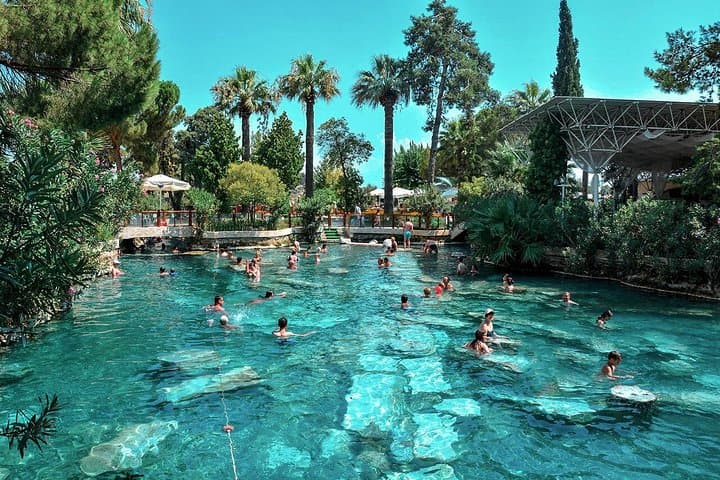
Logistics typically include pickup/drop-off, a boxed or local lunch, and a professional guide; confirm whether park entrance and Cleopatra (antique) pool fees are included before booking. Move deliberately here—the landscape feels alive, the water daring you to pause and feel its warmth.
easy.
6–8 hours.
Suitable for most fitness levels; requires steady walking on uneven, sometimes wet surfaces and short stair sections.
Not always—many small-group tours include pickup, guide and lunch but leave park or archaeological site entrance fees and Cleopatra Pool access as extras; check booking details.
Public walking areas allow barefoot access only; swimming is restricted to designated thermal pools (such as the Antique/Cleopatra Pool) and usually requires an extra fee.
Yes—this tour is generally listed as suitable for all fitness levels, but caregivers should note uneven surfaces, steps and occasional slippery sections that may be challenging.
Towels and swimwear are often not provided—bring your own quick-dry towel and a change of clothes if you plan to enter the thermal pool.
Hierapolis was founded in the 2nd century BCE and expanded under Roman rule as a healing center built around the thermal springs.
Pamukkale’s travertines are fragile and managed via restricted walking areas and timed access; visitors should avoid soaps and oils in thermal water and follow park rules to limit impact.
Cappadocia Private Guide operates guided outdoor trips and adventures with an emphasis on safety, stewardship, and memorable experiences.
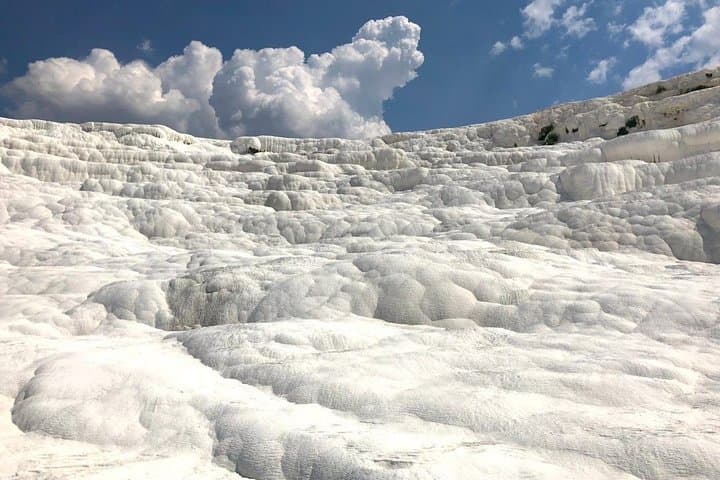
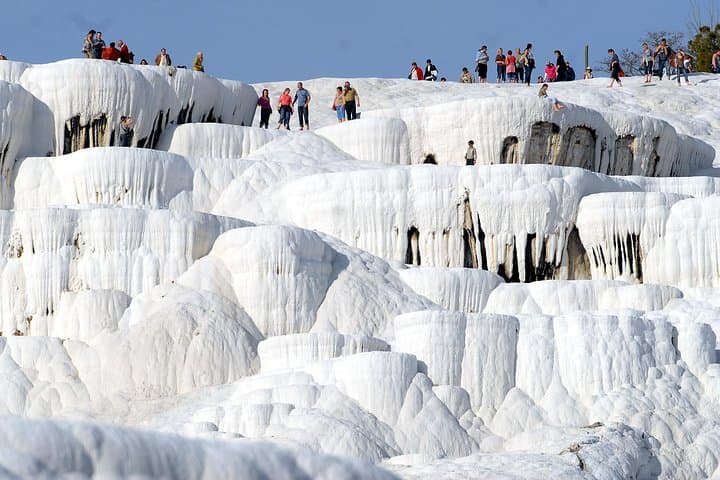
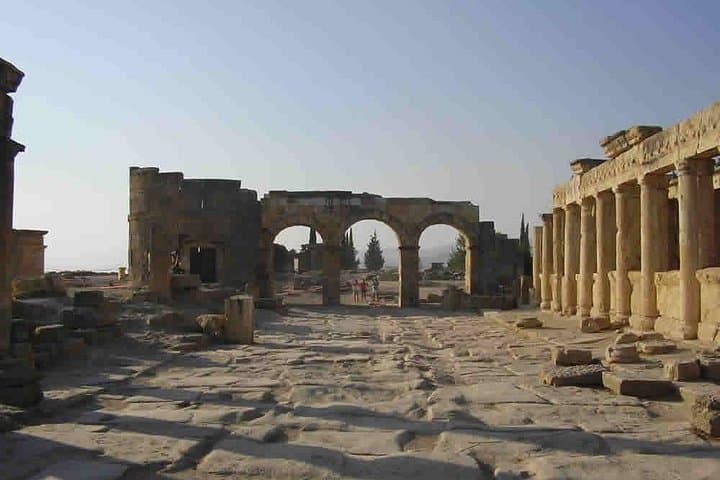
A white ridge of mineral terraces unfurls ahead, each pool a shallow mirror catching the Anatolian sun as steam lifts from warm calcium-rich water. On this small-group excursion visitors move between the surreal, bone-white travertines and the stone bones of Hierapolis, where a Roman theatre watches over a town shaped by hot springs for millennia.
A white ridge of mineral terraces unfurls ahead, each pool a shallow mirror catching the Anatolian sun as steam lifts from warm calcium-rich water. On this small-group excursion visitors move between the surreal, bone-white travertines and the stone bones of Hierapolis, where a Roman theatre watches over a town shaped by hot springs for millennia.
Geology writes the scene: hot, carbonate-laden waters deposit calcite as they cool, building the stepped travertines that make Pamukkale unique. Hierapolis rose beside them in the Hellenistic period and expanded under Rome—its necropolis, baths and theatre speak to a spa culture that predates modern tourism. Locals from Denizli still trade handwoven textiles and tell practical tales of the springs' curative reputation.
Expect about 6–8 hours on tour with guide-led visits to ruins, stops at the terraces and time for a dip where allowed. The terraces are fragile: walking zones rotate and barefoot access is enforced in parts to protect the formations. Bring sun protection, sturdy sandals for walking to viewing spots, and a towel if you plan to swim in the designated thermal pool (entry sometimes extra). Arrive early or favor late afternoon light for fewer people and richer colors on the travertines.
Logistics typically include pickup/drop-off, a boxed or local lunch, and a professional guide; confirm whether park entrance and Cleopatra (antique) pool fees are included before booking. Move deliberately here—the landscape feels alive, the water daring you to pause and feel its warmth.