THE ADVENTURE COLLECTIVE® · Independent discovery and booking for outdoor travel

Walk the otherworldly white terraces of Pamukkale and explore the Roman-era ruins of Hierapolis on a small-group day tour. This full-day outing mixes geology, history and hands-on time at designated thermal pools.
Walk the otherworldly white terraces of Pamukkale and explore the Roman-era ruins of Hierapolis on a small-group day tour. This full-day outing mixes geology, history and hands-on time at designated thermal pools.
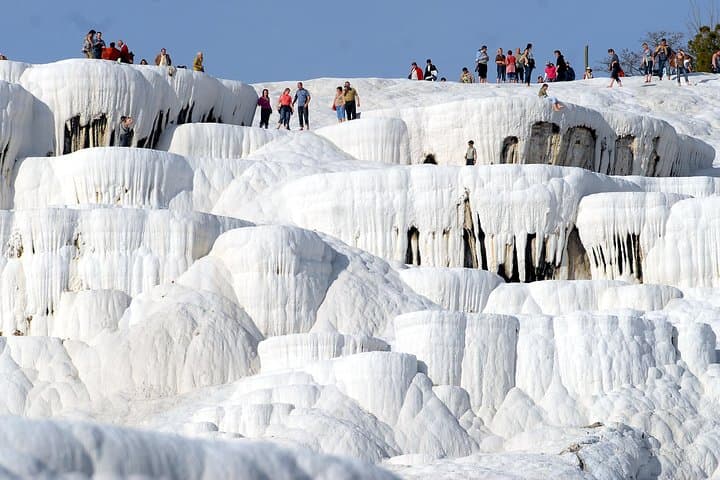
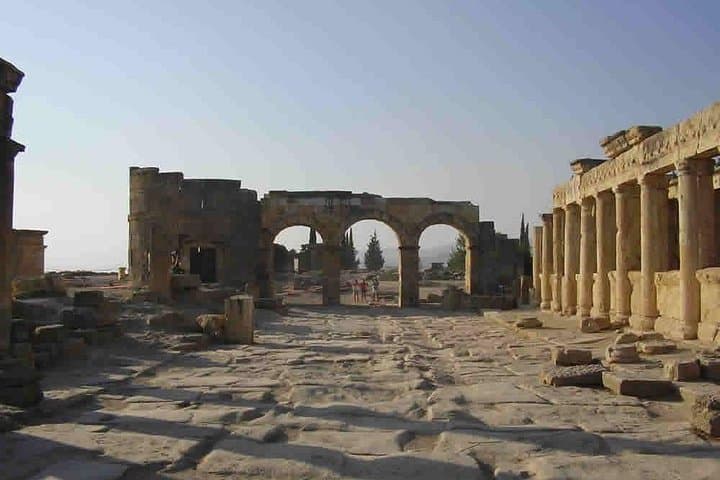
A thin steam rises where calcium-rich water cools over white terraces, and you step onto ancient stone that’s seen traders, pilgrims and physicians for two millennia. The terraces of Pamukkale feel alive: hot springs push warm fingers across the landscape while the ruined city of Hierapolis sits like a watchful neighbor above, its colonnades and theater framing a history of healing.
Verified experiences and guided adventures in the surrounding area.
Operated by PRIVATE EPHESUS SHOREX TOURS · Pamukkale, Denizli Province
A thin steam rises where calcium-rich water cools over white terraces, and you step onto ancient stone that’s seen traders, pilgrims and physicians for two millennia. The terraces of Pamukkale feel alive: hot springs push warm fingers across the landscape while the ruined city of Hierapolis sits like a watchful neighbor above, its colonnades and theater framing a history of healing.
Hierapolis was founded in the 2nd century BCE as a thermal spa by the kings of Pergamon; successive Roman and Byzantine layers left a dense archaeological patchwork. Geologically, the travertines are living limestone formed as mineral-rich water precipitates calcium carbonate—delicate, glossy basins that demand respect. Locally, the springs shaped settlement patterns and lore about curative waters; modern Pamukkale balances tourism with preservation.
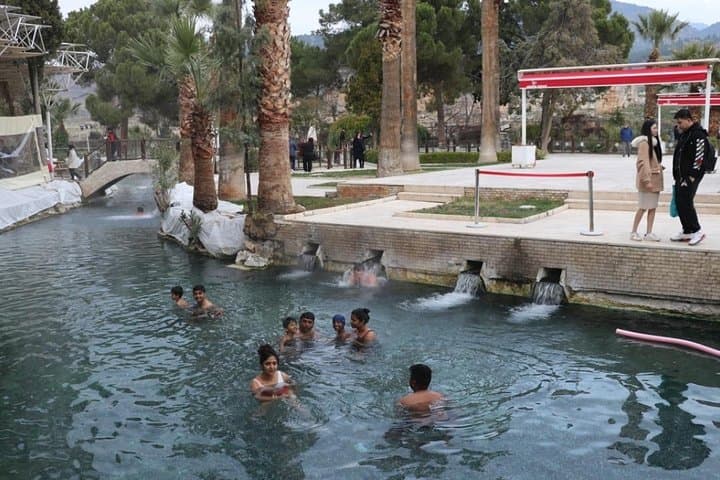
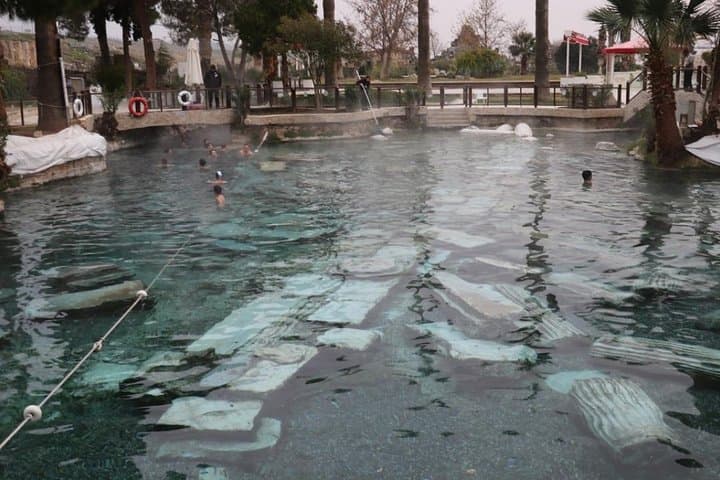
On a typical small-group day tour you’ll walk terraces (some areas protected), visit Hierapolis’ necropolis and theater, and find designated pools where swims are permitted. Expect uneven stone, warm mist, and bright white scalloped terraces that change with the sun. Guides often include a cooked lunch and transport in an air-conditioned vehicle; the Antique (Cleopatra) Pool usually requires a separate entry fee.
Practical guidance: wear sturdy sandals or shoes that grip wet stone, bring a towel and a swimsuit if you intend to enter allowed pools, and carry water—the plateaus reflect heat. Aim for morning or late afternoon to avoid peak crowds and strong midday sun. Respect fenced-off terraces and rinse off lotions before soaking—these formations are fragile, and conservation depends on visitor care.
Most natural terrace basins are protected and off-limits; tours include access to designated pools and the nearby Antique Pool (often separate fee) where swimming is permitted.
This small-group day tour runs about 8–10 hours and typically includes pickup, drop-off and transport in an air-conditioned vehicle, plus lunch as listed by the operator.
Much of Hierapolis and the terraces are uneven with steps; some viewpoints are accessible but full access is limited—check with the operator about specific accessibility needs and pickup points.
Wear grippy shoes, sun protection, a swimsuit if you plan to soak, and light layers; bring cash for additional entrance fees like the Antique Pool and for souvenirs or refreshments.
PRIVATE EPHESUS SHOREX TOURS operates guided outdoor trips and adventures with an emphasis on safety, stewardship, and memorable experiences.
A thin steam rises where calcium-rich water cools over white terraces, and you step onto ancient stone that’s seen traders, pilgrims and physicians for two millennia. The terraces of Pamukkale feel alive: hot springs push warm fingers across the landscape while the ruined city of Hierapolis sits like a watchful neighbor above, its colonnades and theater framing a history of healing.
A thin steam rises where calcium-rich water cools over white terraces, and you step onto ancient stone that’s seen traders, pilgrims and physicians for two millennia. The terraces of Pamukkale feel alive: hot springs push warm fingers across the landscape while the ruined city of Hierapolis sits like a watchful neighbor above, its colonnades and theater framing a history of healing.
Hierapolis was founded in the 2nd century BCE as a thermal spa by the kings of Pergamon; successive Roman and Byzantine layers left a dense archaeological patchwork. Geologically, the travertines are living limestone formed as mineral-rich water precipitates calcium carbonate—delicate, glossy basins that demand respect. Locally, the springs shaped settlement patterns and lore about curative waters; modern Pamukkale balances tourism with preservation.
On a typical small-group day tour you’ll walk terraces (some areas protected), visit Hierapolis’ necropolis and theater, and find designated pools where swims are permitted. Expect uneven stone, warm mist, and bright white scalloped terraces that change with the sun. Guides often include a cooked lunch and transport in an air-conditioned vehicle; the Antique (Cleopatra) Pool usually requires a separate entry fee.
Practical guidance: wear sturdy sandals or shoes that grip wet stone, bring a towel and a swimsuit if you intend to enter allowed pools, and carry water—the plateaus reflect heat. Aim for morning or late afternoon to avoid peak crowds and strong midday sun. Respect fenced-off terraces and rinse off lotions before soaking—these formations are fragile, and conservation depends on visitor care.