THE ADVENTURE COLLECTIVE® · Independent discovery and booking for outdoor travel

Book ahead for official entry and a downloadable audio guide to Pamukkale and Hierapolis. Skip ticket lines, learn onsite history, and follow local rules to protect the travertine terraces.
Book ahead for official entry and a downloadable audio guide to Pamukkale and Hierapolis. Skip ticket lines, learn onsite history, and follow local rules to protect the travertine terraces.
Walk onto a sun-bleached slope where white carbonate terraces step toward a pale blue sky and warm springs collect like scattered mirrors. The terraces themselves seem to dare you forward—calcium-rich water slow as honey, shaping pools that reflect the ruined colonnades of Hierapolis above.
Verified experiences and guided adventures in the surrounding area.
Operated by Travelgroup · Pamukkale, Denizli Province
Walk onto a sun-bleached slope where white carbonate terraces step toward a pale blue sky and warm springs collect like scattered mirrors. The terraces themselves seem to dare you forward—calcium-rich water slow as honey, shaping pools that reflect the ruined colonnades of Hierapolis above.
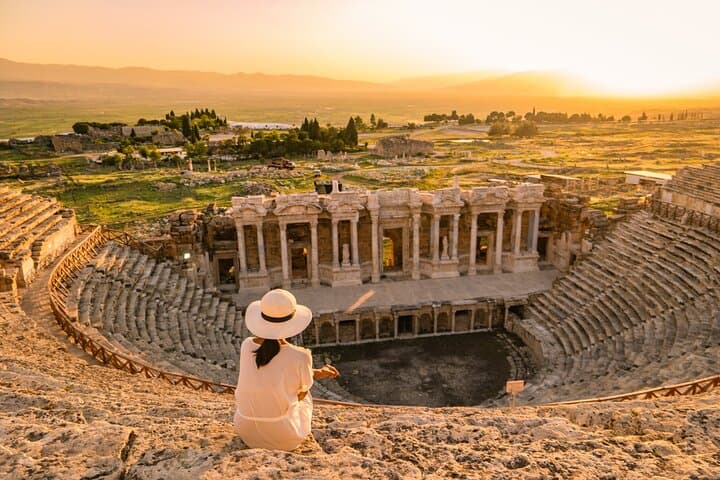
Hierapolis began as a Hellenistic spa city and grew under Rome into a pilgrimage and healing center; its theater, necropolis and the so-called Plutonium speak to rituals and beliefs that mixed science, faith and commerce. Geologically, Pamukkale’s travertine formed over millennia as thermal waters, rich in calcium carbonate, cooled and deposited layers that solidified into the bright, ribbed steps visitors see today.
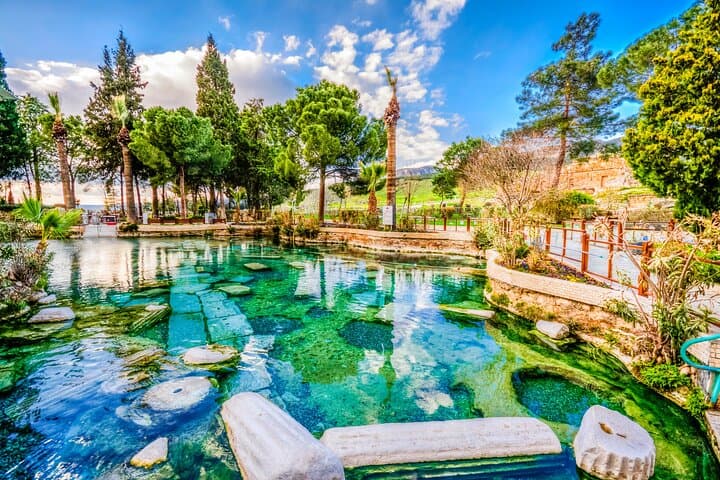
Local life still orients around thermal water: Karahayıt’s iron-rich springs sit a short drive away and the Antique Pool — where you can swim among submerged columns — links modern visitors to the site’s Roman spa legacy.
Practical guide: book the official entry ticket ahead and check your inbox 24 hours before your visit for the ticket and audio-guide link; the supplier sends the audio to your phone and allows offline access. Expect security screening at the entrance (queues can peak in summer). Note site rules — footwear restrictions on travertines and designated walking paths protect the formations. A relaxed 90–120 minute visit covers terraces, museum and the theater, but photographers and history buffs may linger longer. Hydrate, wear sun protection, and download the audio guide before arrival so the stones and stories can be the focus once you step over the gate.
easy.
1.5–2 hours.
Suitable for most fitness levels; walking on uneven surfaces and steps is required.
Mobile tickets are accepted; the supplier emails the official ticket 24 hours before your visit — have it ready on your phone and check spam folders.
Yes, but there are strict rules: certain terrace areas require that you remove shoes and stay on designated paths to protect the formations.
Plan 90–120 minutes for key highlights (terraces, theater, museum), longer if you want to swim in the Antique Pool or linger for photography.
The site includes steps and uneven surfaces; wheelchair access is limited in some areas, so visitors with mobility needs should check specific access routes ahead of time.
Hierapolis developed as a Hellenistic and then Roman spa city; its necropolis contains one of the largest ancient cemeteries in Anatolia and the site is a UNESCO World Heritage Site since 1988.
The travertine terraces are fragile: visitors must stick to paths, follow footwear rules and avoid introducing soaps or lotions to the pools to protect mineral deposition and water chemistry.
Travelgroup operates guided outdoor trips and adventures with an emphasis on safety, stewardship, and memorable experiences.
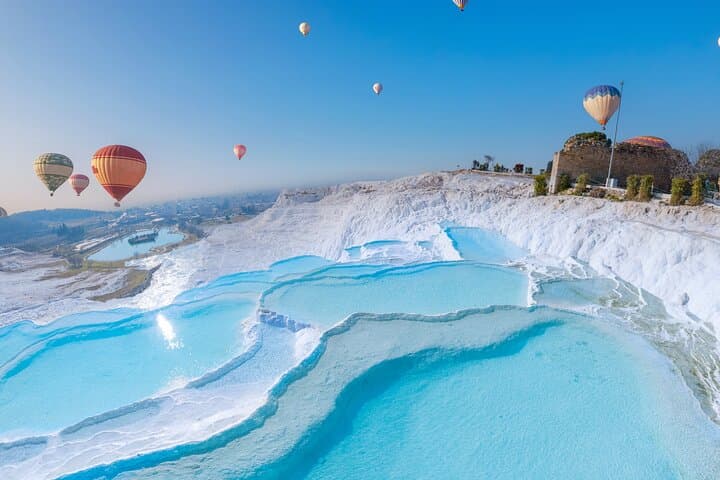
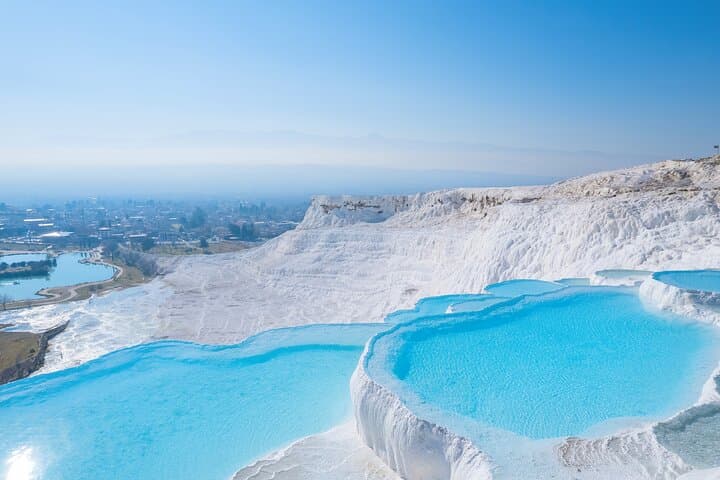
Walk onto a sun-bleached slope where white carbonate terraces step toward a pale blue sky and warm springs collect like scattered mirrors. The terraces themselves seem to dare you forward—calcium-rich water slow as honey, shaping pools that reflect the ruined colonnades of Hierapolis above.
Walk onto a sun-bleached slope where white carbonate terraces step toward a pale blue sky and warm springs collect like scattered mirrors. The terraces themselves seem to dare you forward—calcium-rich water slow as honey, shaping pools that reflect the ruined colonnades of Hierapolis above.
Hierapolis began as a Hellenistic spa city and grew under Rome into a pilgrimage and healing center; its theater, necropolis and the so-called Plutonium speak to rituals and beliefs that mixed science, faith and commerce. Geologically, Pamukkale’s travertine formed over millennia as thermal waters, rich in calcium carbonate, cooled and deposited layers that solidified into the bright, ribbed steps visitors see today.
Local life still orients around thermal water: Karahayıt’s iron-rich springs sit a short drive away and the Antique Pool — where you can swim among submerged columns — links modern visitors to the site’s Roman spa legacy.
Practical guide: book the official entry ticket ahead and check your inbox 24 hours before your visit for the ticket and audio-guide link; the supplier sends the audio to your phone and allows offline access. Expect security screening at the entrance (queues can peak in summer). Note site rules — footwear restrictions on travertines and designated walking paths protect the formations. A relaxed 90–120 minute visit covers terraces, museum and the theater, but photographers and history buffs may linger longer. Hydrate, wear sun protection, and download the audio guide before arrival so the stones and stories can be the focus once you step over the gate.