THE ADVENTURE COLLECTIVE® · Independent discovery and booking for outdoor travel

A full-day shuttle from Fethiye delivers you to Pamukkale’s striking white travertines and the ancient ruins of Hierapolis. Expect a long, rewarding day of thermal pools, Roman architecture and expansive valley views.
A full-day shuttle from Fethiye delivers you to Pamukkale’s striking white travertines and the ancient ruins of Hierapolis. Expect a long, rewarding day of thermal pools, Roman architecture and expansive valley views.
You arrive before the crowds, the bus letting out a low hum while terraces of calcium-rich water catch the morning light like frozen rivers daring you forward. The white travertine shelves glide away from the cliff edge; steam from thermal pools threads the air, and the ruins of Hierapolis sit like a ruined atlas, cataloging centuries of visitors who came for the same curative waters.
Verified experiences and guided adventures in the surrounding area.
Operated by Seaside Travel Agency · Pamukkale, Denizli Province
You arrive before the crowds, the bus letting out a low hum while terraces of calcium-rich water catch the morning light like frozen rivers daring you forward. The white travertine shelves glide away from the cliff edge; steam from thermal pools threads the air, and the ruins of Hierapolis sit like a ruined atlas, cataloging centuries of visitors who came for the same curative waters.
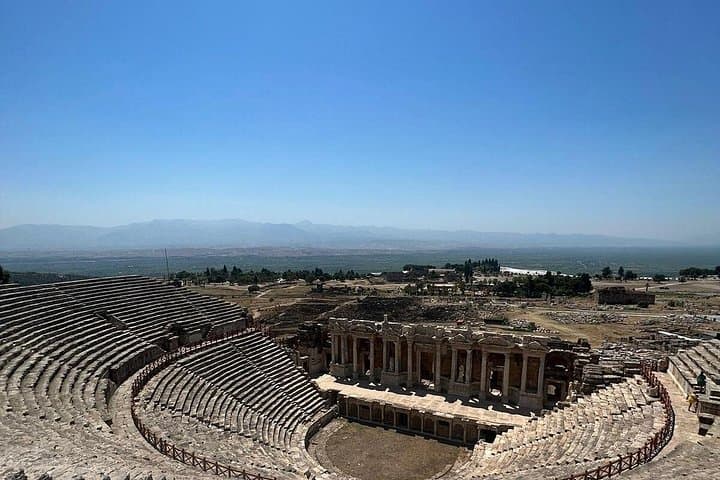
Hierapolis began as a Hellenistic spa and grew under Roman rule into a flourishing healing center; its theater, necropolis and streets are carved into limestone laid down by mineral-saturated spring water over millennia. Geologically, Pamukkale’s "cotton castle" is travertine—porous calcium carbonate deposited by hot springs—formed where groundwater meets the surface and releases dissolved minerals.
Local culture still orbits the springs: small cafés serve ayran and gözleme, and Karahayıt’s red thermal waters lie a short drive away. Conservation rules limit where you can walk—respecting them protects the terraces and keeps the springs flowing for future visitors.
Practical guidance: plan for a long day—expect roughly 12 hours including travel from Fethiye. Wear grippy shoes for uneven stone and bring a lightweight towel and swimsuit if you want to enter permitted pools. Hydrate and carry sun protection; shade is sparse. Allow time to explore the Hierapolis ruins and the antique pool if open; skip the crowded terraces midafternoon when buses arrive. The site is family-friendly but involves steps and uneven paths, so move at a steady pace and leave time to savor the views before the return trip.
moderate.
12 hours.
Suitable for travelers in average fitness who can manage walking on uneven stone and climbing steps.
Some pools allow swimming (e.g., the Antique/"Cleopatra" Pool) for a fee; most terraces prohibit swimming to protect the formations.
Expect a full day; typical operator itineraries run about 12 hours round-trip including stops and site time.
Yes, Pamukkale and Hierapolis are open year-round, though specific access and water flow management vary seasonally.
Accessibility is limited: modern pathways exist for parts of the complex, but many paths and terraces involve steps and uneven surfaces.
Hierapolis was established in the 2nd century BCE and expanded into a Roman spa city famed for its healing springs; the site and travertines became a UNESCO World Heritage Site in 1988.
Water distribution and visitor routes are strictly managed to preserve travertine formation; follow signage and avoid applying soaps or oils in thermal waters.
Seaside Travel Agency operates guided outdoor trips and adventures with an emphasis on safety, stewardship, and memorable experiences.
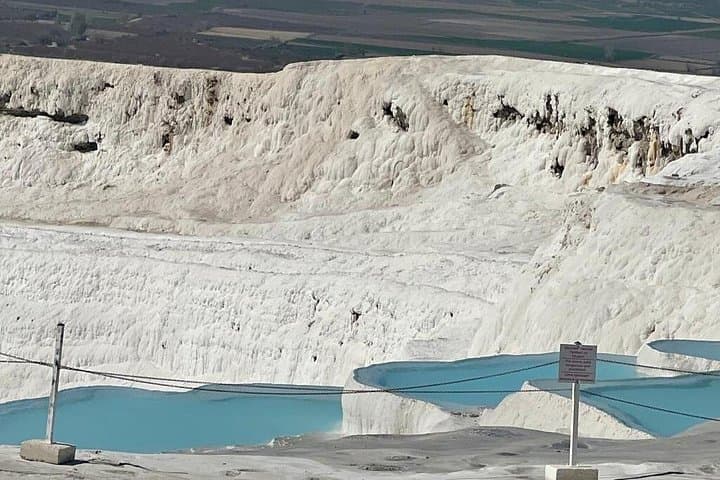
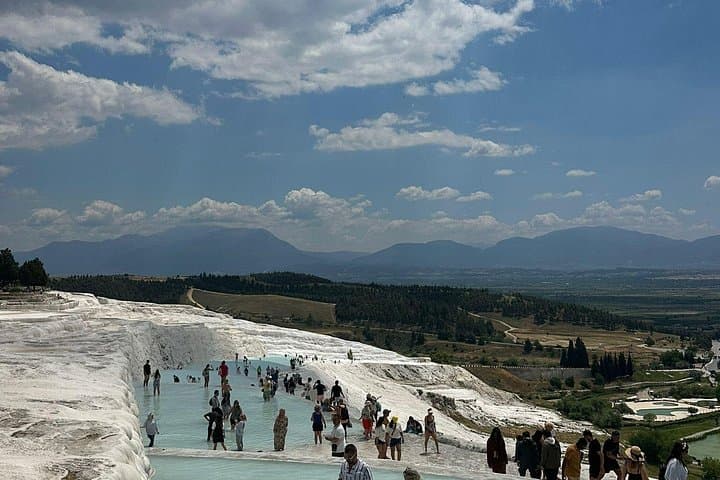
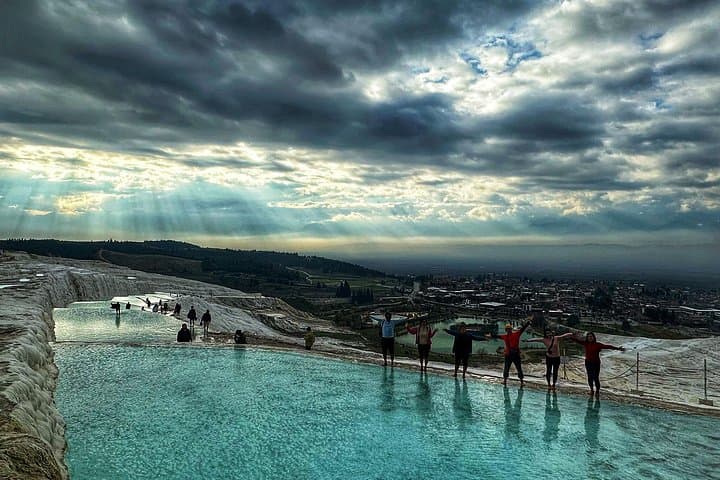
You arrive before the crowds, the bus letting out a low hum while terraces of calcium-rich water catch the morning light like frozen rivers daring you forward. The white travertine shelves glide away from the cliff edge; steam from thermal pools threads the air, and the ruins of Hierapolis sit like a ruined atlas, cataloging centuries of visitors who came for the same curative waters.
You arrive before the crowds, the bus letting out a low hum while terraces of calcium-rich water catch the morning light like frozen rivers daring you forward. The white travertine shelves glide away from the cliff edge; steam from thermal pools threads the air, and the ruins of Hierapolis sit like a ruined atlas, cataloging centuries of visitors who came for the same curative waters.
Hierapolis began as a Hellenistic spa and grew under Roman rule into a flourishing healing center; its theater, necropolis and streets are carved into limestone laid down by mineral-saturated spring water over millennia. Geologically, Pamukkale’s "cotton castle" is travertine—porous calcium carbonate deposited by hot springs—formed where groundwater meets the surface and releases dissolved minerals.
Local culture still orbits the springs: small cafés serve ayran and gözleme, and Karahayıt’s red thermal waters lie a short drive away. Conservation rules limit where you can walk—respecting them protects the terraces and keeps the springs flowing for future visitors.
Practical guidance: plan for a long day—expect roughly 12 hours including travel from Fethiye. Wear grippy shoes for uneven stone and bring a lightweight towel and swimsuit if you want to enter permitted pools. Hydrate and carry sun protection; shade is sparse. Allow time to explore the Hierapolis ruins and the antique pool if open; skip the crowded terraces midafternoon when buses arrive. The site is family-friendly but involves steps and uneven paths, so move at a steady pace and leave time to savor the views before the return trip.