THE ADVENTURE COLLECTIVE® · Independent discovery and booking for outdoor travel

A full-day coach excursion from Side brings you to Pamukkale’s stark white travertine terraces and the ancient spa city of Hierapolis. Expect a long but rewarding day: Roman ruins, optional thermal dips and striking geology.
A full-day coach excursion from Side brings you to Pamukkale’s stark white travertine terraces and the ancient spa city of Hierapolis. Expect a long but rewarding day: Roman ruins, optional thermal dips and striking geology.
The coach drops you at the rim of a white cliff just after dawn and the terraces look like a frozen waterfall: milky basins catching sunlight, steam rising where warm springs meet cool air. Walking across the travertine feels like stepping on cooled glass; the water gurgles and dares you to follow its mineral path down the slope.
Verified experiences and guided adventures in the surrounding area.
Operated by Tourmania · Pamukkale, Denizli
The coach drops you at the rim of a white cliff just after dawn and the terraces look like a frozen waterfall: milky basins catching sunlight, steam rising where warm springs meet cool air. Walking across the travertine feels like stepping on cooled glass; the water gurgles and dares you to follow its mineral path down the slope.
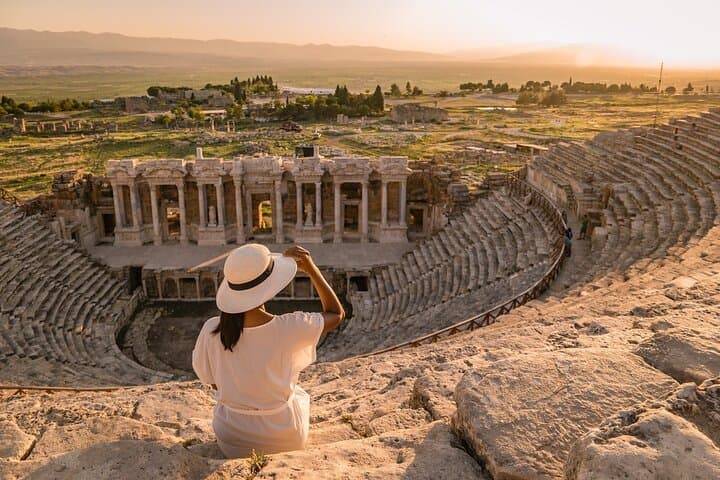
This place began as a thermal spa in the 2nd century B.C. when the kings of Pergamon developed Hierapolis. Ruined columns, a vast Roman theater and the Agora still stand above the terraces, each stone carrying the commerce and ritual of an ancient healing center. Geologically, Pamukkale is a calcite phenomenon — calcium-rich spring water deposits travertine as it cools, building the stepped white basins over millennia from springs high on a 200-meter cliff.
Locals from Denizli historically traded in textiles and used the thermal springs for baths; today the site balances tourism, archaeology and conservation. Expect sections closed to protect deposits and rules such as walking barefoot on the soft terraces.
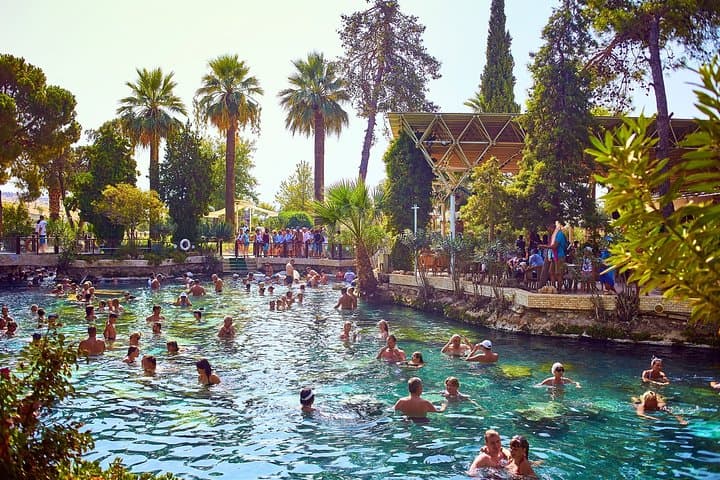
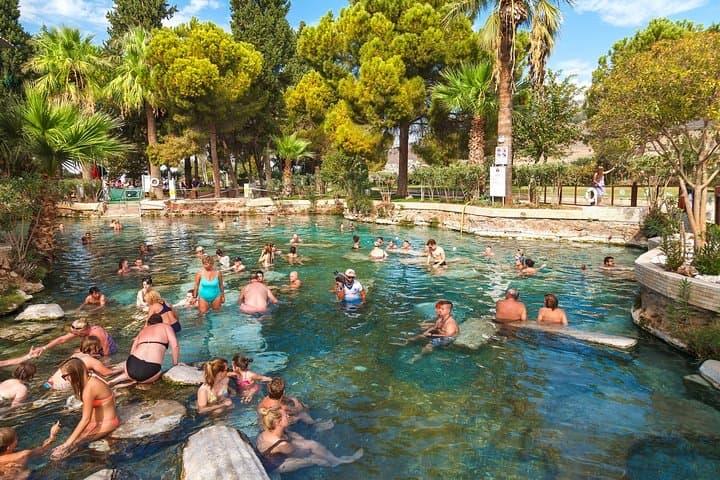
Practically: the tour is a long day (the drive from Side is roughly 300 km), plan for 12–15 hours, bring sun protection, water and swimwear if you want thermal baths. Footwear that’s easy to remove is handy, and bring cash for optional Cleopatra’s Pool. If you’re sensitive to heat or mobility-limited, notify the operator—much of the site involves uneven steps and rocky paths. Early arrival or late afternoon helps avoid crowds and the midday sun while maximizing photographic light and the warmth of the thermal waters.
easy.
12–15 hours.
Suitable for travelers with basic mobility; involves moderate walking on uneven stone and steps.
Yes—rules protect the fragile calcite; many areas require barefoot access and shoes must be left at entrances.
No—swimming in Cleopatra’s Pool typically costs extra and is purchased on-site or in advance if offered by the operator.
Approximately 300 km one-way; the full-day tour typically lasts 12–15 hours including driving and stops.
Parts of Hierapolis are accessible, but many paths are uneven stone and stepped; check with the operator for vehicle drop-off options and mobility assistance.
Hierapolis became a major Roman-era spa and religious center under the Pergamon kings; its ruins include baths, temples and a large theater tied to ancient healing practices.
Pamukkale is managed to limit foot traffic on delicate travertine; stay on designated paths and follow bare-foot rules to minimize damage.
Tourmania operates guided outdoor trips and adventures with an emphasis on safety, stewardship, and memorable experiences.
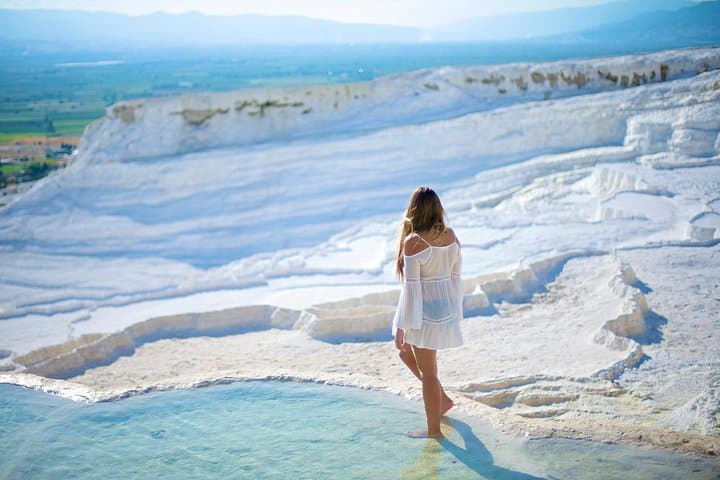
The coach drops you at the rim of a white cliff just after dawn and the terraces look like a frozen waterfall: milky basins catching sunlight, steam rising where warm springs meet cool air. Walking across the travertine feels like stepping on cooled glass; the water gurgles and dares you to follow its mineral path down the slope.
The coach drops you at the rim of a white cliff just after dawn and the terraces look like a frozen waterfall: milky basins catching sunlight, steam rising where warm springs meet cool air. Walking across the travertine feels like stepping on cooled glass; the water gurgles and dares you to follow its mineral path down the slope.
This place began as a thermal spa in the 2nd century B.C. when the kings of Pergamon developed Hierapolis. Ruined columns, a vast Roman theater and the Agora still stand above the terraces, each stone carrying the commerce and ritual of an ancient healing center. Geologically, Pamukkale is a calcite phenomenon — calcium-rich spring water deposits travertine as it cools, building the stepped white basins over millennia from springs high on a 200-meter cliff.
Locals from Denizli historically traded in textiles and used the thermal springs for baths; today the site balances tourism, archaeology and conservation. Expect sections closed to protect deposits and rules such as walking barefoot on the soft terraces.
Practically: the tour is a long day (the drive from Side is roughly 300 km), plan for 12–15 hours, bring sun protection, water and swimwear if you want thermal baths. Footwear that’s easy to remove is handy, and bring cash for optional Cleopatra’s Pool. If you’re sensitive to heat or mobility-limited, notify the operator—much of the site involves uneven steps and rocky paths. Early arrival or late afternoon helps avoid crowds and the midday sun while maximizing photographic light and the warmth of the thermal waters.