THE ADVENTURE COLLECTIVE® · Independent discovery and booking for outdoor travel

A long day from Fethiye that pairs Pamukkale’s snowy travertine terraces with the archaeological remains of Hierapolis. Expect a 13-hour excursion with boardwalk walks, a swim in the Roman pool, and guided interpretation of Hellenistic and Roman spa culture.
A long day from Fethiye that pairs Pamukkale’s snowy travertine terraces with the archaeological remains of Hierapolis. Expect a 13-hour excursion with boardwalk walks, a swim in the Roman pool, and guided interpretation of Hellenistic and Roman spa culture.
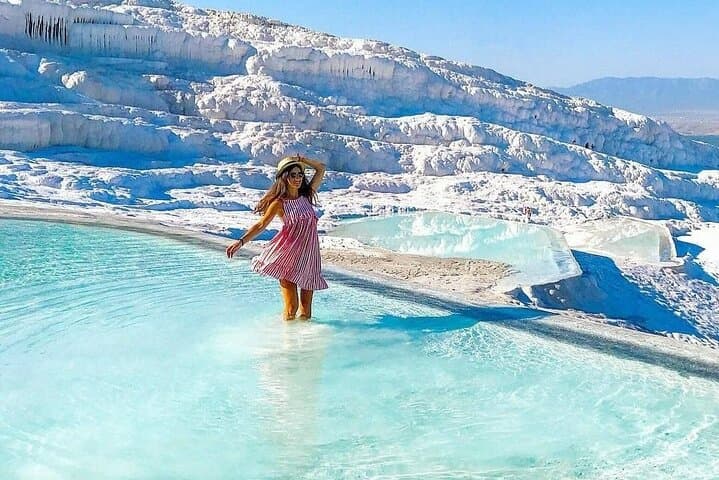
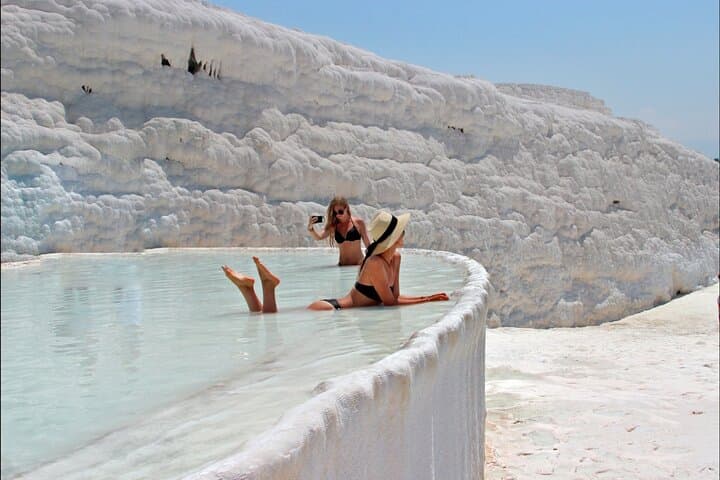
You emerge from the minibus to a cliff that reads like frozen water — white travertine shelves catching sun, steam rising where warm springs still flow. The walk begins on firm boardwalks that thread soft, calcium-coated basins; the air smells faintly mineral and faintly of hot stone. Ahead, the ruins of Hierapolis climb, columns and steps that once guided pilgrims to thermal cures.
Verified experiences and guided adventures in the surrounding area.
Operated by Hesaplı Tatilci by Mobius Travel · Pamukkale, Denizli
You emerge from the minibus to a cliff that reads like frozen water — white travertine shelves catching sun, steam rising where warm springs still flow. The walk begins on firm boardwalks that thread soft, calcium-coated basins; the air smells faintly mineral and faintly of hot stone. Ahead, the ruins of Hierapolis climb, columns and steps that once guided pilgrims to thermal cures.
Hierapolis began as a Hellenistic spa-city and expanded under Rome into a major therapeutic center; marble-paved streets, a necropolis and a theater reveal layers of civic life stacked on top of the geothermal plumbing that makes Pamukkale’s terraces. Geologically, you’re standing on travertine—calcium carbonate deposited by mineral-rich waters over millennia—creating scalloped pools that change with each flow. Locally, small workshops sell onyx and textiles and the town still carries a tradition of thermal bathing.
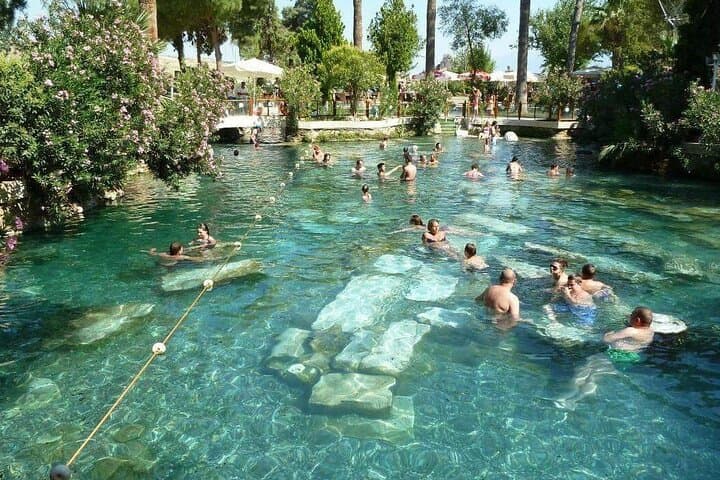
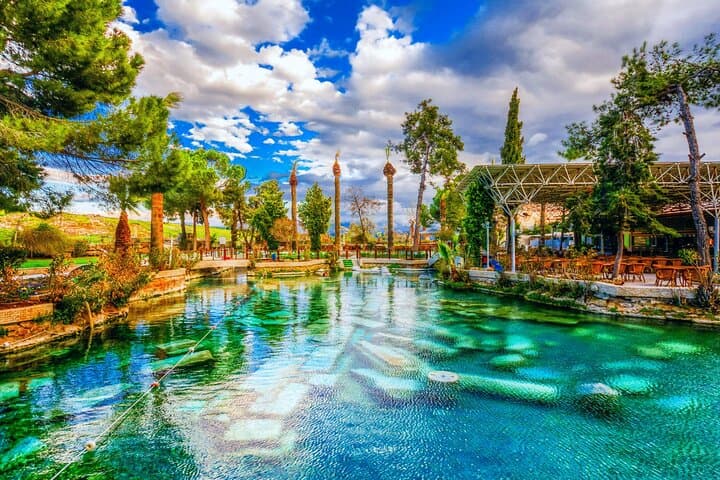
Practically: expect a full 13-hour day when travelling from Fethiye, including pickup, a long coach transfer and a guided walk through the site. Wear good walking shoes you can remove for the terraces (shoes are often prohibited on the white formations), bring swimwear for the Roman / Cleopatra Pool, and a reusable water bottle for dry, windy spells. Plan for mid-day crowds by visiting the terraces first or timing visits around the museum and theatre. Respect marked paths to protect the fragile travertine; entrances and guided routing are enforced. With a camera, sun protection and moderate fitness, this combination of geology and history delivers a memorable, accessible day trip.
easy.
13 hours.
Suitable for most fitness levels; involves walking on uneven stone and steps but no technical climbing
Coach time is approximately 3.5–4 hours each way with scheduled stops; total tour time from pickup to drop-off is about 13 hours.
No—swimming on the terraces is prohibited to protect the travertine; swimming is permitted in the Roman (Cleopatra) Pool where permitted by the operator.
Parts of the archaeological site and the main terraces have boardwalks and accessible routes, but some areas and steps are not fully accessible—check with the operator for detailed pickup and route options.
Entrance to Pamukkale and Hierapolis is typically covered by separate ticketing; confirm with your tour operator whether site admissions are included in your booking.
Hierapolis was founded in the Hellenistic era and expanded under Roman rule as a thermal spa center tied to a mother-goddess cult; its necropolis is one of the largest in Anatolia.
Travertine is fragile—management restricts access to protect calcite formations and reduce erosion; visitors should follow marked paths, avoid soaps in thermal waters and use established facilities.
Hesaplı Tatilci by Mobius Travel operates guided outdoor trips and adventures with an emphasis on safety, stewardship, and memorable experiences.
You emerge from the minibus to a cliff that reads like frozen water — white travertine shelves catching sun, steam rising where warm springs still flow. The walk begins on firm boardwalks that thread soft, calcium-coated basins; the air smells faintly mineral and faintly of hot stone. Ahead, the ruins of Hierapolis climb, columns and steps that once guided pilgrims to thermal cures.
You emerge from the minibus to a cliff that reads like frozen water — white travertine shelves catching sun, steam rising where warm springs still flow. The walk begins on firm boardwalks that thread soft, calcium-coated basins; the air smells faintly mineral and faintly of hot stone. Ahead, the ruins of Hierapolis climb, columns and steps that once guided pilgrims to thermal cures.
Hierapolis began as a Hellenistic spa-city and expanded under Rome into a major therapeutic center; marble-paved streets, a necropolis and a theater reveal layers of civic life stacked on top of the geothermal plumbing that makes Pamukkale’s terraces. Geologically, you’re standing on travertine—calcium carbonate deposited by mineral-rich waters over millennia—creating scalloped pools that change with each flow. Locally, small workshops sell onyx and textiles and the town still carries a tradition of thermal bathing.
Practically: expect a full 13-hour day when travelling from Fethiye, including pickup, a long coach transfer and a guided walk through the site. Wear good walking shoes you can remove for the terraces (shoes are often prohibited on the white formations), bring swimwear for the Roman / Cleopatra Pool, and a reusable water bottle for dry, windy spells. Plan for mid-day crowds by visiting the terraces first or timing visits around the museum and theatre. Respect marked paths to protect the fragile travertine; entrances and guided routing are enforced. With a camera, sun protection and moderate fitness, this combination of geology and history delivers a memorable, accessible day trip.