THE ADVENTURE COLLECTIVE® · Independent discovery and booking for outdoor travel

Walk the white travertine terraces and explore the Roman ruins of Hierapolis on a single-day small-group tour. Expect thermal pools, a historic necropolis, optional swims in the Cleopatra pool (extra fee), and local textile stops.
Walk the white travertine terraces and explore the Roman ruins of Hierapolis on a single-day small-group tour. Expect thermal pools, a historic necropolis, optional swims in the Cleopatra pool (extra fee), and local textile stops.
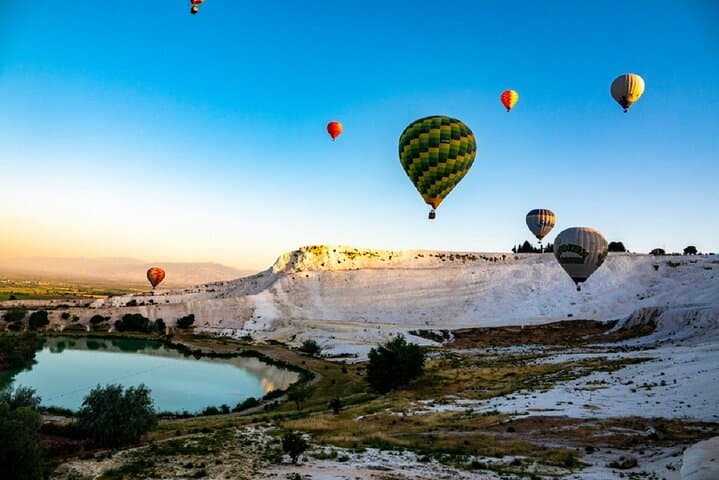
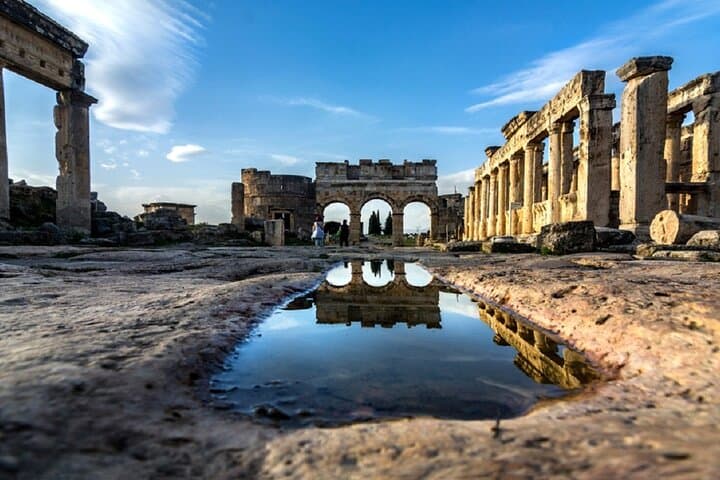
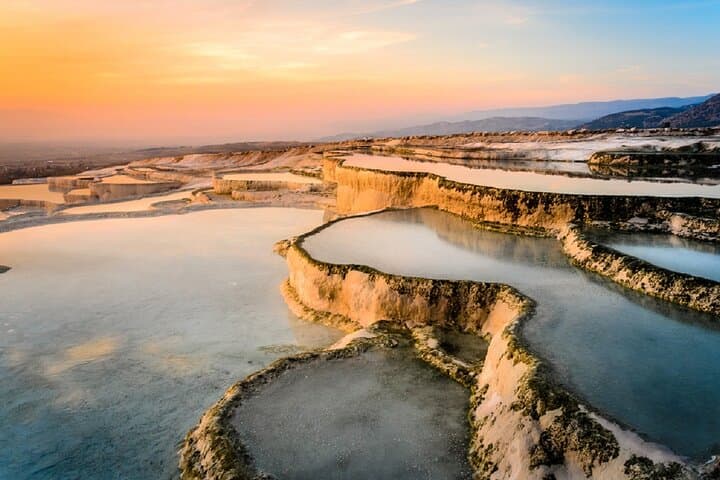
You step off the bus onto a bright, chalk-white shelf that seems to push the sky lower—thermal water threading the terraces in glassy ribbons that dare you to wade. The terraces curve away toward a scrubby valley; behind them rise the stone bones of Hierapolis, where colonnades and tombs hold the slow stories of Roman baths and Byzantine markets.
Verified experiences and guided adventures in the surrounding area.
Operated by Moonstar Tour · Pamukkale, Denizli Province
You step off the bus onto a bright, chalk-white shelf that seems to push the sky lower—thermal water threading the terraces in glassy ribbons that dare you to wade. The terraces curve away toward a scrubby valley; behind them rise the stone bones of Hierapolis, where colonnades and tombs hold the slow stories of Roman baths and Byzantine markets.
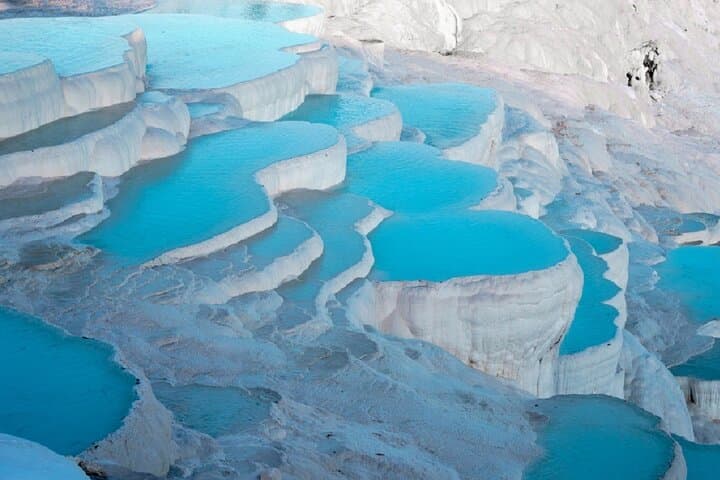
Hierarchy and calcium meet here: Hierapolis began as a Hellenistic spa town and grew under Roman patronage, its necropolis holding thousands of graves. Geologically, the terraces are living architecture—calcium-rich springs deposit travertine as they cool, building the rimstone pools you walk across. Nearby Karahayit shows a different mood: iron-rich hot springs stain pools rust-red, a reminder that the same underground chemistry can paint very different landscapes.
Local life still orbits thermal water—small textile shops and cafes line the approach, and Denizli shepherds a regional cuisine of lamb and gözleme that’s perfect after a long day outside. Conservation rules are strict here: shoes are removed on many terrace sections to protect the deposit; follow the paths.
Practical guide: the full small-group itinerary runs roughly nine hours with pickup, guide commentary, and a lunch stop. Bring a hat, sun protection, and shoes easy to slip off (many terraces require bare feet or socks). If you want the Cleopatra (antique) pool swim, budget extra for its entrance fee and tell your guide in advance. Aim for early morning or late afternoon visits to avoid heat and crowds and allow time to explore the Roman baths, frontinus street, and necropolis without rushing.
easy.
9 hours.
Suitable for most fitness levels; involves several short walks on uneven and sometimes slippery surfaces.
This tour lists entrance tickets as extra—expect to pay site admission and any optional Cleopatra pool fee separately unless confirmed otherwise.
Yes; to protect the travertine you're often required to walk barefoot or in socks on designated terrace sections—bring easy-off footwear and socks.
No, the antique (Cleopatra) pool usually requires a separate fee—tell your guide in advance if you want to swim so timing can be arranged.
The itinerary is listed as physically easy but involves uneven surfaces and steps; families and those with limited mobility should check accessibility details with the operator ahead of booking.
Hierapolis was founded as a Hellenistic spa and expanded under Roman rule; its necropolis is one of the largest in Anatolia, reflecting centuries of continuous use.
Visitor restrictions—no shoes on terraces, stick to paths, and avoid soaps or shampoos in thermal runoff—help slow damage to delicate travertine formations.
Moonstar Tour operates guided outdoor trips and adventures with an emphasis on safety, stewardship, and memorable experiences.
You step off the bus onto a bright, chalk-white shelf that seems to push the sky lower—thermal water threading the terraces in glassy ribbons that dare you to wade. The terraces curve away toward a scrubby valley; behind them rise the stone bones of Hierapolis, where colonnades and tombs hold the slow stories of Roman baths and Byzantine markets.
You step off the bus onto a bright, chalk-white shelf that seems to push the sky lower—thermal water threading the terraces in glassy ribbons that dare you to wade. The terraces curve away toward a scrubby valley; behind them rise the stone bones of Hierapolis, where colonnades and tombs hold the slow stories of Roman baths and Byzantine markets.
Hierarchy and calcium meet here: Hierapolis began as a Hellenistic spa town and grew under Roman patronage, its necropolis holding thousands of graves. Geologically, the terraces are living architecture—calcium-rich springs deposit travertine as they cool, building the rimstone pools you walk across. Nearby Karahayit shows a different mood: iron-rich hot springs stain pools rust-red, a reminder that the same underground chemistry can paint very different landscapes.
Local life still orbits thermal water—small textile shops and cafes line the approach, and Denizli shepherds a regional cuisine of lamb and gözleme that’s perfect after a long day outside. Conservation rules are strict here: shoes are removed on many terrace sections to protect the deposit; follow the paths.
Practical guide: the full small-group itinerary runs roughly nine hours with pickup, guide commentary, and a lunch stop. Bring a hat, sun protection, and shoes easy to slip off (many terraces require bare feet or socks). If you want the Cleopatra (antique) pool swim, budget extra for its entrance fee and tell your guide in advance. Aim for early morning or late afternoon visits to avoid heat and crowds and allow time to explore the Roman baths, frontinus street, and necropolis without rushing.