THE ADVENTURE COLLECTIVE® · Independent discovery and booking for outdoor travel

Walk the luminous travertine terraces of Pamukkale and wander the ruins of Hierapolis on a full-day tour. This guide outlines what you’ll see, what to bring, and how to make the most of a day among thermal springs and ancient stone.
Walk the luminous travertine terraces of Pamukkale and wander the ruins of Hierapolis on a full-day tour. This guide outlines what you’ll see, what to bring, and how to make the most of a day among thermal springs and ancient stone.
You step off the minibus into a bright, mineral-scented light and the landscape shifts: a slope of dazzling white terraces pours down the hillside like frozen waterfalls. The travertine rims sparkle underfoot where thermal water still traces channels, and above, the dust-grey stones of ancient Hierapolis perch like a fortress watching the valley.
Verified experiences and guided adventures in the surrounding area.
Operated by Tourkeystay Tours · Pamukkale, Denizli Province
You step off the minibus into a bright, mineral-scented light and the landscape shifts: a slope of dazzling white terraces pours down the hillside like frozen waterfalls. The travertine rims sparkle underfoot where thermal water still traces channels, and above, the dust-grey stones of ancient Hierapolis perch like a fortress watching the valley.
Hierapolis was founded in the 2nd century BCE as a thermal city; Romans and Greeks carved baths, a theatre and an enormous necropolis into the hill to harness the hot springs. Geologically, Pamukkale’s stepped calcite terraces formed where carbonate-rich waters cooled and deposited mineral layers over millennia. Nearby Karahayıt’s iron-rich springs stain rock red—a vivid counterpoint to the pure white travertine.
Culture here blends Anatolian village life with tourism: expect family-run restaurants for a hearty lunch and vendors offering local textiles. For a quieter moment, cross to the antique pool (Cleopatra’s Pool) where submerged marble columns hint at the town’s layered past—note that swim access is typically separate and often ticketed.
Practical guidance: wear secure, comfortable footwear for uneven stone and changeable surfaces; some terrace areas require barefoot access or have wooden walkways. Bring water, sun protection, and a towel if you plan to pay for the antique pool. Mornings are cooler and less crowded; plan for several hours to walk the site and explore the ruins. Respect marked routes—travertine is fragile and protected—so stay on paths and follow guide instructions to preserve the formations for the next traveler.
easy.
6 hours.
Suitable for most fitness levels; involves walking on uneven surfaces and some stairs.
Most full-day tours include admission to the main archaeological sites and travertine terraces—confirm with your operator for ticket specifics.
Swimming in the natural travertine pools is prohibited to protect the formations; the Antique (Cleopatra’s) Pool is the designated swim option and usually requires a separate fee.
Expect several hours of walking across uneven stone, steps and terraces—pace yourself and allow time to explore ruins and viewpoints.
Yes; the tour is generally family-friendly but infants may be required to sit on an adult’s lap during transport and some areas have stairs and uneven ground.
Hierapolis became a Roman spa and religious center in the 2nd century BCE; its baths and necropolis reflect centuries of healing, trade and ceremony centered on thermal waters.
Travertine is fragile—visitor routes and shoe rules exist to prevent erosion; disposing of waste and avoiding lotions in springs help protect the formations.
Tourkeystay Tours operates guided outdoor trips and adventures with an emphasis on safety, stewardship, and memorable experiences.
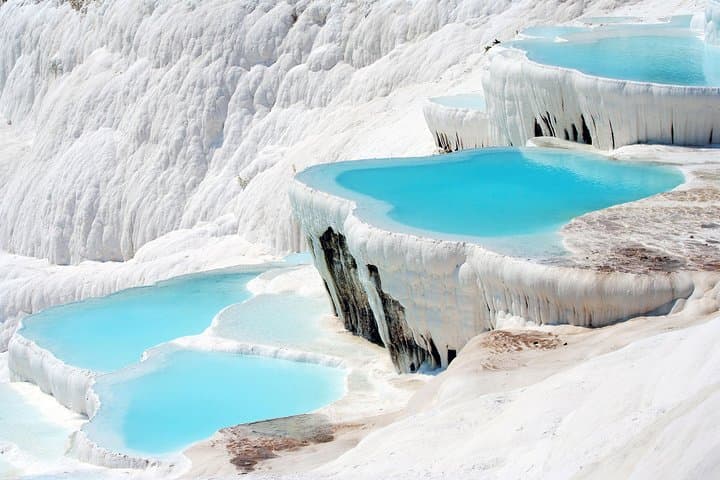
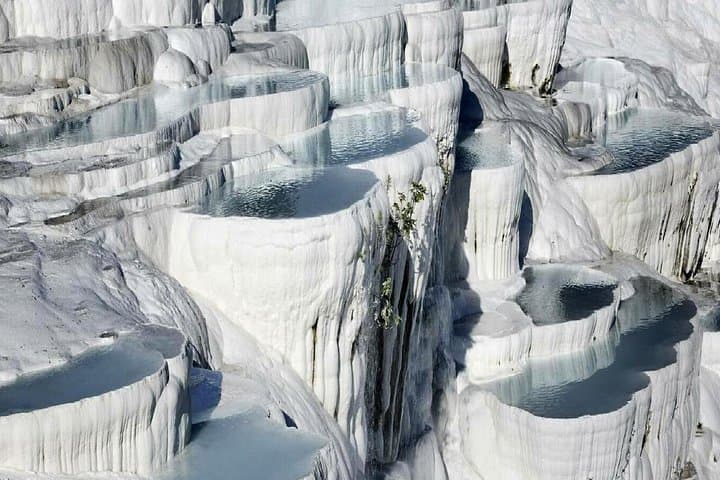
You step off the minibus into a bright, mineral-scented light and the landscape shifts: a slope of dazzling white terraces pours down the hillside like frozen waterfalls. The travertine rims sparkle underfoot where thermal water still traces channels, and above, the dust-grey stones of ancient Hierapolis perch like a fortress watching the valley.
You step off the minibus into a bright, mineral-scented light and the landscape shifts: a slope of dazzling white terraces pours down the hillside like frozen waterfalls. The travertine rims sparkle underfoot where thermal water still traces channels, and above, the dust-grey stones of ancient Hierapolis perch like a fortress watching the valley.
Hierapolis was founded in the 2nd century BCE as a thermal city; Romans and Greeks carved baths, a theatre and an enormous necropolis into the hill to harness the hot springs. Geologically, Pamukkale’s stepped calcite terraces formed where carbonate-rich waters cooled and deposited mineral layers over millennia. Nearby Karahayıt’s iron-rich springs stain rock red—a vivid counterpoint to the pure white travertine.
Culture here blends Anatolian village life with tourism: expect family-run restaurants for a hearty lunch and vendors offering local textiles. For a quieter moment, cross to the antique pool (Cleopatra’s Pool) where submerged marble columns hint at the town’s layered past—note that swim access is typically separate and often ticketed.
Practical guidance: wear secure, comfortable footwear for uneven stone and changeable surfaces; some terrace areas require barefoot access or have wooden walkways. Bring water, sun protection, and a towel if you plan to pay for the antique pool. Mornings are cooler and less crowded; plan for several hours to walk the site and explore the ruins. Respect marked routes—travertine is fragile and protected—so stay on paths and follow guide instructions to preserve the formations for the next traveler.