THE ADVENTURE COLLECTIVE® · Independent discovery and booking for outdoor travel

Traverse UNESCO-trimmed travertines, Roman marble streets and otherworldly Cappadocian valleys in four days. This semi-private circuit blends hot springs, excavation sites and a camel ride with optional balloon ascent for a condensed, culture-and-geology-rich tour.
Traverse UNESCO-trimmed travertines, Roman marble streets and otherworldly Cappadocian valleys in four days. This semi-private circuit blends hot springs, excavation sites and a camel ride with optional balloon ascent for a condensed, culture-and-geology-rich tour.
The minivan hums away from Istanbul before dawn; gulls wheel above the Aegean and the driver points toward a distant spine of white where Pamukkale’s travertine steps catch the first light. On day one the landscape changes from city sprawl to bright calcium terraces that seem to have frozen a waterfall in motion. Walking barefoot across those cotton-colored pools, travelers feel the mineral water pull at their feet as ancient stone keeps offering its cool.
Verified experiences and guided adventures in the surrounding area.
Operated by Turkey Experiences · Göreme, Nevşehir Province
The minivan hums away from Istanbul before dawn; gulls wheel above the Aegean and the driver points toward a distant spine of white where Pamukkale’s travertine steps catch the first light. On day one the landscape changes from city sprawl to bright calcium terraces that seem to have frozen a waterfall in motion. Walking barefoot across those cotton-colored pools, travelers feel the mineral water pull at their feet as ancient stone keeps offering its cool.
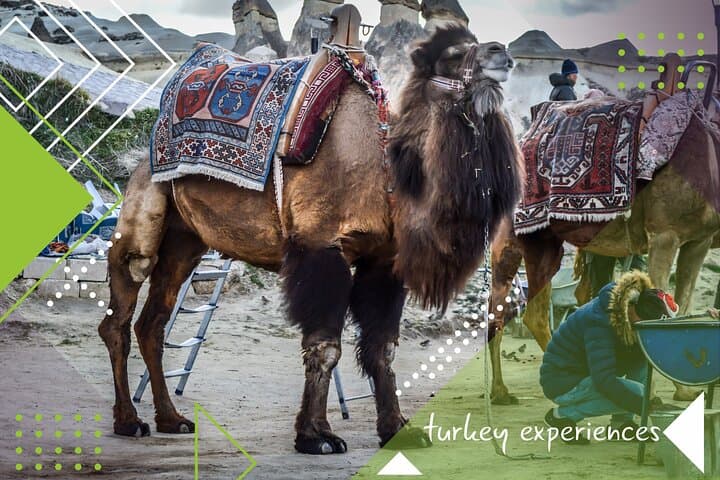
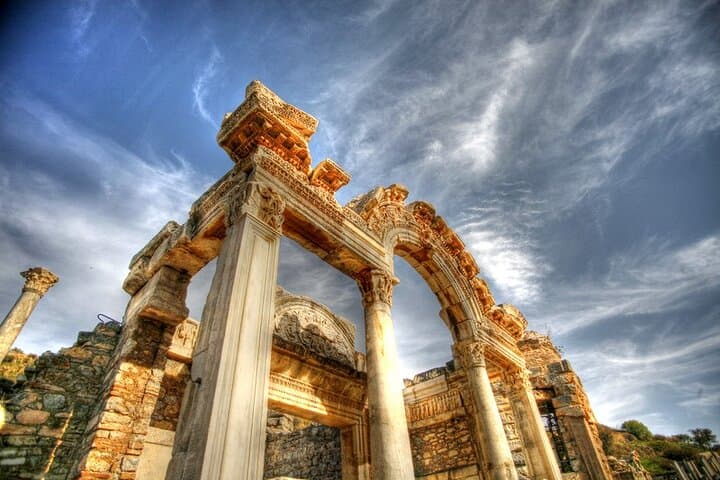
This is a tour stitched from different eras. Pamukkale and Hierapolis sit on thermal springs that deposited calcium for millennia; terraces built bit by sun, bit by mineral flow, overlay a Hellenistic and Roman city whose theater and necropolis still map an imperial past. A day later, the group migrates toward the Ionian coast and Ephesus—once a major Mediterranean harbor—where the Celsus Library and Grand Theater expose the scale of Roman civic life. Finally, Cappadocia arrives like another planet: wind and volcanic ash shaped soft tuff into chimneys and valleys, and for a thousand years communities carved homes and churches into that rock.
Geology and culture are inseparable here. Pamukkale’s travertine is active: hot springs deposit new layers even now. Ephesus’s marble facades were quarried locally and imported; the city’s fortunes rose with Roman trade routes and Christianity, later serving as a center of early church councils. Cappadocia’s fairy chimneys are volcanic tuff eroded by wind and rain, then inhabited and reworked by Byzantine monks who painted their cave sanctuaries with frescoes still legible in dim interiors.
The practical side: the trip is compacted across four days with domestic flights linking Denizli, Izmir, and Nevşehir. Expect semi-private groups (max 10), included hotel nights, most meals on tour days, and several guided site entrances. Physical demands are moderate—many sites require walking on uneven stone or stepping up and down terraces; the hot-air balloon is weather dependent and offered as an upgrade in some packages. Bring sturdy walking shoes, a light daypack, and clothes that layer—mornings are cool, sun is strong by noon. Hydrate between sites: limestone and sun dry you out faster than you think.
Local customs and tips: modest dress helps when visiting religious sites, and bargaining for handicrafts in Avanos is normal and expected. For photography, sunrise balloon flights and late afternoon at Pamukkale give the best light and fewer crowds. Above all, move slowly at the ruins—these are working landscapes, still changing underfoot—and let the valleys and stones do the talking.
moderate.
4 days.
Should be comfortable walking 3–6 miles per day on uneven ground and steps; moderate stamina required for long touring days.
Ballooning is included only with the Gold (or Diamond) package; otherwise it’s available as an add-on and is weather dependent.
Expect several hours walking each day across uneven ruins, terraces and valleys; comfortable walking shoes and moderate fitness are recommended.
Yes—domestic flights (Istanbul–Denizli, Izmir–Cappadocia, Cappadocia–Istanbul) are included in the itinerary.
Yes—vegetarian and halal options are available; advise the operator at booking for specific dietary requirements.
You can wade in certain thermal pools; swimming in the protected travertine formations is restricted, but the Antique (Cleopatra) Pool is accessible for a fee.
Not recommended for serious mobility limitations due to stairs, uneven surfaces and walking distances; consult the operator about specific concerns.
Ephesus rose as a major Roman trade hub and later became an influential early Christian center; Pamukkale’s Hierapolis has been a spa destination since antiquity.
Pamukkale’s terraces are sensitive to foot traffic and water diversion; follow marked paths and local rules to protect ongoing mineral deposition and fragile frescoes in cave churches.
Turkey Experiences operates guided outdoor trips and adventures with an emphasis on safety, stewardship, and memorable experiences.
The minivan hums away from Istanbul before dawn; gulls wheel above the Aegean and the driver points toward a distant spine of white where Pamukkale’s travertine steps catch the first light. On day one the landscape changes from city sprawl to bright calcium terraces that seem to have frozen a waterfall in motion. Walking barefoot across those cotton-colored pools, travelers feel the mineral water pull at their feet as ancient stone keeps offering its cool.
The minivan hums away from Istanbul before dawn; gulls wheel above the Aegean and the driver points toward a distant spine of white where Pamukkale’s travertine steps catch the first light. On day one the landscape changes from city sprawl to bright calcium terraces that seem to have frozen a waterfall in motion. Walking barefoot across those cotton-colored pools, travelers feel the mineral water pull at their feet as ancient stone keeps offering its cool.
This is a tour stitched from different eras. Pamukkale and Hierapolis sit on thermal springs that deposited calcium for millennia; terraces built bit by sun, bit by mineral flow, overlay a Hellenistic and Roman city whose theater and necropolis still map an imperial past. A day later, the group migrates toward the Ionian coast and Ephesus—once a major Mediterranean harbor—where the Celsus Library and Grand Theater expose the scale of Roman civic life. Finally, Cappadocia arrives like another planet: wind and volcanic ash shaped soft tuff into chimneys and valleys, and for a thousand years communities carved homes and churches into that rock.
Geology and culture are inseparable here. Pamukkale’s travertine is active: hot springs deposit new layers even now. Ephesus’s marble facades were quarried locally and imported; the city’s fortunes rose with Roman trade routes and Christianity, later serving as a center of early church councils. Cappadocia’s fairy chimneys are volcanic tuff eroded by wind and rain, then inhabited and reworked by Byzantine monks who painted their cave sanctuaries with frescoes still legible in dim interiors.
The practical side: the trip is compacted across four days with domestic flights linking Denizli, Izmir, and Nevşehir. Expect semi-private groups (max 10), included hotel nights, most meals on tour days, and several guided site entrances. Physical demands are moderate—many sites require walking on uneven stone or stepping up and down terraces; the hot-air balloon is weather dependent and offered as an upgrade in some packages. Bring sturdy walking shoes, a light daypack, and clothes that layer—mornings are cool, sun is strong by noon. Hydrate between sites: limestone and sun dry you out faster than you think.
Local customs and tips: modest dress helps when visiting religious sites, and bargaining for handicrafts in Avanos is normal and expected. For photography, sunrise balloon flights and late afternoon at Pamukkale give the best light and fewer crowds. Above all, move slowly at the ruins—these are working landscapes, still changing underfoot—and let the valleys and stones do the talking.