THE ADVENTURE COLLECTIVE® · Independent discovery and booking for outdoor travel

Float over Pamukkale’s glowing white terraces in a hot air balloon or explore the ancient spa city of Hierapolis on a full-day trip from Antalya. This tour pairs aerial perspective with on-foot time among thermal pools, ruins, and an optional swim in Cleopatra’s Pool.
Float over Pamukkale’s glowing white terraces in a hot air balloon or explore the ancient spa city of Hierapolis on a full-day trip from Antalya. This tour pairs aerial perspective with on-foot time among thermal pools, ruins, and an optional swim in Cleopatra’s Pool.
Before sunrise the bus slides away from Antalya and the road draws you inland toward a bright, alien slope. By the time light catches the white terraces, the travertines are a network of frozen waterfalls, each pool holding a mirror of sky. If you’ve opted for the balloon, you’ll rise above that shine—baskets drifting over calcified shelves while the ancient city of Hierapolis unfolds like a timeworn map below.
Verified experiences and guided adventures in the surrounding area.
Operated by Hot Air Balloon In Pamukkale · Pamukkale, Denizli Province
Before sunrise the bus slides away from Antalya and the road draws you inland toward a bright, alien slope. By the time light catches the white terraces, the travertines are a network of frozen waterfalls, each pool holding a mirror of sky. If you’ve opted for the balloon, you’ll rise above that shine—baskets drifting over calcified shelves while the ancient city of Hierapolis unfolds like a timeworn map below.
The terraces are the result of millennia of mineral-rich thermal waters depositing calcium carbonate; Hierapolis began as a Roman spa city that grew around those springs. Nearby Karahayıt’s red-hot springs and the ruins of Roman baths speak to an economy built on healing and pilgrimage. Locals in Denizli still harvest tourism and salt-rich waters with care, and the site is managed as part of a UNESCO area.
On a practical level: the full-day tour is long—expect 14–17 hours with about 3.5 hours each way from Antalya. Pickup is early morning; if you added the balloon, the launch happens before dawn. Wear sturdy, non-slip shoes for the terraces (you’ll often walk barefoot in designated areas), bring swimwear for the optional Cleopatra Pool (extra fee), and layer for cool mornings that warm quickly. Weather governs balloon flights—rain or wind cancels them for safety. The guided portion covers Hierapolis and the travertines with time for a self-led wander and lunch. Hydrate on the bus, carry cash for entrance or pool fees, and keep to marked routes—these calcium formations heal slowly but erode quickly under off-trail traffic.
easy.
14–17 hours.
Basic mobility required: you’ll walk on uneven travertine and climb short archaeological steps; suitable for most fitness levels.
No—balloon flight is an optional add-on. If selected, it typically occurs before the daytime tour and depends on weather conditions.
The bus transfer is about 3.5 hours each way, making the full-day tour roughly 14–17 hours door-to-door.
Yes, swimming is allowed but usually requires an extra fee (about €12) and use of provided areas near the ancient submerged ruins.
Operators usually refund balloon fees if flights are canceled for safety—this tour notes a full refund if canceled a day before, and a partial refund if canceled last minute.
Hierapolis grew as a Roman spa city around thermal springs and later became a significant Byzantine and Ottoman-era center; the whole area is a UNESCO World Heritage site.
The travertines are fragile: follow marked paths and remove shoes only where allowed. Local management limits access to protect mineral deposits and preserve archaeological remains.
Hot Air Balloon In Pamukkale operates guided outdoor trips and adventures with an emphasis on safety, stewardship, and memorable experiences.
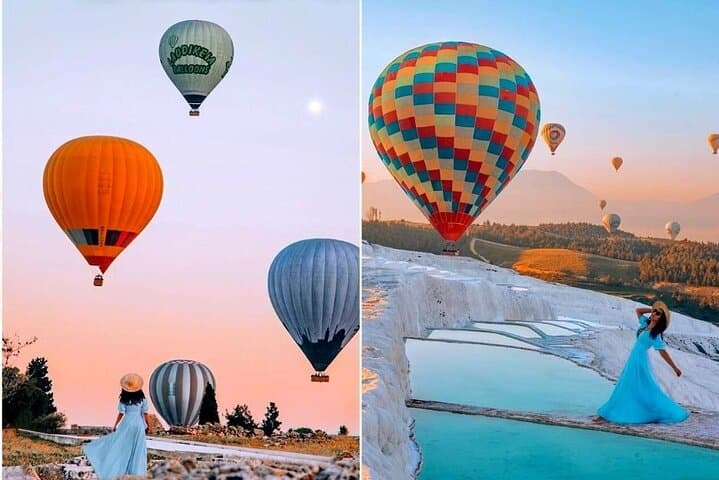
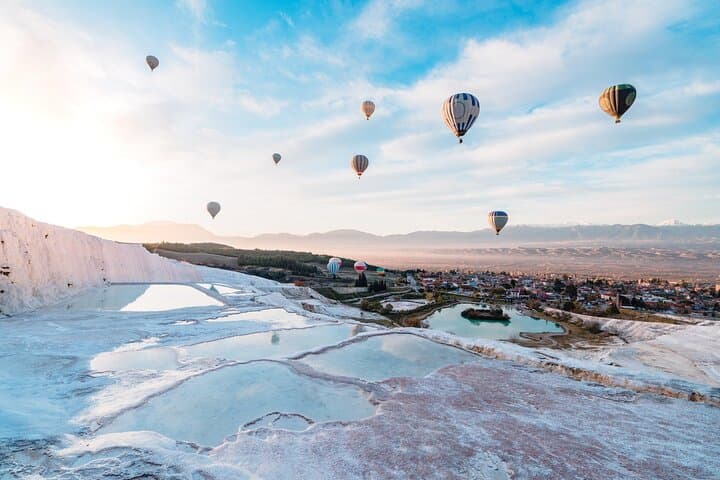
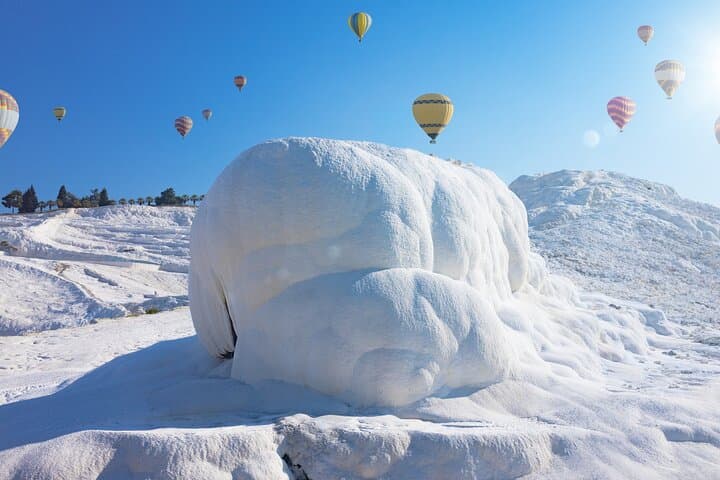
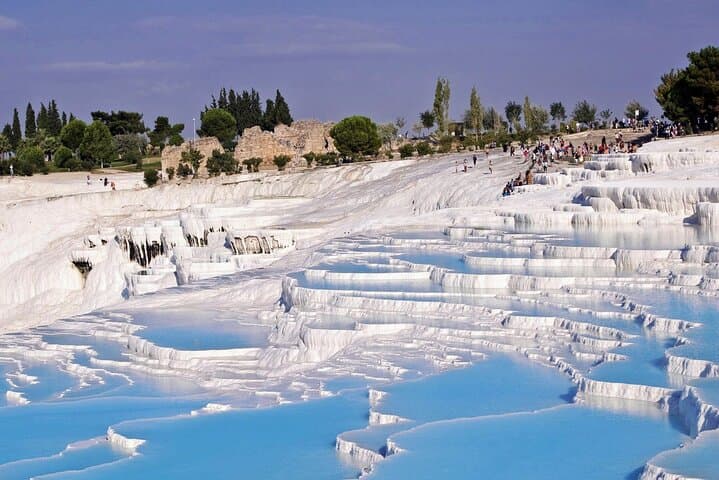
Before sunrise the bus slides away from Antalya and the road draws you inland toward a bright, alien slope. By the time light catches the white terraces, the travertines are a network of frozen waterfalls, each pool holding a mirror of sky. If you’ve opted for the balloon, you’ll rise above that shine—baskets drifting over calcified shelves while the ancient city of Hierapolis unfolds like a timeworn map below.
Before sunrise the bus slides away from Antalya and the road draws you inland toward a bright, alien slope. By the time light catches the white terraces, the travertines are a network of frozen waterfalls, each pool holding a mirror of sky. If you’ve opted for the balloon, you’ll rise above that shine—baskets drifting over calcified shelves while the ancient city of Hierapolis unfolds like a timeworn map below.
The terraces are the result of millennia of mineral-rich thermal waters depositing calcium carbonate; Hierapolis began as a Roman spa city that grew around those springs. Nearby Karahayıt’s red-hot springs and the ruins of Roman baths speak to an economy built on healing and pilgrimage. Locals in Denizli still harvest tourism and salt-rich waters with care, and the site is managed as part of a UNESCO area.
On a practical level: the full-day tour is long—expect 14–17 hours with about 3.5 hours each way from Antalya. Pickup is early morning; if you added the balloon, the launch happens before dawn. Wear sturdy, non-slip shoes for the terraces (you’ll often walk barefoot in designated areas), bring swimwear for the optional Cleopatra Pool (extra fee), and layer for cool mornings that warm quickly. Weather governs balloon flights—rain or wind cancels them for safety. The guided portion covers Hierapolis and the travertines with time for a self-led wander and lunch. Hydrate on the bus, carry cash for entrance or pool fees, and keep to marked routes—these calcium formations heal slowly but erode quickly under off-trail traffic.