THE ADVENTURE COLLECTIVE® · Independent discovery and booking for outdoor travel

Walk across Pamukkale’s gleaming travertine terraces and tour the nearby Greco-Roman city of Hierapolis on a small-group day trip from Kusadasi. Expect guided geology and history, optional thermal dips, and practical tips for visiting the fragile white pools.
Walk across Pamukkale’s gleaming travertine terraces and tour the nearby Greco-Roman city of Hierapolis on a small-group day trip from Kusadasi. Expect guided geology and history, optional thermal dips, and practical tips for visiting the fragile white pools.
You step from the bus onto brilliant white stone that looks, at first glance, like snow clinging to sun-baked cliffside. The terraces are warm underfoot; thermal water threads across them in shallow, glassy rivulets that catch the Anatolian light. In the distance, the ruins of Hierapolis tuck into the upper rim—columns, a theater and baths that once drew people seeking healing.
Verified experiences and guided adventures in the surrounding area.
Operated by Fez Travel · Pamukkale, Denizli
You step from the bus onto brilliant white stone that looks, at first glance, like snow clinging to sun-baked cliffside. The terraces are warm underfoot; thermal water threads across them in shallow, glassy rivulets that catch the Anatolian light. In the distance, the ruins of Hierapolis tuck into the upper rim—columns, a theater and baths that once drew people seeking healing.
Pamukkale’s travertine formed where calcium-rich hot springs deposit minerals as they cool, building terraces over a 200-meter (656-foot) cliff. Hierapolis grew alongside those springs in the Hellenistic and Roman eras as a spa city—its necropolis and theater map centuries of human use of the same waters you’ll see today. The modern village and nearby Karahayit red springs add local color: small cafés, thermal hotels and vendors selling balık ekmek (fish sandwiches) and tea.
Plan for a full day: this small-group tour (max 14) out of Kusadasi runs about 10 hours including transport and a guided walk. You’ll get time to hike between terraces, visit Hierapolis’ ruins and choose to bathe in designated pools (entrance fees for some pools are extra). Practical points: terraces are protected—expect barefoot zones and some closed sections—so bring quick-dry footwear for the approach, a swimsuit, sun protection and cash for optional baths. Early morning or late afternoon visits reduce heat and crowds and offer the best light for photos. Respect signage: the travertine is fragile, and staying on allowed paths preserves the site for future visitors.
easy.
10 hours.
Suitable for most fitness levels; involves moderate walking on uneven surfaces and short climbs
On this full-day tour expect around 3–4 hours on-site exploring terraces and ruins; total tour time including transport is about 10 hours.
Yes—there are designated bathing areas; some like the antique/Cleopatra pool charge an additional entrance fee paid on site.
There are accessible paths to viewing areas and some facilities, but the travertine terraces themselves require removing shoes and have uneven surfaces that limit full wheelchair access.
Yes—there’s an entrance fee for the Pamukkale site; some pools and special areas require separate additional fees.
Hierapolis was founded in the 2nd century BCE and became a prominent Roman spa city built atop thermal springs used for healing and ritual.
The travertine is fragile; visitor limits, barefoot rules and closed sections protect mineral formations—stick to marked paths and avoid soaps or lotions in pools.
Fez Travel operates guided outdoor trips and adventures with an emphasis on safety, stewardship, and memorable experiences.


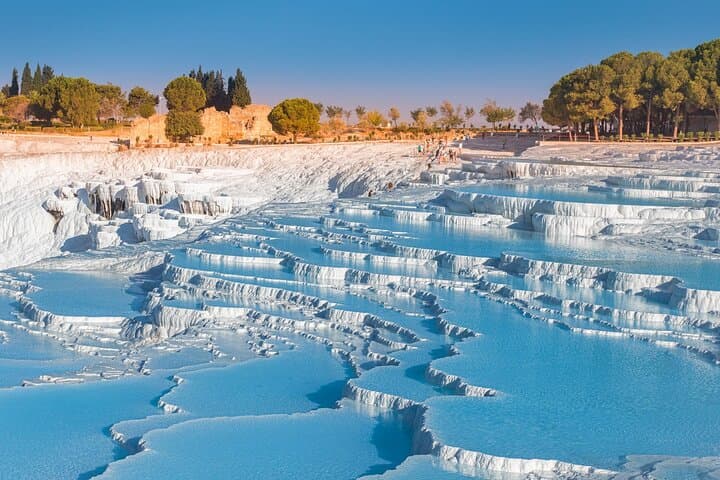
You step from the bus onto brilliant white stone that looks, at first glance, like snow clinging to sun-baked cliffside. The terraces are warm underfoot; thermal water threads across them in shallow, glassy rivulets that catch the Anatolian light. In the distance, the ruins of Hierapolis tuck into the upper rim—columns, a theater and baths that once drew people seeking healing.
You step from the bus onto brilliant white stone that looks, at first glance, like snow clinging to sun-baked cliffside. The terraces are warm underfoot; thermal water threads across them in shallow, glassy rivulets that catch the Anatolian light. In the distance, the ruins of Hierapolis tuck into the upper rim—columns, a theater and baths that once drew people seeking healing.
Pamukkale’s travertine formed where calcium-rich hot springs deposit minerals as they cool, building terraces over a 200-meter (656-foot) cliff. Hierapolis grew alongside those springs in the Hellenistic and Roman eras as a spa city—its necropolis and theater map centuries of human use of the same waters you’ll see today. The modern village and nearby Karahayit red springs add local color: small cafés, thermal hotels and vendors selling balık ekmek (fish sandwiches) and tea.
Plan for a full day: this small-group tour (max 14) out of Kusadasi runs about 10 hours including transport and a guided walk. You’ll get time to hike between terraces, visit Hierapolis’ ruins and choose to bathe in designated pools (entrance fees for some pools are extra). Practical points: terraces are protected—expect barefoot zones and some closed sections—so bring quick-dry footwear for the approach, a swimsuit, sun protection and cash for optional baths. Early morning or late afternoon visits reduce heat and crowds and offer the best light for photos. Respect signage: the travertine is fragile, and staying on allowed paths preserves the site for future visitors.