THE ADVENTURE COLLECTIVE® · Independent discovery and booking for outdoor travel

Journey inland from Side to the surreal white terraces of Pamukkale and the ancient spa city of Hierapolis. This full-day trip combines geology, Greco-Roman ruins and a chance to bathe in warm mineral waters.
Journey inland from Side to the surreal white terraces of Pamukkale and the ancient spa city of Hierapolis. This full-day trip combines geology, Greco-Roman ruins and a chance to bathe in warm mineral waters.
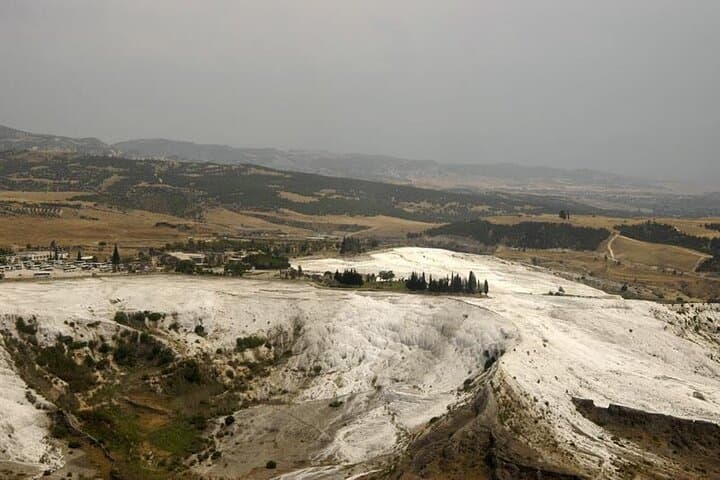
A pale dawn lifts off the Taurus range as the coach winds inland from Side, the Mediterranean shrinking behind you. By midmorning the landscape opens into limestone slopes streaked white — Pamukkale’s travertine terraces glitter like frozen waterfalls. You step out into mineral-warmed air, the sound of water tunneling under calcium shelves, and the hilltop ruins of Hierapolis watch over the pools.
Verified experiences and guided adventures in the surrounding area.
Operated by Köprülü Turistik Işl.Eml.Inş.Tarım taş.Pet.Turz ve Tic Ltd.Şti. · Denizli, Denizli Province
A pale dawn lifts off the Taurus range as the coach winds inland from Side, the Mediterranean shrinking behind you. By midmorning the landscape opens into limestone slopes streaked white — Pamukkale’s travertine terraces glitter like frozen waterfalls. You step out into mineral-warmed air, the sound of water tunneling under calcium shelves, and the hilltop ruins of Hierapolis watch over the pools.
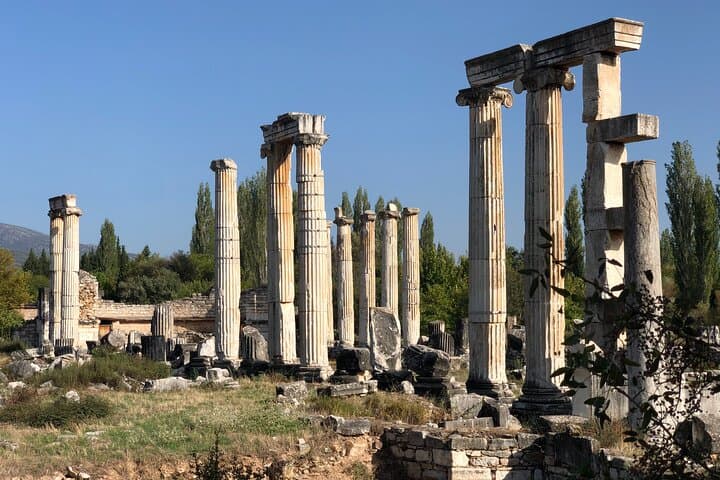
Pamukkale’s terraces are a product of millennia of hot, mineral-rich springs depositing calcium carbonate as the water cools. Above them the Greco-Roman spa city of Hierapolis grew in the 2nd century BCE, its theater, necropolis and colonnaded streets leaving a human layer on the geological stage. Ottoman and modern Turkish bathing traditions continued the site's thermal use; the Kleopatra pool still attracts swimmers to warm, buoyant 34–36°C water.
Practically, expect a long day: most departures from Side or Antalya involve a 3.5–4 hour drive each way. At the site you’ll walk 1–2 miles across terraces, boardwalks and ruins with modest elevation gain to the theater and necropolis. Some terrace sections require barefoot passage to protect deposits; others are fenced off.
Plan for sun, slippery surfaces, and crowds; early or late visits feel calmer. Bring a swimsuit for the paid thermal pool, a bottle of water, and flexible footwear that’s easy to remove. Whether you come for geology, archaeology, or a thermal soak, Pamukkale delivers a compact, otherworldly day of heat, stone and history.
easy.
15–16 hours (including transfers).
Suitable for travelers in light to moderate fitness who can manage 1–2 miles of walking and some stairs.
Expect roughly 3.5–4 hours one way by coach from Side/Antalya depending on traffic and stops.
No—most terraces are protected and access is limited; some areas allow careful foot-wading, but use the designated bathing zones or the paid Kleopatra thermal pool for full immersion.
Usually the thermal pool is an optional paid experience; check the operator’s inclusion list or bring cash for onsite entry fees.
Designated paths and barefoot sections are safe if you move carefully—surfaces can be slippery and uneven, so take your time and follow signage.
Hierapolis developed as a Roman spa town around the 2nd century BCE; its theater and necropolis reflect centuries of ceremonial and civic life tied to the thermal springs.
Authorities restrict access to fragile travertine sections and require barefoot passage in protected areas to reduce erosion; follow signage and avoid soaps or lotions in natural pools.
Köprülü Turistik Işl.Eml.Inş.Tarım taş.Pet.Turz ve Tic Ltd.Şti. operates guided outdoor trips and adventures with an emphasis on safety, stewardship, and memorable experiences.


A pale dawn lifts off the Taurus range as the coach winds inland from Side, the Mediterranean shrinking behind you. By midmorning the landscape opens into limestone slopes streaked white — Pamukkale’s travertine terraces glitter like frozen waterfalls. You step out into mineral-warmed air, the sound of water tunneling under calcium shelves, and the hilltop ruins of Hierapolis watch over the pools.
A pale dawn lifts off the Taurus range as the coach winds inland from Side, the Mediterranean shrinking behind you. By midmorning the landscape opens into limestone slopes streaked white — Pamukkale’s travertine terraces glitter like frozen waterfalls. You step out into mineral-warmed air, the sound of water tunneling under calcium shelves, and the hilltop ruins of Hierapolis watch over the pools.
Pamukkale’s terraces are a product of millennia of hot, mineral-rich springs depositing calcium carbonate as the water cools. Above them the Greco-Roman spa city of Hierapolis grew in the 2nd century BCE, its theater, necropolis and colonnaded streets leaving a human layer on the geological stage. Ottoman and modern Turkish bathing traditions continued the site's thermal use; the Kleopatra pool still attracts swimmers to warm, buoyant 34–36°C water.
Practically, expect a long day: most departures from Side or Antalya involve a 3.5–4 hour drive each way. At the site you’ll walk 1–2 miles across terraces, boardwalks and ruins with modest elevation gain to the theater and necropolis. Some terrace sections require barefoot passage to protect deposits; others are fenced off.
Plan for sun, slippery surfaces, and crowds; early or late visits feel calmer. Bring a swimsuit for the paid thermal pool, a bottle of water, and flexible footwear that’s easy to remove. Whether you come for geology, archaeology, or a thermal soak, Pamukkale delivers a compact, otherworldly day of heat, stone and history.