THE ADVENTURE COLLECTIVE® · Independent discovery and booking for outdoor travel

Walk the world-famous white travertine terraces and explore Hierapolis on a full-day small-group tour from Kusadasi. This practical guide covers what you’ll see, why the springs matter, and how to prepare for a day in the sun.
Walk the world-famous white travertine terraces and explore Hierapolis on a full-day small-group tour from Kusadasi. This practical guide covers what you’ll see, why the springs matter, and how to prepare for a day in the sun.
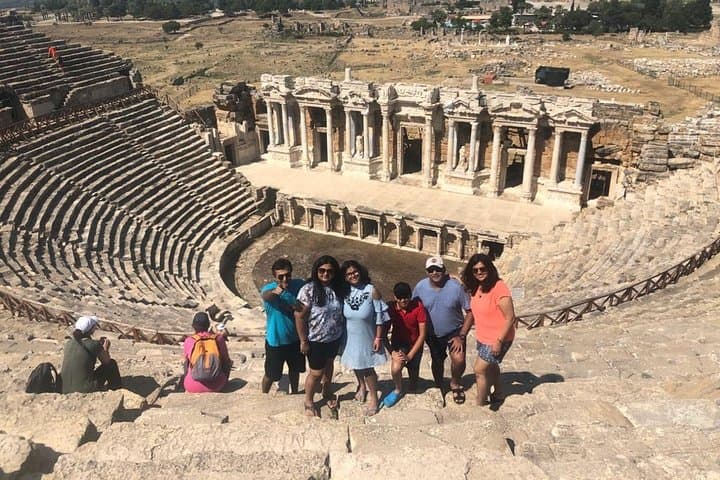
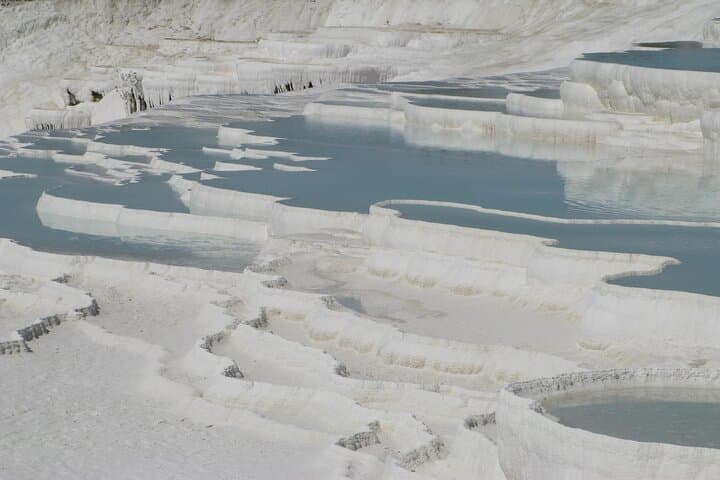
You arrive at the rim of the terraces as steam lifts off warm pools and the calcium-rich water glints like liquid porcelain. The slope ahead is white and sculpted—terraces stacked like frozen waterfalls—while the ruins of Hierapolis sit a short walk above, stone colonnades framing a distant Anatolian plain.
Verified experiences and guided adventures in the surrounding area.
Operated by Guide of Ephesus · Pamukkale, Denizli Province
You arrive at the rim of the terraces as steam lifts off warm pools and the calcium-rich water glints like liquid porcelain. The slope ahead is white and sculpted—terraces stacked like frozen waterfalls—while the ruins of Hierapolis sit a short walk above, stone colonnades framing a distant Anatolian plain.
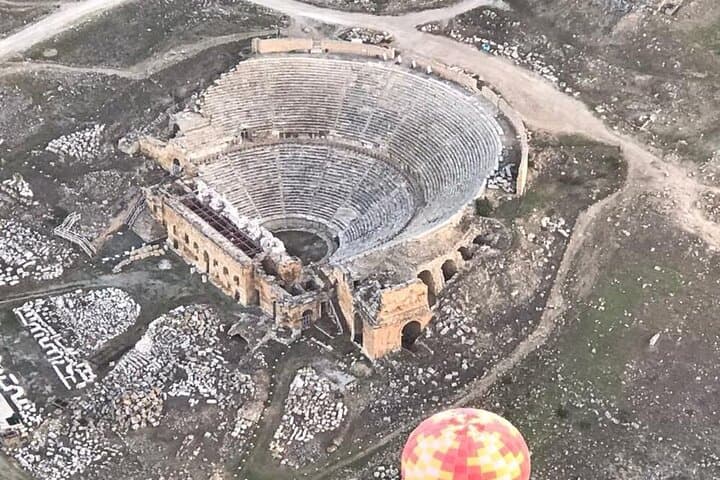
This landscape is geological theatre: over millennia thermal springs deposited travertine, building the stepped pools that drew Romans and Byzantines. Hierapolis began as an ancient spa and healing center in the 2nd century BCE; temples, baths and a necropolis grew up where people came for the waters’ reputed curative power. Local villages like Karahayit, with its iron-red springs, add cultural contrast—earthy, working communities threaded with a long tradition of thermal bathing.
On a small-group tour from Kusadasi you’ll split time between walking the archaeological site, learning Roman and Hellenistic history, and viewing the terraces from platforms. The Pool of Cleopatra invites an optional swim (extra fee) amid submerged columns; the Hierapolis Museum gathers finds that explain daily life here.
Practical edge: wear rubber-soled shoes or go barefoot where allowed—modern soles scuff the travertine. Bring a towel if you plan the pool, sun protection, and a refillable bottle; the site is exposed and midday heat can be intense. Timed visits in the morning or late afternoon soften light and crowds. Respect closed-off sections—the terraces are fragile and managed to prevent erosion. A full-day outing, this trip pairs straightforward logistics with landscapes that feel both geological and human-made, where warm water still seems to be shaping history.
easy.
10 hours.
Suitable for most fitness levels; requires moderate walking on uneven ancient pavement and some short inclines.
Most tours include access to the main site and Hierapolis, but the Cleopatra Pool often requires an additional entrance fee—confirm with the operator before you go.
Swimming on the travertine terraces themselves is prohibited to protect the formations; the Cleopatra (Antique) Pool is the designated swimming option for a fee.
Sections of the site and transportation are accessible, but many ancient pathways and terraces are uneven; check specific accessibility details with the operator if you require assistance.
The transfer from Kusadasi to Pamukkale is typically around 3 to 3.5 hours one way by air-conditioned vehicle, depending on traffic and stops.
Hierapolis was established as a healing center in the Hellenistic period and flourished under Roman rule; its bath complexes and necropolis reflect a city shaped by thermal culture.
The travertine terraces are fragile; management restricts access to prevent erosion—follow designated paths, avoid soaps or lotions in pools, and respect signage to protect the site.
Guide of Ephesus operates guided outdoor trips and adventures with an emphasis on safety, stewardship, and memorable experiences.

You arrive at the rim of the terraces as steam lifts off warm pools and the calcium-rich water glints like liquid porcelain. The slope ahead is white and sculpted—terraces stacked like frozen waterfalls—while the ruins of Hierapolis sit a short walk above, stone colonnades framing a distant Anatolian plain.
You arrive at the rim of the terraces as steam lifts off warm pools and the calcium-rich water glints like liquid porcelain. The slope ahead is white and sculpted—terraces stacked like frozen waterfalls—while the ruins of Hierapolis sit a short walk above, stone colonnades framing a distant Anatolian plain.
This landscape is geological theatre: over millennia thermal springs deposited travertine, building the stepped pools that drew Romans and Byzantines. Hierapolis began as an ancient spa and healing center in the 2nd century BCE; temples, baths and a necropolis grew up where people came for the waters’ reputed curative power. Local villages like Karahayit, with its iron-red springs, add cultural contrast—earthy, working communities threaded with a long tradition of thermal bathing.
On a small-group tour from Kusadasi you’ll split time between walking the archaeological site, learning Roman and Hellenistic history, and viewing the terraces from platforms. The Pool of Cleopatra invites an optional swim (extra fee) amid submerged columns; the Hierapolis Museum gathers finds that explain daily life here.
Practical edge: wear rubber-soled shoes or go barefoot where allowed—modern soles scuff the travertine. Bring a towel if you plan the pool, sun protection, and a refillable bottle; the site is exposed and midday heat can be intense. Timed visits in the morning or late afternoon soften light and crowds. Respect closed-off sections—the terraces are fragile and managed to prevent erosion. A full-day outing, this trip pairs straightforward logistics with landscapes that feel both geological and human-made, where warm water still seems to be shaping history.