THE ADVENTURE COLLECTIVE® · Independent discovery and booking for outdoor travel

A full-day drive from Bodrum leads to Pamukkale’s iconic white travertine terraces and the ancient ruins of Hierapolis. This practical guide outlines what to expect on the long but rewarding day trip—walking, geology, and on-site logistics.
A full-day drive from Bodrum leads to Pamukkale’s iconic white travertine terraces and the ancient ruins of Hierapolis. This practical guide outlines what to expect on the long but rewarding day trip—walking, geology, and on-site logistics.
You arrive at Pamukkale mid-morning after a long ribbon of highway unspools behind you; white terraces climb the slope ahead like frozen waterfalls, their calcium crusts bright against a blue Anatolian sky. The water smells faintly of minerals and the terraces gleam underfoot as the guide points toward the ruins of Hierapolis perched above.
Verified experiences and guided adventures in the surrounding area.
Operated by Tourmania · Pamukkale, Denizli Province
You arrive at Pamukkale mid-morning after a long ribbon of highway unspools behind you; white terraces climb the slope ahead like frozen waterfalls, their calcium crusts bright against a blue Anatolian sky. The water smells faintly of minerals and the terraces gleam underfoot as the guide points toward the ruins of Hierapolis perched above.
Geology here is immediate: warm, carbonate-rich springs have been depositing travertine for millennia, building stepped pools that ancient Romans prized for their therapeutic qualities. Hierapolis, founded in the Hellenistic era and expanded under Rome, adds carved tombs, a monumental theatre and a necropolis that speak to the site's long life as a spa city.
Culture and commerce still meet at the thermal edge — small stalls, local tea, and the distinct red springs of nearby Karahayit offer contrasts to the white slopes. Note practical realities: tours from Bodrum are full-day affairs (about 12 hours total), and much of the site requires walking on uneven stone and stepping barefoot on designated terraces to protect the travertine.
Plan for sun, limited shade and a mix of paved ruins and soft, wet carbonate surfaces. Timing your visit for morning light or late afternoon softens the glare and crowds. Bring water, removable footwear for the terraces, and a camera with a polarizer for glare control. Expect about two hours at the travertines and Hierapolis, plus lengthy transfers — the drive from Bodrum is roughly 270 km each way.
easy.
12 hours (including transfers).
Light walking ability is sufficient, but expect stairs, uneven surfaces and several hours on your feet; comfortable mobility recommended.
Yes—site rules require visitors to remove shoes on the travertine to prevent damage; bring easy-to-remove footwear and a bag to carry them.
The tour is marketed as suitable for all fitness levels, but it involves long transfers and walking on uneven surfaces; supervise children and consider mobility limitations.
Public access to the ancient Cleopatra’s Pool may be restricted for renovation; always check current access and avoid swimming in protected or closed areas.
The drive is approximately 270 km (about 3.5–4.5 hours each way depending on traffic); the itinerary includes rest and meal stops, but expect a full-day schedule.
Hierapolis was founded in the Hellenistic period and developed into a Roman spa city; its theatre and extensive necropolis reflect centuries of ritual and medical use.
Pamukkale is protected to conserve fragile travertine formations—visitors must stay on designated paths, remove shoes on terraces, and avoid bathing in restricted pools to reduce erosion and contamination.
Tourmania operates guided outdoor trips and adventures with an emphasis on safety, stewardship, and memorable experiences.


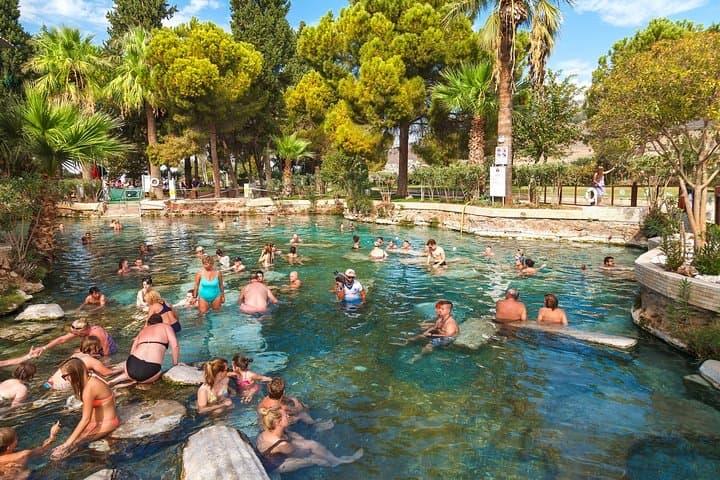
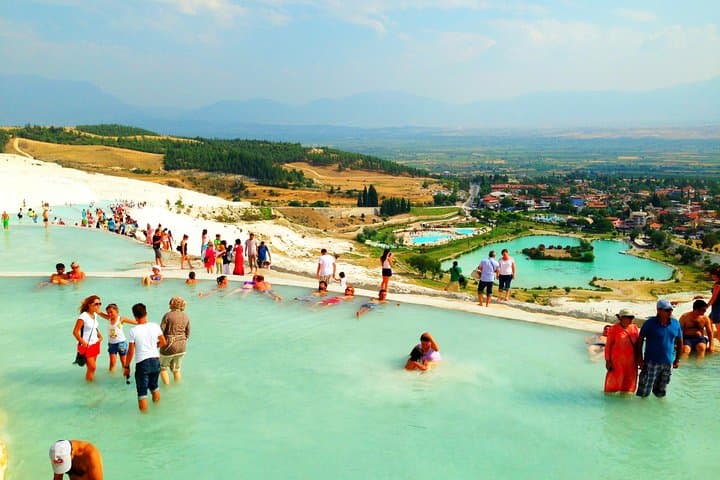
You arrive at Pamukkale mid-morning after a long ribbon of highway unspools behind you; white terraces climb the slope ahead like frozen waterfalls, their calcium crusts bright against a blue Anatolian sky. The water smells faintly of minerals and the terraces gleam underfoot as the guide points toward the ruins of Hierapolis perched above.
You arrive at Pamukkale mid-morning after a long ribbon of highway unspools behind you; white terraces climb the slope ahead like frozen waterfalls, their calcium crusts bright against a blue Anatolian sky. The water smells faintly of minerals and the terraces gleam underfoot as the guide points toward the ruins of Hierapolis perched above.
Geology here is immediate: warm, carbonate-rich springs have been depositing travertine for millennia, building stepped pools that ancient Romans prized for their therapeutic qualities. Hierapolis, founded in the Hellenistic era and expanded under Rome, adds carved tombs, a monumental theatre and a necropolis that speak to the site's long life as a spa city.
Culture and commerce still meet at the thermal edge — small stalls, local tea, and the distinct red springs of nearby Karahayit offer contrasts to the white slopes. Note practical realities: tours from Bodrum are full-day affairs (about 12 hours total), and much of the site requires walking on uneven stone and stepping barefoot on designated terraces to protect the travertine.
Plan for sun, limited shade and a mix of paved ruins and soft, wet carbonate surfaces. Timing your visit for morning light or late afternoon softens the glare and crowds. Bring water, removable footwear for the terraces, and a camera with a polarizer for glare control. Expect about two hours at the travertines and Hierapolis, plus lengthy transfers — the drive from Bodrum is roughly 270 km each way.