THE ADVENTURE COLLECTIVE® · Independent discovery and booking for outdoor travel

A full-day coach tour from Belek delivers Pamukkale’s white travertines, the ruins of Hierapolis, and thermal pools with guided context and meals included. Expect an early start, a long but scenic drive, and several hours to walk, swim, and explore.
A full-day coach tour from Belek delivers Pamukkale’s white travertines, the ruins of Hierapolis, and thermal pools with guided context and meals included. Expect an early start, a long but scenic drive, and several hours to walk, swim, and explore.
You arrive before dawn on a coach threading through pine-smelling countryside; by late morning the landscape opens to a white cliff that throws back the light like a blank page. The travertine terraces of Pamukkale spill stepwise pools of warm water, each ledge catching steam and sun. Walking barefoot across cooled travertine, the thermal water tugs at your feet and the ancient stones beneath your soles feel older than the road that brought you here.
Verified experiences and guided adventures in the surrounding area.
Operated by Payless · Pamukkale, Denizli Province
You arrive before dawn on a coach threading through pine-smelling countryside; by late morning the landscape opens to a white cliff that throws back the light like a blank page. The travertine terraces of Pamukkale spill stepwise pools of warm water, each ledge catching steam and sun. Walking barefoot across cooled travertine, the thermal water tugs at your feet and the ancient stones beneath your soles feel older than the road that brought you here.
This place combines geology and human history: mineral-rich spring water laid the calcium deposits over millennia, while Romans and earlier Hellenistic settlers built Hierapolis as a spa and religious center. The site’s theatre, necropolis and ruined baths map a culture built around healing; Cleopatra’s Pool — an optional paid soak — carries its own layer of local myth.
Expect a structured day: early pickup in Belek, roughly a four-hour drive, guided exploration of terraces and Hierapolis, workshops visits, buffet lunch and an afternoon return. The terrain at the site is mostly flat but uneven stone and wet surfaces demand steady footwear when not on the travertine, and the area is exposed to sun. Plan for hydrated breaks, respect restricted paths (shoeless zones protect the formations), and allow extra time for photos and rubbing shoulders with the friendly but busy crowds.
Timing matters: arrive in shoulder seasons for gentler temperatures and softer light, and bring a small towel to dry off between pools.
moderate.
12–13 hours.
Moderate fitness recommended — able to walk several hours with some standing and gentle hill sections.
Standard tour fees typically include transport and guiding, but some on-site admissions such as Cleopatra’s Pool may carry an additional charge.
Expect around four hours each way by air-conditioned coach, which is why the tour is a full-day outing.
No — in order to protect the travertine you are usually required to remove shoes on designated terraces; carry a bag for footwear storage.
Hierapolis has uneven ancient ruins and some stairs; the tour is not ideal for those with significant mobility limitations and isn’t recommended for people with serious back or heart conditions.
Hierapolis was a Roman-era spa town built around mineral springs; the combination of travertine formation and ancient ruins is a result of continuous human use of thermal resources.
Water flow and visitor access are managed to protect the fragile travertine; stay on marked paths, avoid soaps or oils in pools, and follow local signage to minimize impact.
Payless operates guided outdoor trips and adventures with an emphasis on safety, stewardship, and memorable experiences.
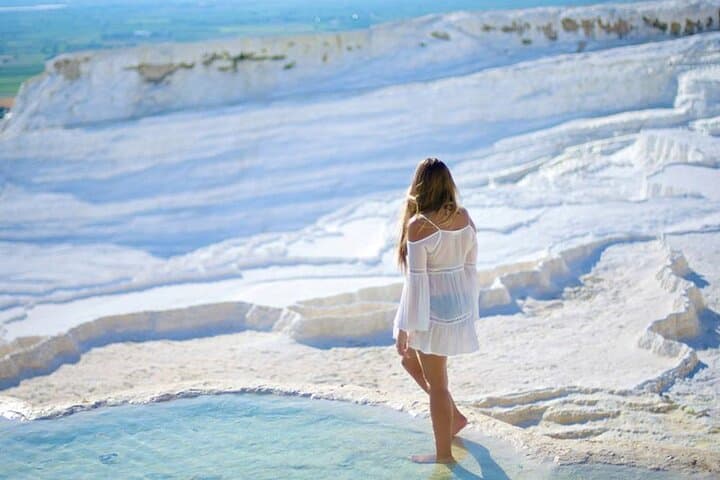
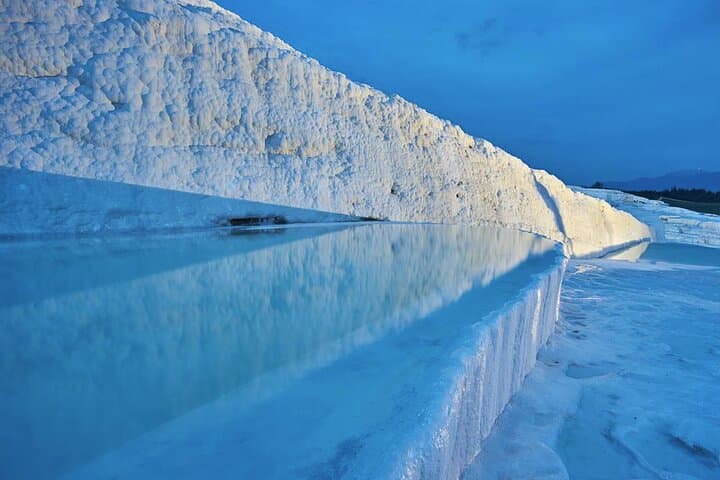
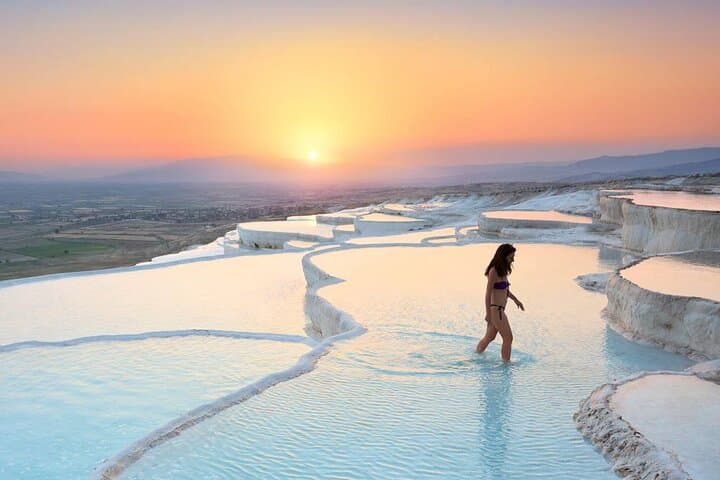

You arrive before dawn on a coach threading through pine-smelling countryside; by late morning the landscape opens to a white cliff that throws back the light like a blank page. The travertine terraces of Pamukkale spill stepwise pools of warm water, each ledge catching steam and sun. Walking barefoot across cooled travertine, the thermal water tugs at your feet and the ancient stones beneath your soles feel older than the road that brought you here.
You arrive before dawn on a coach threading through pine-smelling countryside; by late morning the landscape opens to a white cliff that throws back the light like a blank page. The travertine terraces of Pamukkale spill stepwise pools of warm water, each ledge catching steam and sun. Walking barefoot across cooled travertine, the thermal water tugs at your feet and the ancient stones beneath your soles feel older than the road that brought you here.
This place combines geology and human history: mineral-rich spring water laid the calcium deposits over millennia, while Romans and earlier Hellenistic settlers built Hierapolis as a spa and religious center. The site’s theatre, necropolis and ruined baths map a culture built around healing; Cleopatra’s Pool — an optional paid soak — carries its own layer of local myth.
Expect a structured day: early pickup in Belek, roughly a four-hour drive, guided exploration of terraces and Hierapolis, workshops visits, buffet lunch and an afternoon return. The terrain at the site is mostly flat but uneven stone and wet surfaces demand steady footwear when not on the travertine, and the area is exposed to sun. Plan for hydrated breaks, respect restricted paths (shoeless zones protect the formations), and allow extra time for photos and rubbing shoulders with the friendly but busy crowds.
Timing matters: arrive in shoulder seasons for gentler temperatures and softer light, and bring a small towel to dry off between pools.