THE ADVENTURE COLLECTIVE® · Independent discovery and booking for outdoor travel

Walk barefoot across glistening travertine terraces, soak in thermal pools, and roam the ruins of Hierapolis on this semi-private day tour. Practical tips on timing, footwear, and what to expect help you plan a smooth visit.
Walk barefoot across glistening travertine terraces, soak in thermal pools, and roam the ruins of Hierapolis on this semi-private day tour. Practical tips on timing, footwear, and what to expect help you plan a smooth visit.
A visitor steps out of the minivan into a white world: terraces of calcite spill down a sunlit slope while steam lifts from warm springs, beckoning with the smell of mineral-rich water. The guide gestures toward the Roman theatre perched above—its stones still holding echoes of ancient crowds—while the travertines curve like frozen waterfalls below.
Verified experiences and guided adventures in the surrounding area.
Operated by Turkey Experiences · Pamukkale, Denizli Province
A visitor steps out of the minivan into a white world: terraces of calcite spill down a sunlit slope while steam lifts from warm springs, beckoning with the smell of mineral-rich water. The guide gestures toward the Roman theatre perched above—its stones still holding echoes of ancient crowds—while the travertines curve like frozen waterfalls below.
Geology here is the star: thermal springs deposit calcium carbonate as they cool, building the stepped pools that formed over millennia. Hierapolis grew where those springs were most abundant; the Greeks and Romans turned the place into a spa city crowned by baths, temples and an extensive necropolis. Kaklik Cave, an underground relative of the terraces, reveals rimstone pools and moss patches where light finds a way inside.
Culture and craft are visible too: local ateliers still work with the region’s stones and herbal traditions; lunch on this tour often features Denizli flavors—lentils, vegetables and slow-cooked meats—served at a nearby restaurant.
Practical guidance: expect several hours of walking on uneven stone and wooden walkways, minimal elevation gain but sun exposure and warm water. Shoes must be removed in parts of the travertines to protect the calcite; carry a small towel and water shoes to use off-site. Bring sunscreen, cash for lockers and modest swimwear if you plan to dip in the thermal pools. Aim for morning or late afternoon to avoid heat and the largest crowds. With a moderate fitness level and respect for protected areas, the combined natural and archaeological highlights make for a compact, unforgettable day trip.
moderate.
6–15 hours.
Participants should be comfortable with several hours of walking on uneven surfaces and short stair sections; not suitable for those with serious mobility issues.
Yes—walking barefoot on the protected travertine terraces is required to prevent damage; bring a small towel and carry shoes for other parts of the day.
Access to the Antique (Cleopatra) Pool is typically available but may carry an extra fee; swimming is allowed and includes submerged ancient columns—check with your operator for current access rules.
Kaklik Cave is nearby and this itinerary includes a short guided visit; expect about 15–30 minutes of exploration on wooden walkways inside the cave.
Yes—this option includes round-trip Istanbul–Denizli flights, but passport details may be required to issue tickets, so provide requested information promptly.
Hierapolis began as a Hellenistic spa town and flourished under Roman rule for its therapeutic springs; its Roman theatre, baths and necropolis reflect centuries of continuous use.
Pamukkale’s travertines are fragile; park rules (barefoot access, staying on paths, controlled water flow) aim to preserve the carbonate terraces and reduce human impact.
Turkey Experiences operates guided outdoor trips and adventures with an emphasis on safety, stewardship, and memorable experiences.

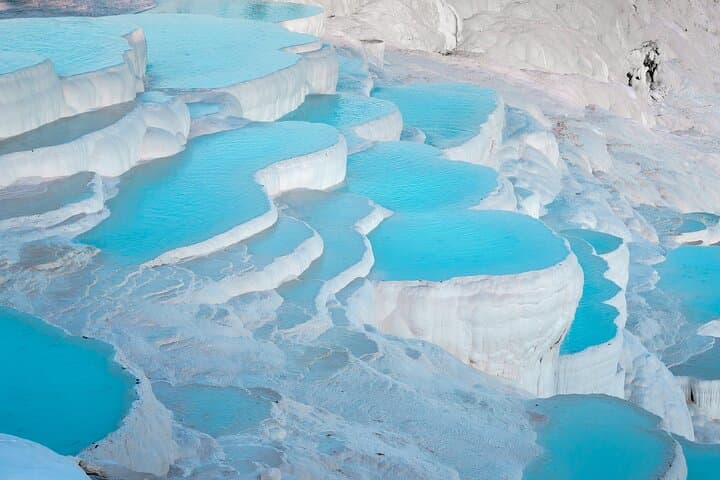
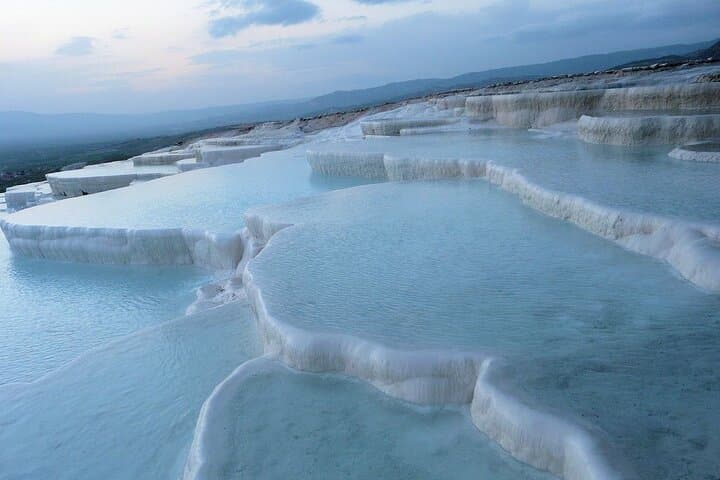
A visitor steps out of the minivan into a white world: terraces of calcite spill down a sunlit slope while steam lifts from warm springs, beckoning with the smell of mineral-rich water. The guide gestures toward the Roman theatre perched above—its stones still holding echoes of ancient crowds—while the travertines curve like frozen waterfalls below.
A visitor steps out of the minivan into a white world: terraces of calcite spill down a sunlit slope while steam lifts from warm springs, beckoning with the smell of mineral-rich water. The guide gestures toward the Roman theatre perched above—its stones still holding echoes of ancient crowds—while the travertines curve like frozen waterfalls below.
Geology here is the star: thermal springs deposit calcium carbonate as they cool, building the stepped pools that formed over millennia. Hierapolis grew where those springs were most abundant; the Greeks and Romans turned the place into a spa city crowned by baths, temples and an extensive necropolis. Kaklik Cave, an underground relative of the terraces, reveals rimstone pools and moss patches where light finds a way inside.
Culture and craft are visible too: local ateliers still work with the region’s stones and herbal traditions; lunch on this tour often features Denizli flavors—lentils, vegetables and slow-cooked meats—served at a nearby restaurant.
Practical guidance: expect several hours of walking on uneven stone and wooden walkways, minimal elevation gain but sun exposure and warm water. Shoes must be removed in parts of the travertines to protect the calcite; carry a small towel and water shoes to use off-site. Bring sunscreen, cash for lockers and modest swimwear if you plan to dip in the thermal pools. Aim for morning or late afternoon to avoid heat and the largest crowds. With a moderate fitness level and respect for protected areas, the combined natural and archaeological highlights make for a compact, unforgettable day trip.