THE ADVENTURE COLLECTIVE® · Independent discovery and booking for outdoor travel

Board a comfortable coach in Izmir and spend a full day exploring Pamukkale’s snow-white travertine terraces and the ancient ruins of Hierapolis. This guided day trip combines geology, Roman history, thermal pools, and an included buffet lunch.
Board a comfortable coach in Izmir and spend a full day exploring Pamukkale’s snow-white travertine terraces and the ancient ruins of Hierapolis. This guided day trip combines geology, Roman history, thermal pools, and an included buffet lunch.
You step off the air-conditioned coach and the world goes white: terraces of mineral-laden travertine cascade down the slope like frozen waterfalls, steam from thermal springs nudging the air. The natural pools gleam; the warm runoff dares you closer while the ruins of Hierapolis look on, stone faces softened by centuries.
Verified experiences and guided adventures in the surrounding area.
Operated by Payless · Pamukkale, Denizli
You step off the air-conditioned coach and the world goes white: terraces of mineral-laden travertine cascade down the slope like frozen waterfalls, steam from thermal springs nudging the air. The natural pools gleam; the warm runoff dares you closer while the ruins of Hierapolis look on, stone faces softened by centuries.
This landscape is geological show-and-tell — hot water rising through limestone deposited calcium carbonate that built the terraces over millennia. Hierapolis, founded in the Hellenistic era and expanded by the Romans, became a spa destination where emperors and pilgrims came for baths and healing. Today the site is a UNESCO World Heritage area that balances active tourism with preservation.
Culturally, the area stitches Ottoman spa villages, Turkish hospitality at the included open buffet lunch, and local guides who narrate Roman theaters, the Temple of Apollo, and the martyrium of St. Philip. Nearby Karahayit’s rust-red springs and the quieter north rim viewpoints offer alternatives if you want to step off the main track.
Practical guidance: the tour runs 10–12 hours from Izmir (about a 3-hour drive each way) with 3–4 hours free time on site. Wear sturdy sandals or shoes you can remove — walking on the travertines is barefoot in protected areas. Bring sun protection, refillable water, and a swimsuit if you plan to pay for Cleopatra’s Pool. Expect uneven paths, bright reflections, and crowds at peak hours; aim for morning or late afternoon light for photos and cooler walking.
easy.
10–12 hours.
Suitable for most fitness levels, but you should be able to walk uneven surfaces and climb short stair sections during the free-time explore.
The coach journey is approximately 200–230 km and takes about 3 hours each way, with a comfort stop en route.
Swimming on the protected terraces is not allowed; an optional paid entrance permits bathing in Cleopatra’s Pool (Antique Pool) instead.
Yes for most; children and elders should be supervised on uneven, often slippery surfaces and may need assistance during barefoot stretches.
The tour includes guided entry logistics and an open buffet lunch; Cleopatra’s Pool admission is optional and typically costs extra.
Hierapolis was established in the Hellenistic period and expanded under Rome as a spiritual spa town; the combined natural and archaeological site is UNESCO-listed.
Visitor numbers and barefoot access are managed to protect travertines; stay on designated paths, follow signage, and avoid soaps or oils in thermal waters.
Payless operates guided outdoor trips and adventures with an emphasis on safety, stewardship, and memorable experiences.
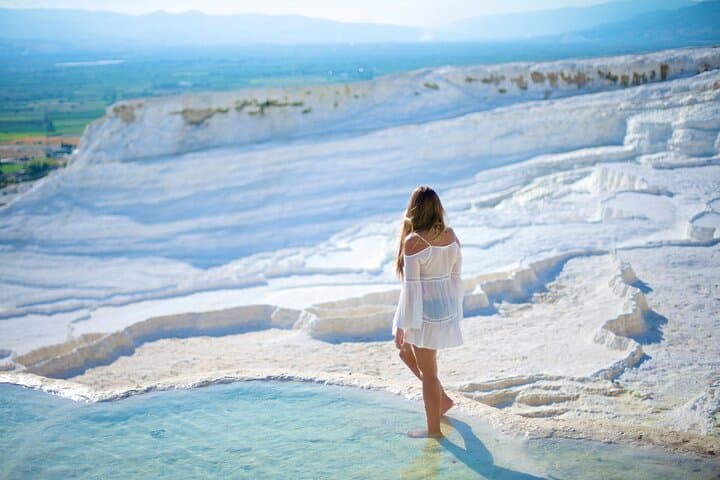
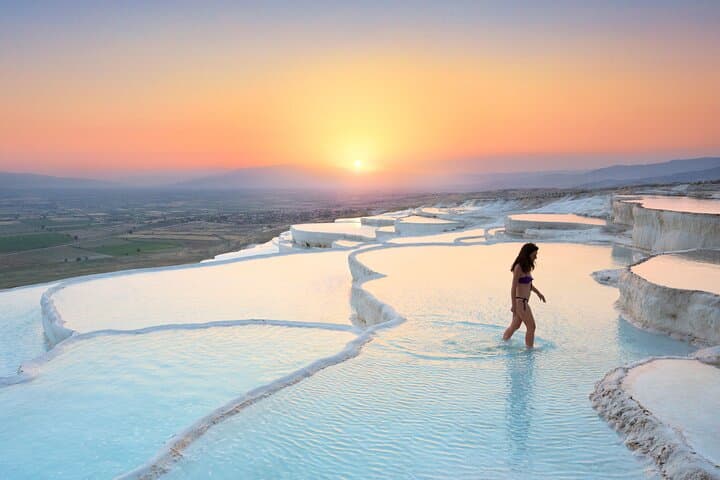
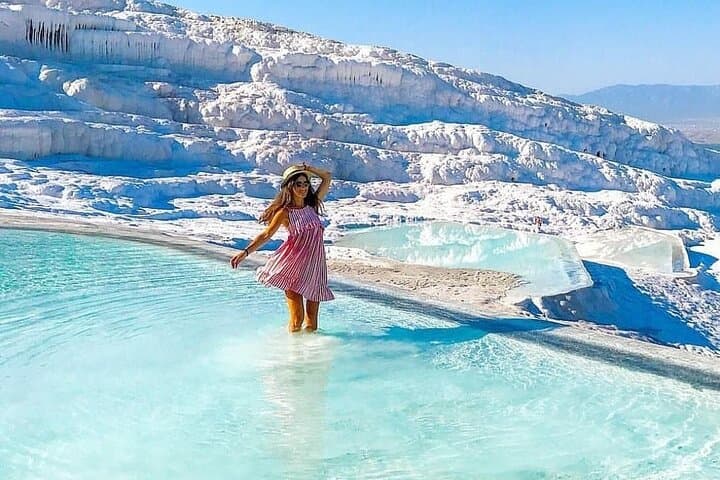
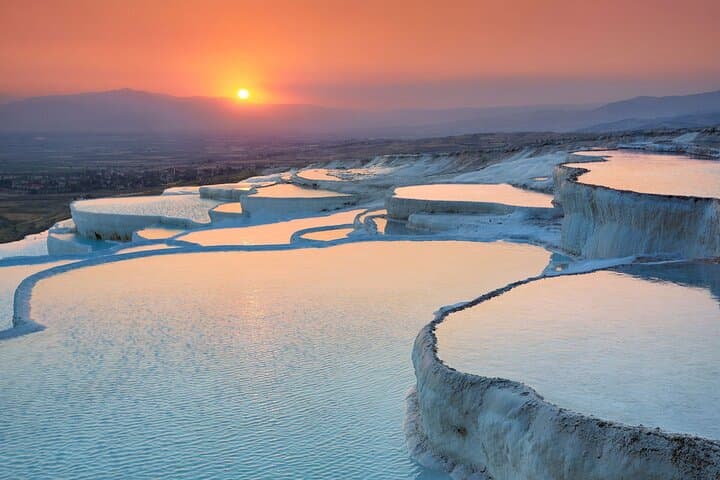
You step off the air-conditioned coach and the world goes white: terraces of mineral-laden travertine cascade down the slope like frozen waterfalls, steam from thermal springs nudging the air. The natural pools gleam; the warm runoff dares you closer while the ruins of Hierapolis look on, stone faces softened by centuries.
You step off the air-conditioned coach and the world goes white: terraces of mineral-laden travertine cascade down the slope like frozen waterfalls, steam from thermal springs nudging the air. The natural pools gleam; the warm runoff dares you closer while the ruins of Hierapolis look on, stone faces softened by centuries.
This landscape is geological show-and-tell — hot water rising through limestone deposited calcium carbonate that built the terraces over millennia. Hierapolis, founded in the Hellenistic era and expanded by the Romans, became a spa destination where emperors and pilgrims came for baths and healing. Today the site is a UNESCO World Heritage area that balances active tourism with preservation.
Culturally, the area stitches Ottoman spa villages, Turkish hospitality at the included open buffet lunch, and local guides who narrate Roman theaters, the Temple of Apollo, and the martyrium of St. Philip. Nearby Karahayit’s rust-red springs and the quieter north rim viewpoints offer alternatives if you want to step off the main track.
Practical guidance: the tour runs 10–12 hours from Izmir (about a 3-hour drive each way) with 3–4 hours free time on site. Wear sturdy sandals or shoes you can remove — walking on the travertines is barefoot in protected areas. Bring sun protection, refillable water, and a swimsuit if you plan to pay for Cleopatra’s Pool. Expect uneven paths, bright reflections, and crowds at peak hours; aim for morning or late afternoon light for photos and cooler walking.