THE ADVENTURE COLLECTIVE® · Independent discovery and booking for outdoor travel

Float over Pamukkale’s chalk-white terraces at sunrise, then walk the Roman ruins of Hierapolis on a full-day tour from Istanbul. This combined balloon-and-land trip pairs aerial perspective with hands-on exploration—plan for early starts and weather-dependent flights.
Float over Pamukkale’s chalk-white terraces at sunrise, then walk the Roman ruins of Hierapolis on a full-day tour from Istanbul. This combined balloon-and-land trip pairs aerial perspective with hands-on exploration—plan for early starts and weather-dependent flights.
You lift off before dawn, the balloon basket rocking as the valley below resolves from shadow into terraces of white calcite and pale blue pools. The sun edges up behind a distant ridge; steam from warm springs drifts like a slow breath off the terraces. From the sky Pamukkale looks engineered—banded, bright, almost otherworldly—while the ruined city of Hierapolis crouches at the plateau’s rim.
Verified experiences and guided adventures in the surrounding area.
Operated by HTR Tours Travel Agency · Denizli, Denizli Province
You lift off before dawn, the balloon basket rocking as the valley below resolves from shadow into terraces of white calcite and pale blue pools. The sun edges up behind a distant ridge; steam from warm springs drifts like a slow breath off the terraces. From the sky Pamukkale looks engineered—banded, bright, almost otherworldly—while the ruined city of Hierapolis crouches at the plateau’s rim.
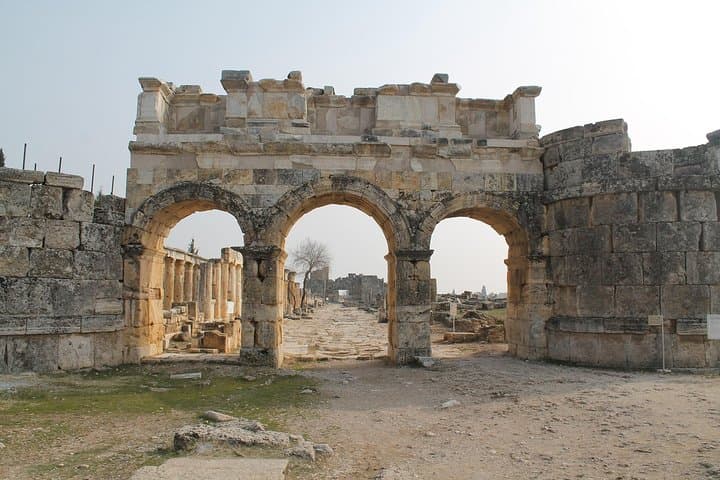
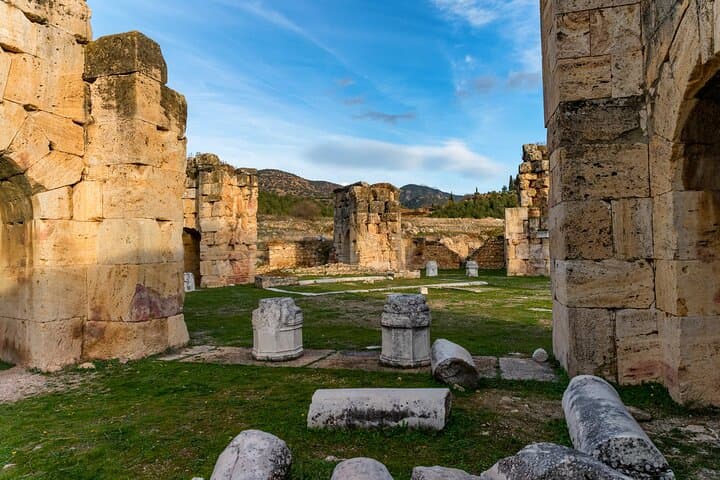
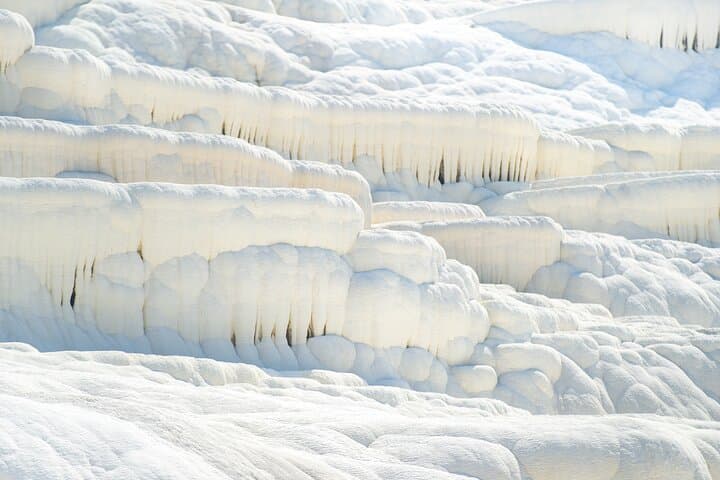
The travertine terraces are calcium-carbonate formations deposited by thermal springs over millennia; Hierapolis began as a Hellenistic-Roman spa town and expanded under imperial patronage. Walk past the colonnaded streets and the ruined theatre and you’ll find inscriptions, sarcophagi and a necropolis that speak to the town’s long role as a healing center. Local culture still orbits those springs: nearby Karahayit’s red waters and the limestone caves tell another chapter of the same geology.
Expect about 1–2 miles (1.5–3 km) of walking at the site with minimal elevation change—there are steps into ruins but no technical climbing. Balloon flights are scheduled at sunrise and are weather dependent; the rest of the day is a guided land tour with transfers and lunch included.
Practical points: arrive layered for a chilly lift-off, bring a refillable water bottle and sunscreen, and be prepared to remove shoes on the terraces. Balloons may be canceled for wind; operators typically offer refunds or rescheduling. Time your trip in spring or fall for milder temperatures and fewer crowds, and follow park rules to protect the fragile travertine surfaces.
easy.
12–14 hours.
Suitable for travelers in average physical condition; involves walking on uneven stone and stairs.
No—balloon flights are weather dependent; operators will refund or reschedule if conditions are unsafe.
The tour description indicates admissions to Pamukkale and Hierapolis are included, but confirm at booking for any recent changes.
Yes—park rules require barefoot or socked walking on the travertine to prevent damage; bring easy footwear to change into.
Most full-day packages include transfers—often an early flight or long-drive leg—follow the operator’s pickup schedule and arrive ready for a long day.
Hierapolis was founded as a Hellenistic spa town and expanded under Roman rule; its ruins and necropolis reflect centuries of therapeutic pilgrimage and ancient urban life.
Stay on designated paths and avoid soaps or oils in the pools; the travertine terraces are fragile and protected—follow park rules and use biodegradable products.
HTR Tours Travel Agency operates guided outdoor trips and adventures with an emphasis on safety, stewardship, and memorable experiences.
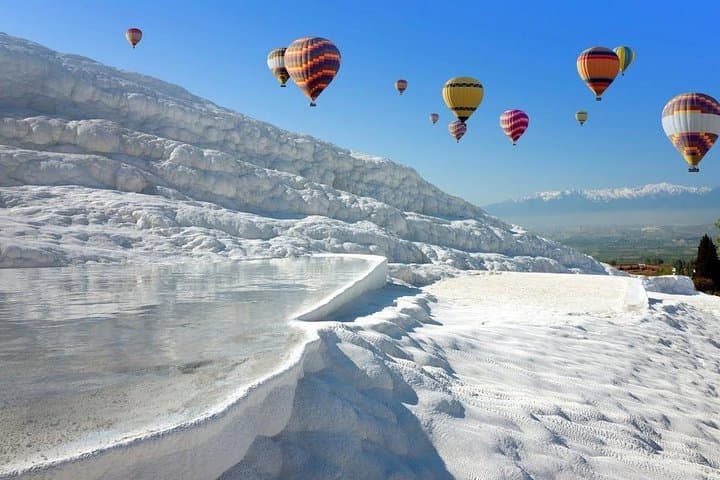
You lift off before dawn, the balloon basket rocking as the valley below resolves from shadow into terraces of white calcite and pale blue pools. The sun edges up behind a distant ridge; steam from warm springs drifts like a slow breath off the terraces. From the sky Pamukkale looks engineered—banded, bright, almost otherworldly—while the ruined city of Hierapolis crouches at the plateau’s rim.
You lift off before dawn, the balloon basket rocking as the valley below resolves from shadow into terraces of white calcite and pale blue pools. The sun edges up behind a distant ridge; steam from warm springs drifts like a slow breath off the terraces. From the sky Pamukkale looks engineered—banded, bright, almost otherworldly—while the ruined city of Hierapolis crouches at the plateau’s rim.
The travertine terraces are calcium-carbonate formations deposited by thermal springs over millennia; Hierapolis began as a Hellenistic-Roman spa town and expanded under imperial patronage. Walk past the colonnaded streets and the ruined theatre and you’ll find inscriptions, sarcophagi and a necropolis that speak to the town’s long role as a healing center. Local culture still orbits those springs: nearby Karahayit’s red waters and the limestone caves tell another chapter of the same geology.
Expect about 1–2 miles (1.5–3 km) of walking at the site with minimal elevation change—there are steps into ruins but no technical climbing. Balloon flights are scheduled at sunrise and are weather dependent; the rest of the day is a guided land tour with transfers and lunch included.
Practical points: arrive layered for a chilly lift-off, bring a refillable water bottle and sunscreen, and be prepared to remove shoes on the terraces. Balloons may be canceled for wind; operators typically offer refunds or rescheduling. Time your trip in spring or fall for milder temperatures and fewer crowds, and follow park rules to protect the fragile travertine surfaces.