THE ADVENTURE COLLECTIVE® · Independent discovery and booking for outdoor travel

A long, rewarding daytrip from Kemer that pairs Pamukkale’s milky travertine terraces and ancient Hierapolis with the turquoise shores of Salda Lake. Early pickup and careful timing let you maximize time at both geological highlights.
A long, rewarding daytrip from Kemer that pairs Pamukkale’s milky travertine terraces and ancient Hierapolis with the turquoise shores of Salda Lake. Early pickup and careful timing let you maximize time at both geological highlights.
The morning begins before dawn as the minibus threads away from the Mediterranean coast and into Anatolia, lights shrinking behind you while the road grows long and quiet. By midmorning the white terraces of Pamukkale appear like a geological stage set—calcium-rich springs stepped into shallow milky pools that catch the sun.
Verified experiences and guided adventures in the surrounding area.
Operated by tourbookinturkey · Denizli, Denizli Province
The morning begins before dawn as the minibus threads away from the Mediterranean coast and into Anatolia, lights shrinking behind you while the road grows long and quiet. By midmorning the white terraces of Pamukkale appear like a geological stage set—calcium-rich springs stepped into shallow milky pools that catch the sun.
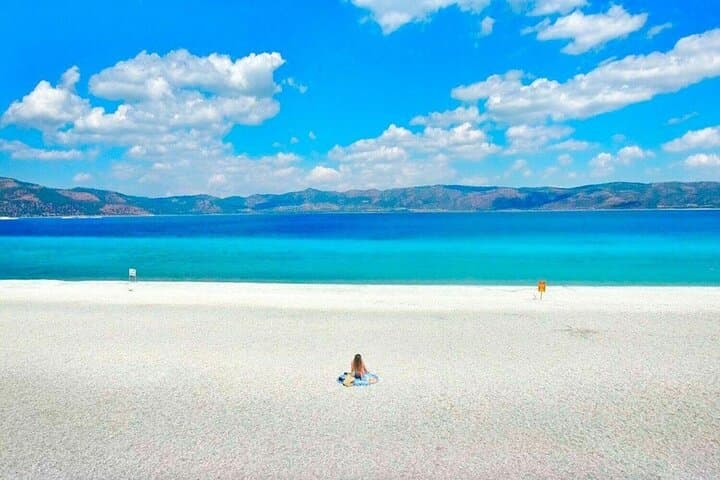
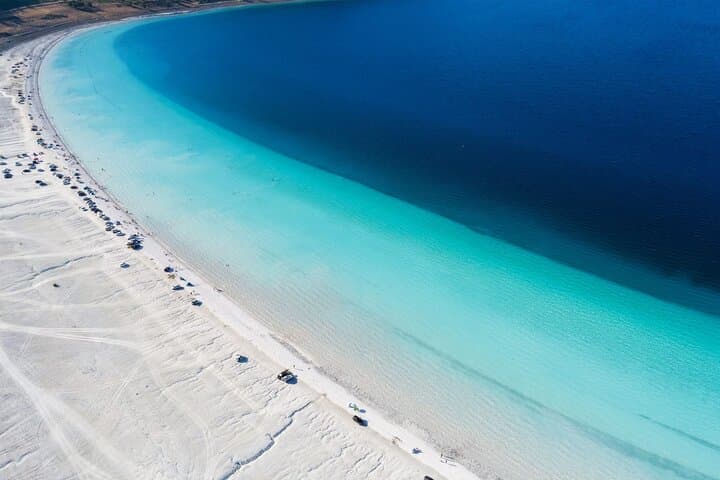
Pamukkale’s terraces formed over millennia as hot, mineral-laden water deposited travertine; the adjacent ruins of Hierapolis record a Roman and Hellenistic spa culture drawn to the same thermal source. Later, the day moves to Salda Lake, a crater lake famed for its pale, almost lunar beaches and exceptionally clear, turquoise water—geology here is younger but starkly different, with high-magnesium sediments that create soft, white shorelines.
Culturally, both sites stand between ancient ritual and modern tourism: Hierapolis’ theatre and necropolis point to civic life centered on baths, while nearby villagers sell simple regional fare. Guides will link the geology to local history and point out how seasonal flows shape the terraces.
Practically, expect a long travel day—early pickup from Kemer, several hours at each site, and evening return. Wear non-marking shoes for the travertines, carry a swimsuit for the thermal pools, and bring water and sun protection. Timing matters: arrive at Pamukkale early or late afternoon to avoid peak crowds and allow photos under better light. Respect signage—walking on protected terraces is restricted—and budget ticket and modest entrance fees for some baths. This is a full, sensory day that pairs dramatic limestone formations with stark, highland lakeshore scenery.
moderate.
16–17 hours.
Suitable for travelers in average fitness; long vehicle time with short walks and some standing on uneven surfaces.
Pickup is typically around 04:30–05:00 with return to hotel around 20:00–21:00, making this a full-day excursion of roughly 16–17 hours.
Yes—designated thermal pools permit swimming (e.g., Cleopatra Pool may have an extra entrance fee) and Salda has areas suitable for a quick dip; follow local rules and lifeguard guidance if present.
Some entrance tickets and local admissions may be included (check tour inclusions); extra access like the antique pool can incur additional fees on-site.
The tour accommodates all fitness levels and offers infant seats, but long travel times and early pickup may be challenging for very young children.
Hierapolis was founded in the Hellenistic period and flourished under Roman rule as a thermal spa city; Pamukkale and Hierapolis are UNESCO-protected for their combined natural and cultural value.
The travertine terraces are sensitive to water flow and foot traffic; visitors must follow designated paths and rules to protect deposits and local ecology.
tourbookinturkey operates guided outdoor trips and adventures with an emphasis on safety, stewardship, and memorable experiences.
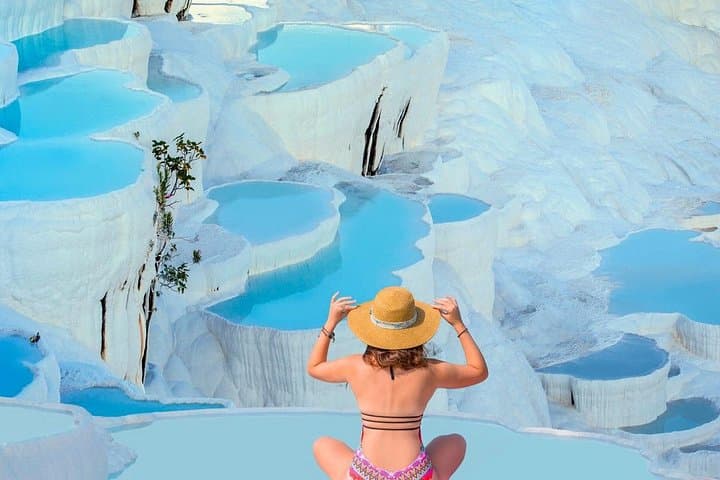
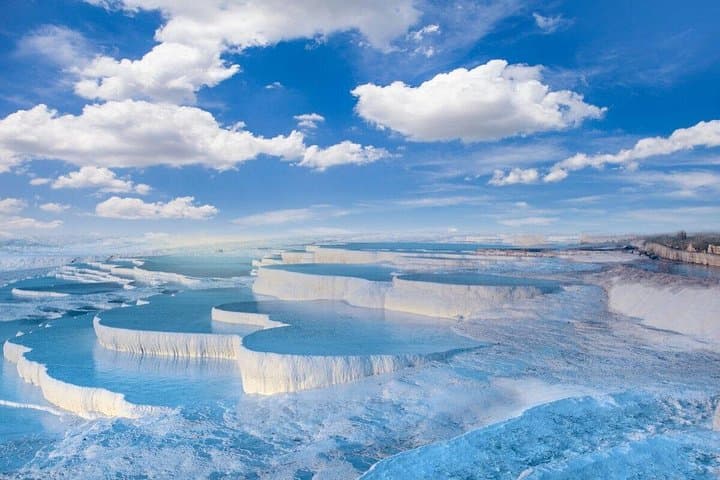
The morning begins before dawn as the minibus threads away from the Mediterranean coast and into Anatolia, lights shrinking behind you while the road grows long and quiet. By midmorning the white terraces of Pamukkale appear like a geological stage set—calcium-rich springs stepped into shallow milky pools that catch the sun.
The morning begins before dawn as the minibus threads away from the Mediterranean coast and into Anatolia, lights shrinking behind you while the road grows long and quiet. By midmorning the white terraces of Pamukkale appear like a geological stage set—calcium-rich springs stepped into shallow milky pools that catch the sun.
Pamukkale’s terraces formed over millennia as hot, mineral-laden water deposited travertine; the adjacent ruins of Hierapolis record a Roman and Hellenistic spa culture drawn to the same thermal source. Later, the day moves to Salda Lake, a crater lake famed for its pale, almost lunar beaches and exceptionally clear, turquoise water—geology here is younger but starkly different, with high-magnesium sediments that create soft, white shorelines.
Culturally, both sites stand between ancient ritual and modern tourism: Hierapolis’ theatre and necropolis point to civic life centered on baths, while nearby villagers sell simple regional fare. Guides will link the geology to local history and point out how seasonal flows shape the terraces.
Practically, expect a long travel day—early pickup from Kemer, several hours at each site, and evening return. Wear non-marking shoes for the travertines, carry a swimsuit for the thermal pools, and bring water and sun protection. Timing matters: arrive at Pamukkale early or late afternoon to avoid peak crowds and allow photos under better light. Respect signage—walking on protected terraces is restricted—and budget ticket and modest entrance fees for some baths. This is a full, sensory day that pairs dramatic limestone formations with stark, highland lakeshore scenery.