THE ADVENTURE COLLECTIVE® · Independent discovery and booking for outdoor travel

Walk barefoot across calcium-white terraces and explore the Roman ruins of Hierapolis on a private day tour from Fethiye. Learn what to expect—swim options, entrance fees, and practical tips for timing and footwear.
Walk barefoot across calcium-white terraces and explore the Roman ruins of Hierapolis on a private day tour from Fethiye. Learn what to expect—swim options, entrance fees, and practical tips for timing and footwear.
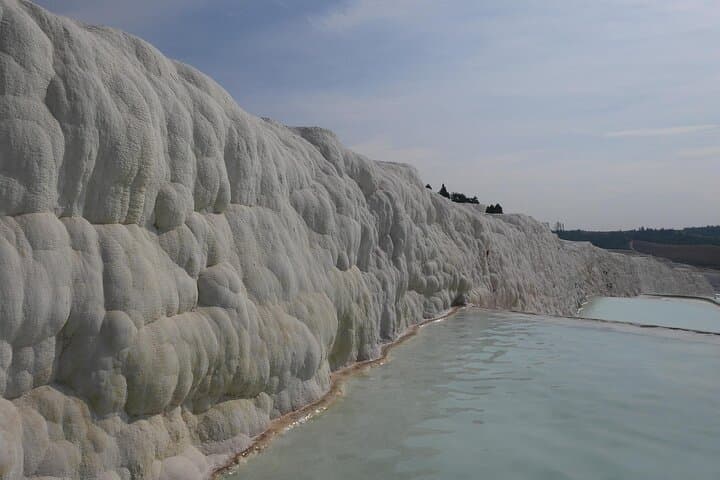
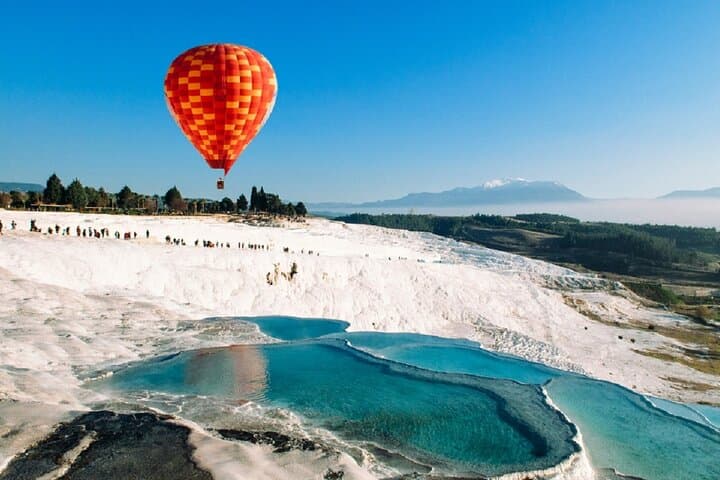
You step off the coach into a blinding white slope: terraces of calcite catch the sun and hold small, blue pools that steam faintly in cool air. Bare feet on warm travertine feel oddly intimate, each step revealing a layered landscape where hot springs once laid down sheet after sheet of mineral.
Verified experiences and guided adventures in the surrounding area.
Operated by Moonstar Tour · Pamukkale, Denizli Province
You step off the coach into a blinding white slope: terraces of calcite catch the sun and hold small, blue pools that steam faintly in cool air. Bare feet on warm travertine feel oddly intimate, each step revealing a layered landscape where hot springs once laid down sheet after sheet of mineral.
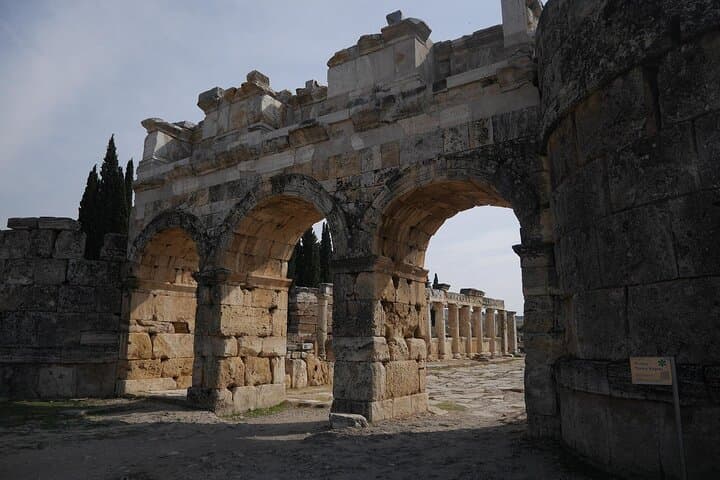
This is Pamukkale — the “cotton” cliffs of Denizli Province — and above them, the ruins of Hierapolis, a Greco-Roman spa city founded in the 2nd century BCE and expanded by Romans who built baths, a theater and an extensive necropolis. Geologically, Pamukkale’s terraces are living travertine, formed as calcium-rich thermal water cools and deposits mineral layers; culturally, the site long attracted pilgrims, Roman elites and, today, photographers and bathers.
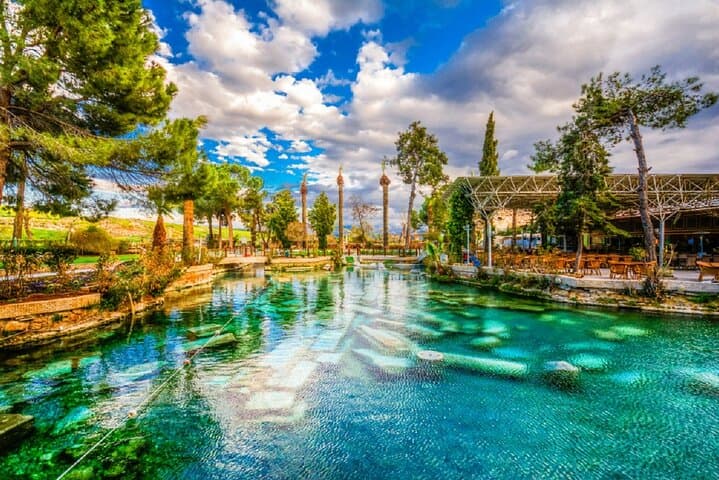
Expect a mix of geological spectacle and archaeological walking: flat terraces, shallow pools, and uneven ancient stone in the theater and cardo. The Cleopatra (antique) pool is a separate paid swim option if you want to enter water warmed by the springs and dotted with submerged columns. Nearby Karahayit offers iron-rich red springs that contrast with the white travertine.
Practical notes: footwear must be removed on the terraces—bring easy-to-remove shoes and a lightweight towel. Midday heat can be intense; start early for softer light and fewer crowds. The tour involves several short walks and steps across uneven surfaces, so moderate fitness and steady footwear for non-terrace sections are important. Confirm pickup details in advance and factor in a long drive from Fethiye when planning a day trip.
moderate.
3–7 hours.
Moderate fitness: able to walk 1–3 miles total on uneven surfaces and climb steps.
General site access is normally included in tour logistics, but some special swims (Cleopatra pool) and local fees may be extra—confirm with the operator.
The shallow travertine pools are protected and you cannot swim in most; the antique Cleopatra pool allows swimming for an additional fee.
Expect roughly 3–4 hours one way by road depending on traffic; the full-day schedule accounts for travel time and site visits.
Access across the terraces requires barefoot walking over uneven surfaces; some viewpoints are reachable by paths, but the site is not fully wheelchair accessible.
Hierapolis grew as a thermal healing center under Hellenistic and Roman rule; its theater, baths and necropolis reflect centuries of civic and ritual life.
Visitor limits and barefoot rules protect fragile travertine; stick to designated paths, avoid stepping on fresh deposits and support local vendors to benefit the community.
Moonstar Tour operates guided outdoor trips and adventures with an emphasis on safety, stewardship, and memorable experiences.
You step off the coach into a blinding white slope: terraces of calcite catch the sun and hold small, blue pools that steam faintly in cool air. Bare feet on warm travertine feel oddly intimate, each step revealing a layered landscape where hot springs once laid down sheet after sheet of mineral.
You step off the coach into a blinding white slope: terraces of calcite catch the sun and hold small, blue pools that steam faintly in cool air. Bare feet on warm travertine feel oddly intimate, each step revealing a layered landscape where hot springs once laid down sheet after sheet of mineral.
This is Pamukkale — the “cotton” cliffs of Denizli Province — and above them, the ruins of Hierapolis, a Greco-Roman spa city founded in the 2nd century BCE and expanded by Romans who built baths, a theater and an extensive necropolis. Geologically, Pamukkale’s terraces are living travertine, formed as calcium-rich thermal water cools and deposits mineral layers; culturally, the site long attracted pilgrims, Roman elites and, today, photographers and bathers.
Expect a mix of geological spectacle and archaeological walking: flat terraces, shallow pools, and uneven ancient stone in the theater and cardo. The Cleopatra (antique) pool is a separate paid swim option if you want to enter water warmed by the springs and dotted with submerged columns. Nearby Karahayit offers iron-rich red springs that contrast with the white travertine.
Practical notes: footwear must be removed on the terraces—bring easy-to-remove shoes and a lightweight towel. Midday heat can be intense; start early for softer light and fewer crowds. The tour involves several short walks and steps across uneven surfaces, so moderate fitness and steady footwear for non-terrace sections are important. Confirm pickup details in advance and factor in a long drive from Fethiye when planning a day trip.